Lash Products Every Beginner Should Know
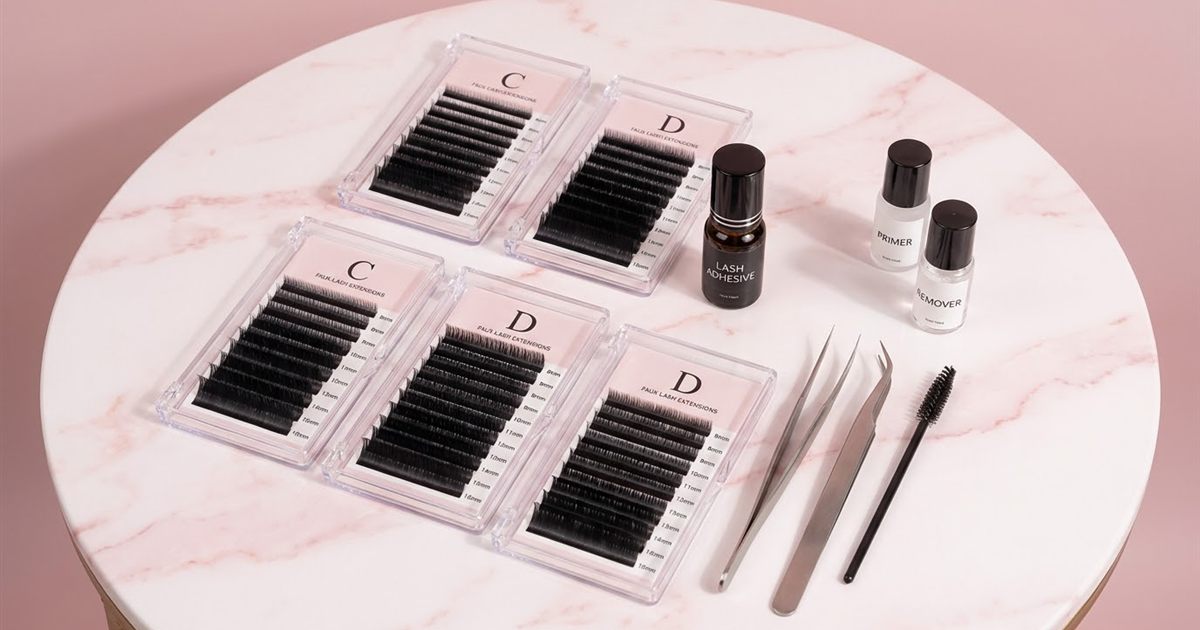
Walk into a lash supply shop, or open one online, and you will meet a wall of tiny products: trays of extensions in a dozen curls, bottles of adhesive with different promises, tweezers in every shape and a long list of liquids with confusing names. For a beginner, it is easy to feel lost and spend money on the wrong things. Product knowledge is the antidote. When you understand what each item does and what makes it good or bad, shopping becomes simple and your work becomes safer. This guide introduces the main products a lash artist uses and explains the ideas a good eyelash extension course teaches about them.
Free Guide
Get Your Free Lash Extensions Starter Guide

A $17 value, yours free today. We'll send the guide straight to your inbox in the next minute.
You'll also get occasional lash tips by email. Unsubscribe anytime.
Why Product Knowledge Comes First
Products are not just tools, they are part of the safety of the service. The adhesive touches skin near the eyes. The extensions sit on natural lashes you want to keep healthy. The remover has to dissolve a bond without harming the lash. If you do not understand how each one behaves, you cannot predict problems, and you cannot explain choices to a client.
This knowledge also saves money. Beginners often buy a large kit, then discover half of it is not what they needed. A course that teaches products early lets you build a cart deliberately. A lash course supplies kit checklist and monthly supply costs after a lash course can help you plan the budget.
Lash Extensions: Curl, Length And Thickness
The extensions themselves are described by three main qualities.
- Curl: how much the lash bends. Common curl names use letters, and each gives a different look, from a gentle lift to a dramatic curve.
- Length: measured in millimeters. The length you choose for each position is part of your lash map.
- Thickness: the diameter of the extension, also in millimeters. Thicker extensions look bolder but weigh more.
The most important idea here is that the extension must suit the natural lash. A heavy extension on a fine natural lash can stress it and cause damage. A lash curl, length and thickness guide explains each choice, and lash extension weight and natural lash health covers the safety side.
Classic Lashes, Fans And Handmade Or Premade Options
Extensions are used in different ways. In classic work, one extension goes on one natural lash. In hybrid and volume work, several very fine extensions are joined into a fan before being placed on one natural lash. Fans can be made by the artist on the spot or bought premade. Each choice has pros and cons for speed, control and cost. Handmade versus premade fans compares them, and classic versus volume lash extensions explains the main styles.
Adhesive: The Product That Needs The Most Respect
Adhesive is the product that causes the most trouble for beginners, because it is sensitive to conditions and it is applied near the eyes. A few ideas are worth learning early.
- Cure time: how fast the adhesive sets. Faster is not always better for a beginner, because you need time to place carefully.
- Humidity and temperature: both affect how the adhesive behaves, so the same bottle can act differently on different days. Humidity, climate and lash retention explains why.
- Storage and shelf life: adhesive loses quality as it ages or when stored badly. Lash adhesive storage and shelf life shows how to look after it.
- Fumes and sensitivity: some clients react to the adhesive or its vapor, which is why a patch test and good ventilation matter. Lash adhesive sensitivity and patch tests and adhesive fumes and health cover this carefully.
- Brand and formula: quality varies, and the choice matters more than many beginners expect. Does the adhesive brand matter in a lash course? gives a balanced answer.
Primer, Cleanser And Preparation Products
Before any extension goes on, the natural lashes need to be clean and free of oil. Cleansers and primers help with this. They remove makeup residue, oil and debris so the adhesive can bond properly. Because poor retention is often a preparation problem, these products have an outsized effect on how long a set lasts. Lash prep steps before extensions walks through the process, and how to fix poor lash retention shows how preparation connects to results.
Removers And Why They Deserve Attention
Removers are designed to break down the adhesive bond so extensions can come off without pulling natural lashes. They come in different forms, and each has a different feel and speed. What matters is understanding how to use them gently and safely, and knowing that removal is a skill and not an afterthought. Why safe lash removal matters explains why.
Tweezers And Hand Tools
Tweezers are the most personal tools on your cart. You use two types: one to isolate a natural lash and one to pick up and place an extension. They come in different tip shapes, lengths and angles, and the right pair feels comfortable and precise in your hand. How to choose lash tweezers explains how to try and compare them. A simple setup is enough while you learn, as a lash cart setup guide shows.
Pads, Tape And Everyday Supplies
Small items make a big difference to comfort and safety. Under eye pads or tape protect the lower lashes and skin. Microbrushes, cotton swabs and lash brushes help with cleaning and checking. Disinfectant and wipes keep your station safe between clients. Lash course sanitation and hygiene standards explains how to use them.
Values And Preferences In Products
Some artists and clients care about whether products are vegan or cruelty free, or about ingredient lists. If that matters to you, learn what to look for and how to ask suppliers. Vegan and cruelty free lash extension supplies covers those questions.
How To Evaluate A Product As A Beginner
You do not need to be a chemist to judge a product sensibly. Ask a few simple questions before you buy.
- Does the seller give clear information? Good products come with clear instructions, ingredient information and storage guidance.
- Is the quality consistent? Extensions in a tray should be uniform in length and curl.
- Does it suit my skill level? A very fast adhesive or a very thick lash may be hard for a beginner.
- Is it safe for my clients? Look for guidance on sensitivities and ventilation.
- Can I return it or ask questions? A seller who answers questions is a good sign.
Learn Terms Along The Way
Product conversations come with their own vocabulary. Learning the terms early helps you read labels and talk to suppliers confidently. A lash extension terms glossary collects the most common ones in simple language.
Common Beginner Mistakes With Products
- Buying a giant kit before learning: you pay for items you may never need.
- Choosing the thickest lashes for a bolder look: weight can damage natural lashes.
- Ignoring storage rules: old or badly stored adhesive causes failures.
- Skipping the patch test conversation: sensitivities are a real safety issue.
- Following social media recommendations blindly: what works for one artist may not suit your skill level.
Where The Lash Extensions Master Course Fits
Module 1 includes a product knowledge lesson, and later modules cover styling, retention, adhesives and eye education, so you understand the products before you buy a full supply kit. The Lash Extensions Master Course is a one time payment with lifetime access to 31 video lessons across six modules, plus a 90 plus page training manual, a Certificate of Completion and a 7 day money back guarantee. You can stream it on any device, pause and rewatch any lesson, and you are never required to buy anything extra to follow along. See the full lesson list on the course page.
Final Thoughts
Product knowledge turns a confusing wall of items into a clear set of choices. Understand curl, length and thickness, treat adhesive with respect, prepare the lashes well and remove extensions gently. Learn first, buy deliberately and let your training guide what goes on your cart.
Free Guide
Get Your Free Lash Extensions Starter Guide
A $17 value, yours free today. We'll send the guide straight to your inbox in the next minute.
You'll also get occasional lash tips by email. Unsubscribe anytime.
Frequently Asked Questions
Products affect safety, retention and the health of natural lashes. Understanding what each product does helps you choose well, store it correctly and avoid problems.
Keep Reading
Popular Lash Training Guides
- Minimum Age For Eyelash Extension Training
- Eyelash Extension Training Cost In 2026: Real Breakdown
- Lash Tech License Requirements By State
- Is It Hard To Learn Eyelash Extensions? Honest Answer
Ready to go from reading to doing? See the full Lash Extensions Master Course or browse all lash training guides.