Lash Adhesive Sensitivity and Patch Tests
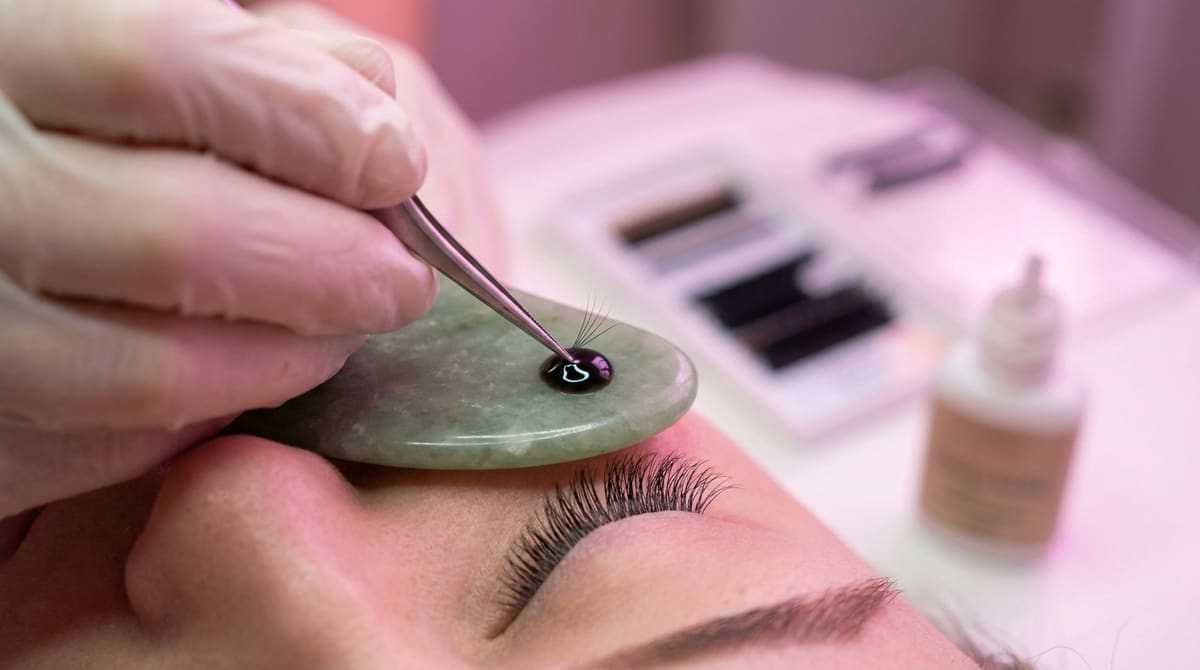
Nobody enrolls in an eyelash extension course thinking about allergic reactions. You are picturing full sets, happy clients, and a growing appointment book, not a swollen eyelid and a refund request three days after someone’s first fill.
But adhesive sensitivity is one of the most common reasons a new lash business loses a client for good, and it is also one of the least covered topics in a lot of rushed, cheap training programs that spend all their time on styling and almost none on the chemistry sitting a few millimeters from someone’s eye.
Free Guide
Get Your Free Lash Extensions Starter Guide

A $17 value, yours free today. We'll send the guide straight to your inbox in the next minute.
You'll also get occasional lash tips by email. Unsubscribe anytime.
A real eyelash extension training course should teach you what causes adhesive sensitivity, how to patch test properly, and what to do the moment a reaction starts, not just how to apply a pretty set.
What Actually Causes a Reaction
Lash adhesive is built around cyanoacrylate, the same family of compound used in most fast-bonding glues, and a genuine allergy to it is an immune response, not just irritation from fumes. That distinction matters because the two look similar at first (watery eyes, some redness) but come from completely different causes, and only one of them gets worse with repeated exposure. Fume sensitivity tends to improve with better ventilation and a lower-fume formula. A true cyanoacrylate allergy does not improve with a “gentler” adhesive, because the client’s immune system is reacting to the core bonding agent itself, not the fumes around it.
Why Patch Testing Gets Skipped
Patch testing takes an extra appointment, or at least an extra 24 to 48 hours of waiting before the first full set, and in a rush to book revenue-generating appointments, plenty of new technicians (and, honestly, some experienced ones) skip it entirely. The math feels backwards when you are new: turning down or delaying a paying client to do a test that “probably” will not react anyway. But that math changes fast the first time a client has a real reaction on a full set, because at that point you are not just losing one appointment, you are potentially facing a client who needs medical attention, a bad review, and in some regions, a liability claim tied directly to a step your training should have made non-negotiable.
How To Patch Test Properly
A proper patch test applies a small amount of the actual adhesive you plan to use, either to one or two lashes or to a small patch of skin (commonly the inner forearm), then waits a minimum of 24 hours, ideally 48, checking for redness, itching, swelling or unusual warmth in the area. This is not the same as asking a client “are you allergic to anything?” during intake, because most people have never been exposed to lash adhesive before their first set and genuinely do not know. The test exists specifically to catch that unknown, not to double-check something the client could have told you themselves.
Real Scenario
A new lash artist skipped patch testing on her first three clients because “everyone at the salon does full sets same-day.” Her fourth client developed significant eyelid swelling within six hours of her first full set and needed an urgent care visit. The adhesive itself was a reputable, well-reviewed brand; the problem was never the product, it was the missing test that would have caught the reaction on a few lashes instead of an entire set.
Reactions Can Show Up Later, Not Just On Day One
One of the more counterintuitive things a good course should teach is that sensitivity to cyanoacrylate can develop over time, even in a client who has had multiple sets before with zero issues. Repeated exposure is actually a known risk factor for developing a reaction, not a guarantee of immunity, which is why experienced technicians keep asking about any new irritation at every fill, not just the very first appointment. A client who says “my eyes have felt itchy the last day or two” after several successful sets is giving you exactly the information you need to slow down, not a complaint to brush off because “it never bothered them before.”
What A Course Should Teach You To Do In The Moment
Beyond the testing itself, real training should walk you through what to actually do if a reaction starts during or after an appointment: stopping the application immediately, removing the affected extensions if swelling is significant, advising the client to seek medical care if the reaction looks severe rather than mild irritation, and documenting the exact adhesive brand and lot number used. That last detail matters more than most new technicians expect, because if a reaction turns out to be linked to a specific batch, that documentation is what protects both you and any future clients from the same exposure.
Adhesive Storage Affects Reaction Risk Too
Sensitivity is not only about the client, it is also about the adhesive itself, and this is a piece a lot of rushed courses skip entirely. Lash adhesive is sensitive to heat, humidity, and air exposure, and an improperly stored or expired bottle can develop a different, harsher chemical profile than the same adhesive fresh out of a properly sealed, temperature-controlled container. A reaction that looks like a client-specific allergy is sometimes actually a reaction to a degraded product, which is one more reason documenting the brand, lot number, and even the bottle’s age at time of use matters as much as documenting the client’s own history. A course that explains proper adhesive storage (away from direct light, in a cool space, replaced within the manufacturer’s stated shelf life after opening) is protecting you from a whole category of “unexplained” reactions that were never about the client at all.
Building A Simple Reaction Log As You Go
Beyond handling a reaction in the moment, a genuinely useful habit a course should encourage is keeping a simple running log of adhesive brand, lot number, and any client reaction, even a mild one, tied to specific dates. This sounds like extra administrative work when you are just starting out and eager to focus on technique, but it becomes valuable fast: if you ever switch adhesive brands, that log tells you whether reactions changed in frequency, and if a client experiences irritation, you have an actual record instead of trying to remember details from memory weeks later. Insurance providers and, in more serious cases, medical professionals treating a reaction will also want exactly this kind of documentation, not a vague recollection of “I think it was the usual glue.”
What To Ask Before You Enroll
Before you commit to any eyelash extension training course, ask directly whether adhesive sensitivity and patch testing are part of the actual curriculum, not just mentioned in passing during a sanitation module. Ask if the course explains more than one adhesive type, since being stuck with a single formula leaves you with no backup plan the day a client cannot tolerate it. A course that only ever mentions one brand, without explaining why it chose that one or what alternatives exist for sensitive clients, is giving you a product recommendation, not real training in adhesive selection. This is also worth pairing with what you already know to check about sanitation and hygiene standards in general, since adhesive safety is really one specific, high-stakes piece of that broader picture.
Free Guide
Get Your Free Lash Extensions Starter Guide
A $17 value, yours free today. We'll send the guide straight to your inbox in the next minute.
You'll also get occasional lash tips by email. Unsubscribe anytime.
Frequently Asked Questions
At least 24 to 48 hours before the full application, applying a small amount of adhesive to a few lashes or to the skin of the inner arm, and checking for redness, itching, or swelling before booking the actual appointment.
Keep Reading
Popular Lash Training Guides
- Minimum Age For Eyelash Extension Training
- Eyelash Extension Training Cost In 2026: Real Breakdown
- Lash Tech License Requirements By State
- Is It Hard To Learn Eyelash Extensions? Honest Answer
Ready to go from reading to doing? See the full Lash Extensions Master Course or browse all lash training guides.