Should You Specialize In One Lash Style?
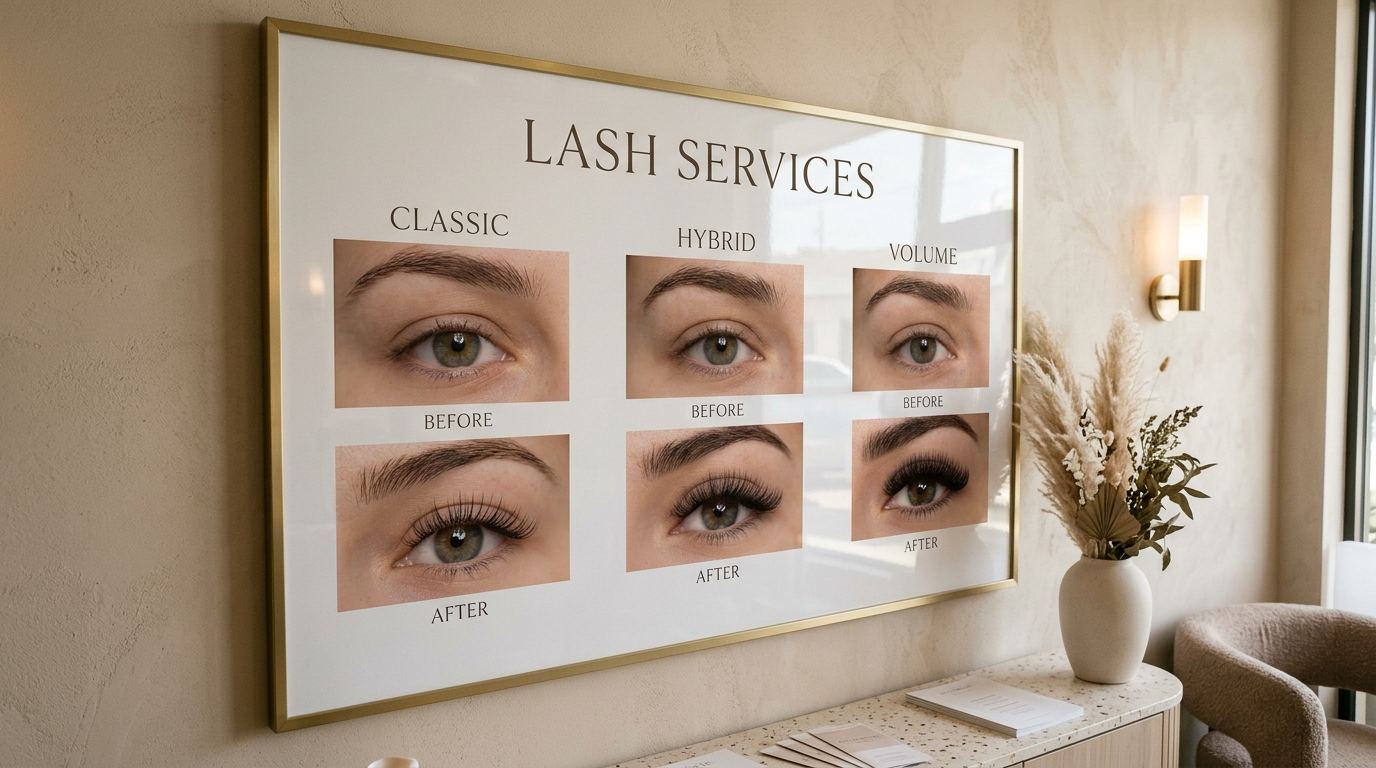
Once you’re certified and booking real clients, a real business question comes up that your course technique alone doesn’t answer: should you offer every lash style you learned, or build your business around being known for just one? Both are legitimate paths, and the right answer depends more on your local market and your own booking data than on which style you personally enjoy most.
Free Guide
Get Your Free Lash Extensions Starter Guide

A $17 value, yours free today. We'll send the guide straight to your inbox in the next minute.
You'll also get occasional lash tips by email. Unsubscribe anytime.
Why Most New Lash Artists Should Start As A Generalist
You don’t have enough booking data to know what your market wants until you’ve served that market for a while. Offering everything you’re trained in early on gives you that data faster.
When you’re brand new, turning away potential bookings because they don’t fit a narrow specialty you haven’t validated yet can slow your growth for no real payoff. Offering classic, hybrid, and volume, everything your course covered, keeps your calendar open to the widest range of client requests while you’re still building your base and figuring out what your specific local market actually books most often.
The Case For Specializing, Once You Have The Data
After a few months of real bookings, patterns usually emerge: maybe volume sets fill your calendar fastest, or maybe hybrid rebookings are the most consistent. That data, not a guess made on day one, is the strongest signal for what to specialize in if you decide to. A specialty, especially a more advanced one like mega volume, lets you market to a specific audience actively searching for that exact look, often at a premium price, instead of competing broadly on price against every other lash artist in your area.
Track this deliberately rather than relying on a vague impression of what feels busiest. A simple spreadsheet noting which style each booking was, how it was priced, and whether that client rebooked gives you real numbers to base a specialization decision on, instead of guessing based on whichever appointments happen to stick in your memory most.
How Specializing Changes Your Marketing
A generalist’s marketing has to speak to everyone, which often ends up speaking clearly to no one in particular. A specialist’s marketing can be sharp and specific: your photos, your captions, your booking page can all be built around one clear promise, becoming the go-to person for that exact look in your area rather than one of many lash artists offering the same broad menu.
This clarity also tends to make referrals easier to generate. A client who books you specifically for your specialty has an easy, specific thing to tell friends (“she’s the mega volume specialist in town”) compared to a vaguer recommendation for a generalist who does a bit of everything well. That specificity travels further in word-of-mouth referrals than a broad, competent-at-everything reputation typically does.
Specializing Doesn’t Mean Turning Everyone Else Away
You don’t have to stop offering your other trained styles just because you market one as your specialty. Many specialists still book classic or hybrid sets when asked, they simply lead their marketing and pricing structure with their specialty, since that’s what pulls in the specific clients actively searching for it, while their other styles stay available as a secondary option.
Consider Your Local Market Size First
A narrow specialty needs enough local demand to actually fill a calendar around it, which is realistic in a larger city with more potential clients, but genuinely harder to sustain in a small town. If your area is small, staying a generalist for longer, possibly indefinitely, is often the more practical business decision, regardless of which style you personally love doing most.
A Hybrid Approach Many Lash Artists Land On
Plenty of established lash artists settle somewhere between the two extremes rather than fully committing to one label. They offer their full trained range but lead their marketing, portfolio, and social media with whichever style they’re strongest in or most known for locally, without formally closing the door on other requests. This middle ground captures much of the marketing clarity of specializing while keeping the flexibility of a broader client base, which can be a comfortable long-term position rather than something you’re forced to move away from eventually.
This hybrid approach also tends to feel less risky psychologically for lash artists who aren’t fully confident yet about narrowing their focus. You get to test how a specialty-led marketing angle performs without formally shutting the door on the rest of your trained skill set, which makes it a genuinely reasonable middle step rather than an indecisive compromise.
Revisit The Decision As Your Business Changes
Your positioning doesn’t have to be permanent from the moment you decide it. A generalist in year one might have enough consistent volume demand by year two to comfortably specialize, or a specialist in a saturated niche might reopen their menu if that specific demand cools off. Treat this as a decision you can revisit periodically based on actual booking patterns, not a one-time choice you’re locked into for the rest of your career.
What Clients Actually Search For Matters Too
Beyond your own preference, pay attention to how clients in your area actually describe what they want when they reach out. If most inquiries mention a specific style by name, that’s a signal worth listening to when deciding how to frame your own marketing and service menu, since matching the language your potential clients are already using tends to convert better than a menu built purely around your own assumptions of what they want.
Watch What Local Competitors Are Already Doing
Look at how other lash artists in your area position themselves before deciding your own approach. If your market already has several established mega volume specialists but very few solid generalists, there may be more room to build a name as the reliable, well-rounded option than to compete directly in an already crowded specialty. Positioning isn’t just about what you enjoy doing, it’s also about where a genuine gap exists in your specific local market.
Don’t Let The Decision Delay Getting Started
Whichever direction you lean toward, don’t let deciding between specializing and staying a generalist hold up actually booking your first clients. This is a decision best made with real data from real appointments, which means the fastest way to make it well is to start working, pay attention to what happens, and adjust your positioning deliberately once you have enough bookings behind you to see a genuine pattern rather than a guess.
What Our Course Includes
The Lash Extensions Master Course trains you across classic, hybrid, and volume application, for a one-time $97 payment with lifetime access, so you have the full range of skills available whether you end up specializing or staying a generalist long-term.
Final Thoughts
Specializing can be a strong move once you have real booking data behind it, but starting as a generalist keeps more doors open while you’re still building your client base and learning what your local market actually wants. If you’re deciding how to price whichever direction you choose, read how to price your lash services, or see classic vs volume lash extensions: which first to think through your training order before positioning your business.
Free Guide
Get Your Free Lash Extensions Starter Guide
A $17 value, yours free today. We'll send the guide straight to your inbox in the next minute.
You'll also get occasional lash tips by email. Unsubscribe anytime.
Frequently Asked Questions
Usually not immediately. Offering the full range of styles you were trained in while you're still building a client base gives you more booking opportunities early on, before you have enough data on what your local market actually wants most.
Keep Reading
Popular Lash Training Guides
- Minimum Age For Eyelash Extension Training
- Eyelash Extension Training Cost In 2026: Real Breakdown
- Lash Tech License Requirements By State
- Is It Hard To Learn Eyelash Extensions? Honest Answer
Ready to go from reading to doing? See the full Lash Extensions Master Course or browse all lash training guides.