Adhesive Fumes And Your Health In Training
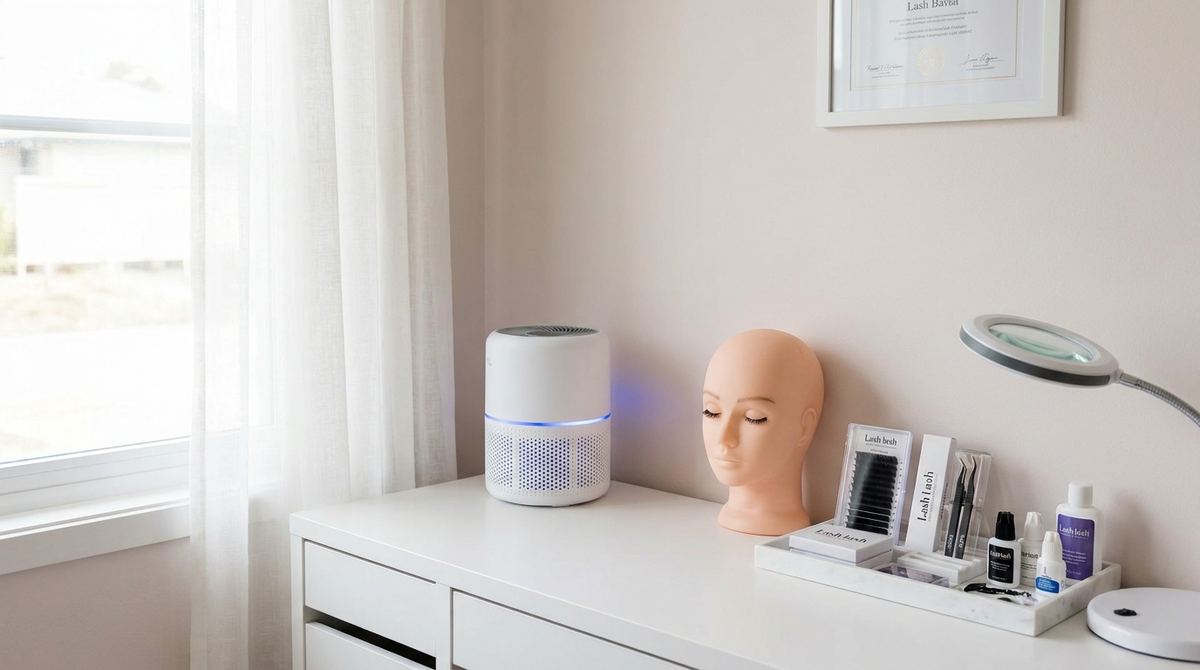
Most lash extension training focuses on technique: isolation, application speed, adhesive handling for the client’s lashes. What gets far less attention is the technician’s own exposure to adhesive fumes, hour after hour, session after session, for as long as you’re in this career. It’s not a reason to avoid lash training, but it is something worth understanding and protecting against from your very first practice session, not after you’ve already developed a problem.
Free Guide
Get Your Free Lash Extensions Starter Guide

A $17 value, yours free today. We'll send the guide straight to your inbox in the next minute.
You'll also get occasional lash tips by email. Unsubscribe anytime.
Why Lash Adhesive Produces Fumes At All
Lash extension adhesive is built around cyanoacrylate, the same family of fast-curing bonding chemistry used in many industrial glues, and it releases fumes as it cures, not just while the bottle is open. That curing process happens continuously throughout every single lash placed during a full set, which is why a poorly ventilated space can feel noticeably worse by the end of a two-hour session than it did at the start, even if you never got adhesive anywhere near your own skin.
The Difference Between Mild Adjustment And A Real Problem
Some eye watering or a slightly scratchy throat in your very first few practice sessions is common, and for most trainees it eases as their body adjusts and as they build better ventilation habits into their setup. A real problem looks different: symptoms that get worse over repeated sessions instead of better, breathing that feels tight or wheezy, or a skin reaction on your hands or face that shows up reliably every time you’re exposed. That pattern, worsening rather than settling, is the signal that it’s time to change your setup or talk to a doctor, not just push through it.
A repeated pattern that gets worse with each session is different from a one-off bad day. Track it honestly instead of assuming you’ll just get used to it, because for some trainees, sensitivity actually builds with cumulative exposure rather than fading.
Fumes Affect Clients Too, Not Just You
It’s worth remembering that whatever you’re breathing during a full set, your client is breathing too, often from a closer distance and for the same duration. A workspace set up to protect your own health as the technician generally protects your client at the same time, and clients who are themselves sensitive to strong smells will notice and appreciate a well-ventilated room even if they never say so directly. Framing your ventilation setup as a client comfort feature, not just a personal health precaution, can also become a small but real point of difference when clients are comparing lash artists in your area.
Setting Up A Safer Practice Space From Day One
You don’t need a professional cleanroom to train safely, but a few basics matter more than most new students realize. A dedicated air purifier with a true HEPA and activated carbon filter, positioned close to your practice area rather than across the room, does more real work than opening a window on its own. Point a small fan so it pulls air away from your face and toward the purifier or an open window, not the other way around, and avoid training in a small enclosed room with the door shut for hours at a time, which is exactly the setup that concentrates fumes the most.
What To Do If You Think You’re Sensitive
If you notice a consistent reaction, don’t just switch adhesive brands at random hoping one will bother you less; different formulas vary in fume intensity and in the specific compounds they release, so a genuinely lower-fume, sensitive-formula adhesive (several brands make one specifically for this) is a better first step than guessing. Pair that with stronger ventilation and, if needed, a properly rated mask, and reassess after a few sessions rather than assuming nothing can be done.
Talking To Your Course Or Employer About It
If you’re training somewhere with other students or working in a shared studio later, don’t assume you’re the only one affected just because no one else has said anything. Raising a ventilation concern with an instructor or studio owner is a completely normal, professional thing to do, and most will take it seriously since a genuinely well-ventilated space benefits every single person working in it, including clients who spend an hour or more breathing the same air during their appointment.
Adhesive Storage And Handling Also Affects Fume Exposure
Ventilation during application isn’t the only factor. How you store and handle adhesive between uses matters too: a bottle left uncapped, adhesive dispensed onto an open jade stone well ahead of when you’ll actually use it, or a workspace with several opened bottles sitting out at once all add unnecessary fume exposure on top of what a normal application already produces. Cap adhesive immediately after dispensing, dispense only as much as you’ll use in the next few minutes, and avoid keeping more than one bottle open in your workspace at a time.
Comparing Low-Fume Adhesive Formulas
If you’ve already tightened up your ventilation and handling and still notice a reaction, the adhesive formula itself is worth reconsidering before assuming you simply can’t do this work. Low-fume and sensitive-formula adhesives are formulated specifically to reduce the intensity of released compounds, and cure times, retention, and bond strength vary between brands enough that switching isn’t a guaranteed downgrade in results. Many technicians who assumed they had a fundamental incompatibility with lash work found a specific formula that worked for them once they actually tested a few side by side, rather than giving up on the career after one bad reaction to a single product.
Long-Term Habits That Protect Your Career, Not Just Today’s Session
Fume exposure is cumulative, which means habits that feel unnecessary in your first few weeks of training pay off years down the line. Technicians who build strong ventilation and handling habits from day one are far less likely to develop a disruptive sensitivity five or ten years into a career than those who treat protection as optional until a problem shows up. Treat your workspace setup as a permanent professional habit, not a temporary precaution you’ll relax once you’re more experienced.
What Our Course Includes
The Lash Extensions Master Course covers proper workspace setup and sanitation as part of its 31 video lessons in classic, hybrid and volume application, consultation, retention and business training, for a one-time $97 payment with lifetime access.
Final Thoughts
Fume sensitivity is a real, if under-discussed, part of starting a lash career, and protecting yourself early costs far less than dealing with a developed sensitivity years into your business. Build good ventilation and handling habits into your very first practice session rather than treating them as something to figure out later, since the habits you form in training tend to be the ones that stick for the rest of your career. For more on keeping your workspace safe more broadly, read sanitation and hygiene standards in lash training, and if you’re specifically worried about your own skin reacting to product, lash adhesive sensitivity and patch tests covers how that testing process works, from the other side of the chair.
Free Guide
Get Your Free Lash Extensions Starter Guide
A $17 value, yours free today. We'll send the guide straight to your inbox in the next minute.
You'll also get occasional lash tips by email. Unsubscribe anytime.
Frequently Asked Questions
Mild eye watering or a scratchy throat in your first few sessions is common and usually settles as you get used to proper ventilation habits and airflow. It's the difference between a mild adjustment and a real reaction that matters.
Keep Reading
Popular Lash Training Guides
- Minimum Age For Eyelash Extension Training
- Eyelash Extension Training Cost In 2026: Real Breakdown
- Lash Tech License Requirements By State
- Is It Hard To Learn Eyelash Extensions? Honest Answer
Ready to go from reading to doing? See the full Lash Extensions Master Course or browse all lash training guides.