Vegan Cruelty-Free Lash Supplies Guide
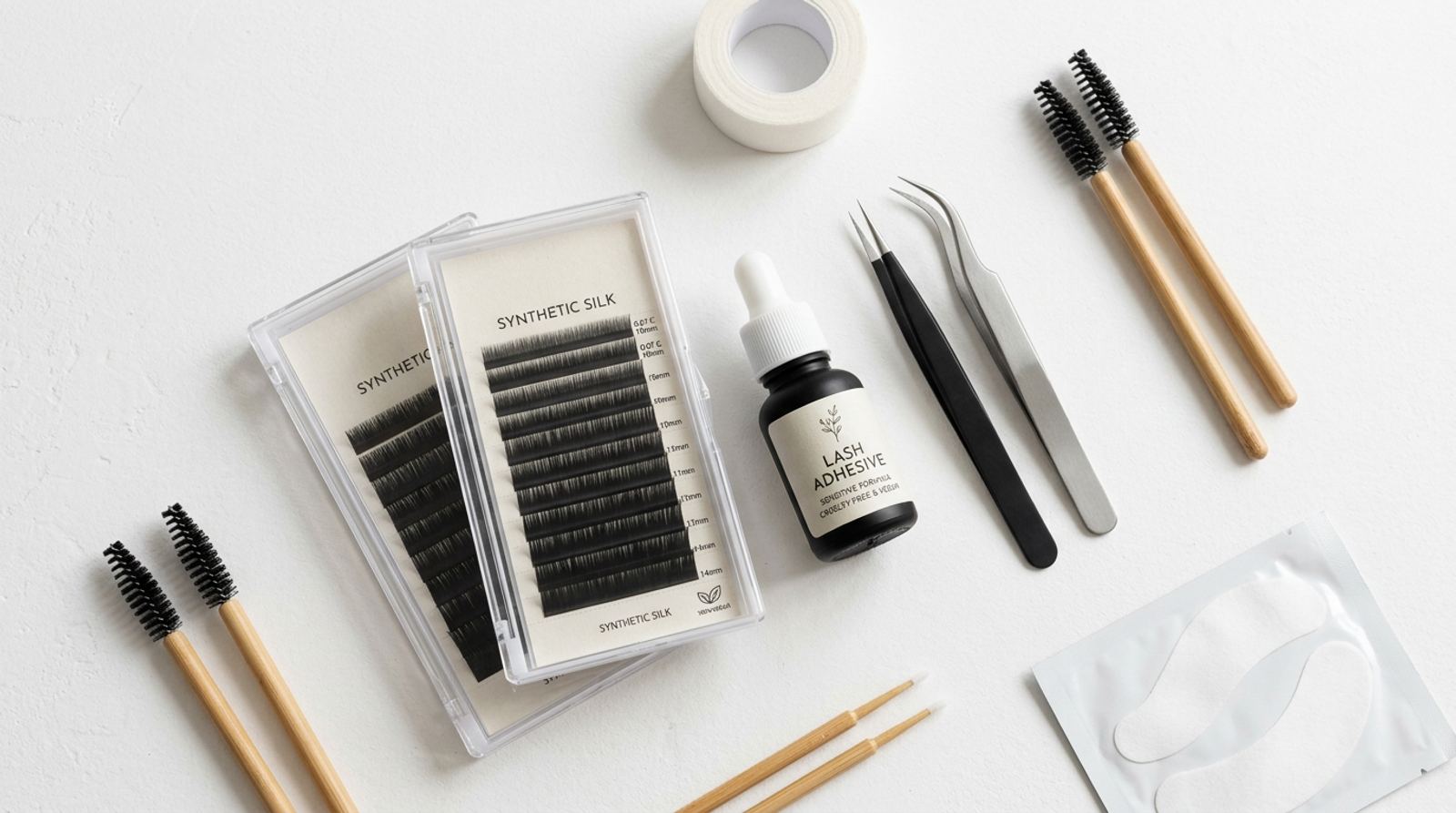
A growing number of clients are asking lash artists a question that didn’t come up much a few years ago: are these vegan, and is anything about them tested on animals. It’s a fair question, and one worth being able to answer with real specifics rather than a shrug, since the honest details of lash supply sourcing aren’t something most training covers in depth. Here’s what’s actually worth knowing.
Free Guide
Get Your Free Lash Extensions Starter Guide

A $17 value, yours free today. We'll send the guide straight to your inbox in the next minute.
You'll also get occasional lash tips by email. Unsubscribe anytime.
Why This Question Is Coming Up More Often
Values-driven purchasing has expanded well beyond food and skincare into nearly every category clients spend money on, and beauty services are no exception. Clients who already choose cruelty-free makeup or vegan skincare are increasingly extending that same standard to services like lash extensions, and being able to answer their questions with genuine, specific knowledge, rather than a vague reassurance, is a real point of trust and differentiation as a lash artist.
What Lash Extension Trays Are Actually Made From Today
The mink and silk fiber lashes of a decade ago have largely been replaced industry-wide by synthetic silk and PBT, polybutylene terephthalate, fibers, which are already animal-free by default in most modern lash lines. This shift happened mostly for consistency and performance reasons rather than ethical marketing, but it means most lash trays you’d already be using are vegan without any special sourcing effort. The more relevant question for a values-driven client isn’t usually the fiber itself anymore, it’s whether the brand explicitly certifies cruelty-free testing practices.
Most modern lash trays are already synthetic and animal-free by default. The real differentiator for a values-driven client is whether the brand behind them is transparent and certified about cruelty-free testing, not just the fiber material itself.
Understanding Cruelty-Free Adhesive Options
Lash adhesive is where this conversation gets more specific, since formulation and testing practices vary meaningfully by brand. Some adhesive manufacturers explicitly formulate and test without animal ingredients or animal testing and label this clearly, while others don’t address it at all in their marketing. If a client asks about your specific adhesive, it’s worth knowing the actual answer for the product you use rather than assuming any professional-grade adhesive automatically qualifies.
Does Choosing Vegan Supplies Mean Compromising On Quality?
This is one of the biggest misconceptions worth clearing up early: vegan and cruelty-free lash supplies generally use the same synthetic fiber technology and chemical bonding science as any other quality product on the market. Retention, curl consistency, and overall set quality aren’t inherently worse with ethically sourced supplies, so switching for this reason doesn’t require accepting a downgrade in your actual work.
Reading Supplier Claims Critically
Not every brand that markets itself loosely as “cruelty-free” backs that up with a real, verifiable certification or clear sourcing information. Before making specific claims to your own clients, look for brands that are transparent about their actual testing practices and ingredient sourcing, rather than relying on marketing language alone. Being able to name the specific certification or sourcing detail, not just repeat a brand’s tagline, is what actually builds credibility with a client who’s asking a serious question.
How To Talk About This With Clients Who Ask
If a client asks whether your lashes or adhesive are vegan or cruelty-free, the strongest answer is specific: naming the actual product lines you use and what you know about their sourcing, rather than a general reassurance. If you genuinely don’t know a detail, saying so honestly and offering to check is far better for trust than guessing or overstating a claim you can’t actually back up.
Should You Market This As A Specialty?
If a meaningful part of your target client base is values-driven around cruelty-free and vegan products, actively mentioning it in your marketing, service menu, or social media bios can be a genuine differentiator in a crowded local market. This isn’t necessary for every lash artist, but in markets with a strong presence of ethically-minded consumers, being one of the artists who can speak to this clearly and specifically is a real competitive edge, not just a nice-to-have detail.
Sourcing Your First Vegan and Cruelty-Free Supply Kit
When you’re setting up or updating your supply kit, look specifically for brands that publish clear sourcing information and, ideally, third-party cruelty-free certification rather than a self-applied label. This is worth doing once, thoroughly, rather than repeatedly guessing brand by brand, since a documented, verified supply list is something you can confidently reference any time a client asks rather than needing to research it fresh each time.
Staying Current As The Product Landscape Changes
Supply brands update formulations and sourcing practices over time, and a brand that was cruelty-free certified a few years ago may have changed ownership or manufacturing, or a previously uncertified brand may have since earned certification. Revisiting your actual supply choices periodically, rather than assuming what you learned once during training stays permanently accurate, keeps the specific information you give clients genuinely current.
Building A Values-Driven Client Base Intentionally
If you decide to lean into offering vegan and cruelty-free services as part of your brand, it’s worth being consistent across every touchpoint, your service menu language, your social media captions, and your in-person consultation, rather than mentioning it only when a client happens to ask. Clients who care about this tend to notice and appreciate consistency, and inconsistent messaging can come across as an afterthought rather than a genuine value you’ve built into how you run your business.
Handling Clients Who Have Specific Adhesive Sensitivities
Some clients asking about cruelty-free or vegan products are also managing sensitivities or allergies to specific ingredients, and it’s worth treating these as related but distinct conversations. A product being cruelty-free doesn’t automatically mean it’s hypoallergenic or right for a client with a known sensitivity, so keep your product knowledge specific enough to answer both types of questions accurately rather than assuming one label covers every concern a client might raise.
Staying Informed Without Getting Overwhelmed By Options
The supply market for ethically sourced beauty products continues to expand, and it’s easy to feel like you need to research every new brand claiming to be cruelty-free. A more sustainable approach is settling on a small, well-vetted set of go-to suppliers you trust and periodically checking in on new options every few months, rather than trying to track every new product launch in real time, which is neither necessary nor a good use of your limited business hours.
Adding It To Your Consultation Without Overcomplicating It
You don’t need to turn every consultation into a detailed lecture on supply sourcing. A brief, confident mention, “I use vegan, cruelty-free lash trays and adhesive if that matters to you,” gives a values-driven client the information they’re looking for without turning a routine consultation into an unnecessarily long conversation for clients who never think to ask. Save the deeper detail for clients who follow up with specific questions, rather than front-loading it into every single appointment regardless of interest.
Why Transparency Beats Perfection On This Topic
No supplier or artist can promise every single product in a full lash kit meets every possible ethical standard a client might care about, and trying to claim otherwise risks overpromising. Being transparent about which specific products you’ve verified as cruelty-free, and honest about anything you’re less certain of, builds more durable trust than presenting yourself as having a flawless, fully verified ethical supply chain when that level of certainty isn’t realistic for any working artist to maintain.
What Our Course Includes
The Lash Extensions Master Course is self-paced with lifetime access, covering all 31 video lessons in classic, hybrid and volume application, plus consultation, retention and business training, for a one-time $97 payment, giving you the technical foundation to confidently evaluate and work with whichever supply lines fit your values and your clients’ expectations.
Final Thoughts
Vegan and cruelty-free lash supplies aren’t a niche compromise or a downgrade from standard products, they’re largely the same synthetic technology most artists already use, paired with more transparent sourcing and testing practices. Being able to answer a values-driven client’s question with real specifics, rather than a vague reassurance, is a small but genuine point of trust that’s worth building into how you talk about your supply choices. For more on setting up your full kit from the start, lash course supplies: the exact kit you need covers the broader supply list this fits into, and if client communication in general is something you want to get right early, how to price your lash extension services is a useful next read for building the same kind of confident, specific communication into your pricing conversations.
Free Guide
Get Your Free Lash Extensions Starter Guide
A $17 value, yours free today. We'll send the guide straight to your inbox in the next minute.
You'll also get occasional lash tips by email. Unsubscribe anytime.
Frequently Asked Questions
No. Most modern lash extension trays are already made from synthetic silk or PBT fibers rather than animal hair, but not every product line is explicitly vegan-certified or cruelty-free tested, so it's worth checking a specific brand's sourcing rather than assuming.
Keep Reading
Popular Lash Training Guides
- Minimum Age For Eyelash Extension Training
- Eyelash Extension Training Cost In 2026: Real Breakdown
- Lash Tech License Requirements By State
- Is It Hard To Learn Eyelash Extensions? Honest Answer
Ready to go from reading to doing? See the full Lash Extensions Master Course or browse all lash training guides.