Volume Lash Course: What You Will Learn
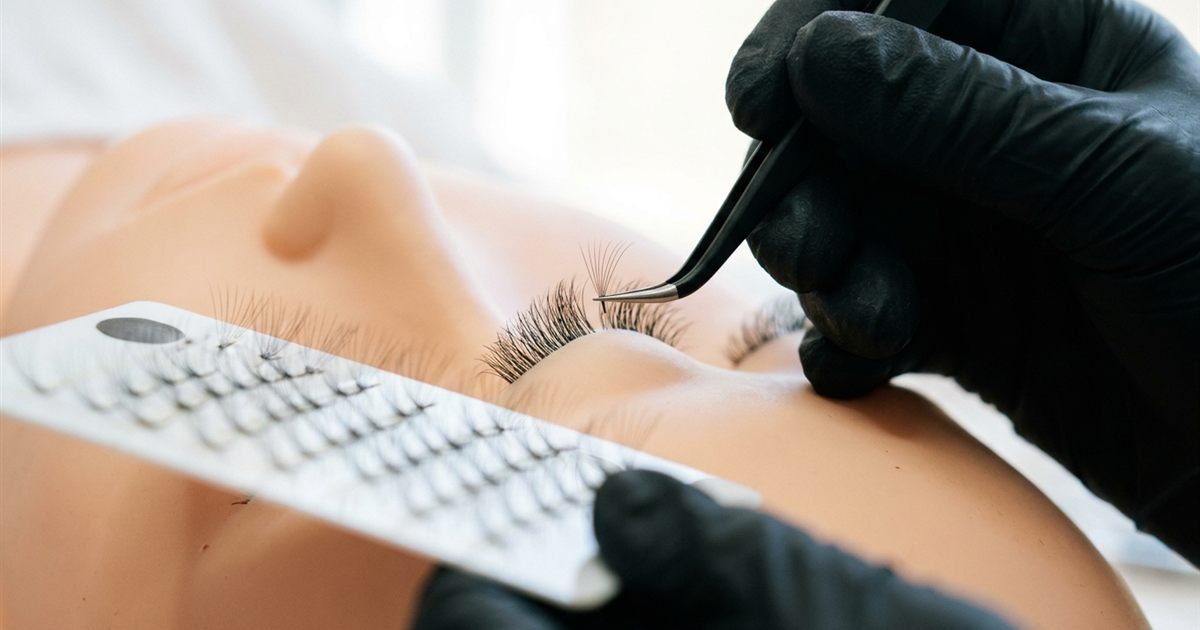
Volume lashes are the look most clients ask for: soft, fluffy, full and dramatic without looking heavy. They are also the style that intimidates most beginners, because it involves building tiny fans by hand and placing each one on a single natural lash. If you are considering a volume lash course, the natural questions are what exactly it teaches, how hard it is and whether you are ready. This guide walks through what a good course covers, the skills you will build along the way, what usually trips students up and how to prepare so you learn volume with less frustration.
Free Guide
Get Your Free Lash Extensions Starter Guide

A $17 value, yours free today. We'll send the guide straight to your inbox in the next minute.
You'll also get occasional lash tips by email. Unsubscribe anytime.
Volume lashes are not a different skill from classic. They are the same fundamentals, isolation and adhesive control, applied with more precision and a lighter touch.
What Volume Lashes Actually Are
In classic lashes, one extension is applied to one natural lash. In volume lashes, several very fine extensions are joined into a small fan, and that fan is placed on one natural lash. Because each extension is lighter, you can add more of them without putting too much weight on the natural lash, and the result looks fuller. Volume sets are often described by how many lashes go into each fan, for example 2D, 3D or more, and the number you choose depends on the health, strength and density of the client’s natural lashes.
If you are still deciding where to start, classic versus volume lashes and which to learn first explains the difference in more detail, and hybrid lash extensions explained shows how the two can be mixed.
Skill One: Isolation, Again
Every volume lesson comes back to the same skill: isolating a single natural lash cleanly. If you pick up two natural lashes with one fan, they bond together and you get stickies. This is why students who rush into volume without solid isolation struggle. A volume lash course will spend time on this before it moves on, and you will keep coming back to it. If yours feels shaky, lash isolation: the skill beginners need is a good refresher.
Skill Two: Making A Fan
Fan making is the heart of volume. You pick up a small group of extensions and form them into a fan that is open, even and light. A good fan has a narrow base that sits neatly on one natural lash and a symmetrical spread at the top. A poor fan is too tight, too wide or lopsided, and it will look messy or clump with its neighbors.
There are two ways to get fans:
- Handmade fans. You build each one during the appointment, which gives you control over size and shape but takes practice.
- Premade fans. Fans are built in advance and you place them, which is faster to start with but gives you less flexibility.
Most students learn on handmade fans because understanding how a fan is built makes you better at any method. The trade offs are covered in handmade versus premade lash fans for beginners.
Skill Three: Choosing The Right Weight, Length And Curl
Volume extensions are very fine, and choosing the wrong thickness or length can damage a fragile natural lash. A volume course teaches you how to match the extension to the natural lash so the set stays light. That includes understanding thickness, length and curl, and why the total weight on each natural lash matters. Two guides go deeper: lash curls, lengths and thickness explained and lash extension weight: a beginner’s guide.
Skill Four: Mapping And Styling
Mapping is the plan for where each length and curl goes along the lash line, and it is what makes a set look designed rather than random. In volume, mapping decides how full the set looks in the center, how the outer corner flares and how the eye shape is flattered. A course should teach you how to read a client’s eye shape and choose a style, which is the focus of lash mapping: styling for every eye shape.
Skill Five: Adhesive Control
Adhesive matters even more with fans, because a fan has a base that touches the natural lash and a little extra glue can bond it to a neighbor. You will learn how much adhesive to use, how to wipe your tweezers and how to keep your working area clean. Humidity and temperature change how adhesive cures, so humidity and lash retention in training and lash adhesive storage and shelf life are worth reading once you start. Sensitivity is another consideration, covered in lash adhesive sensitivity and patch tests.
Skill Six: Refills And Retention
A full set is only the start. Volume clients return for refills, and you need to know how to replace the extensions that have shed, remove grown out fans and rebuild fullness without overloading the natural lashes. A good course teaches refills as a core skill rather than an afterthought. See how lash refills work for new lash artists and how to fix poor lash retention for what to expect.
Skill Seven: Safety, Removal And Correction
Volume work comes with its own safety points. You will learn how to keep the lash line clean, how to avoid overloading fragile lashes and how to remove extensions safely when needed. You will also learn how to correct mistakes. Read why safe lash removal matters and how to learn lash correction for the mindset behind these lessons.
What Usually Trips Students Up
Volume is where most beginners meet their first real frustration. These are the common stumbling blocks.
- Fans that are uneven. Practice making the same fan repeatedly until it looks the same every time.
- Picking up too many or too few extensions. Small variations change the look and the weight.
- Sticking fans to neighboring lashes. This goes back to isolation and to keeping your tools clean.
- Going too fast. Speed comes after precision, not before.
- Overloading the natural lash. A dramatic set is not worth a damaged lash.
If you feel stuck, struggling in lash extension classes offers reassurance and a plan, and top beginner mistakes in eyelash training covers the most common ones.
How Long Volume Takes To Learn
Be wary of any course that promises volume mastery in a weekend. Understanding the steps takes a few lessons, but making clean, consistent fans and placing them without bonding lashes takes repeated practice. Most students go through three phases: first, fans that look uneven and take a long time; second, fans that look right but are slow to place; and third, a rhythm where fan making and placement flow together. Each phase can last longer or shorter depending on how often you practice. The honest expectation is that volume takes weeks of regular mannequin work before it feels comfortable, and longer before you can do a full set at professional speed. How long to learn lash extensions and how long a beginner full set should take give realistic timelines.
How To Know You Are Ready To Start Volume
Volume is easier when you arrive with the right foundation. You are probably ready if you can:
- Isolate a single natural lash reliably and quickly.
- Apply classic extensions without frequent stickies.
- Control adhesive so that placements stay clean.
- Keep your tweezers and workspace organized.
- Work calmly without your hands tiring quickly.
If you are unsure, how to know you are ready for volume lashes has a fuller checklist, and if you are wondering whether you have to learn it at all, can you skip volume in a lash course gives an honest answer.
How To Practice Volume Between Lessons
Skill comes from repetition, not from watching. A simple routine helps.
- Practice fan making by itself, without placing, until your fans are consistent.
- Practice placement on a mannequin, focusing on clean isolation.
- Take close up photos of your work and look for bonded lashes.
- Keep notes on the number of extensions per fan, the adhesive amount and the result.
- Rewatch the lesson on any step that feels unclear.
A week by week plan is available in how to practice lash extensions between lessons.
What Our Course Includes
The Lash Extensions Master Course covers volume as a full lesson, with a volume full set demonstrated step by step, alongside classic application, hybrid refills, lash styling, retention, adhesives, removals and health and safety. It is 31 high quality video lessons you can rewatch anytime with lifetime access, plus a 90+ page Classic, Hybrid and Volume Lash Training Manual with a homework template and a Certificate of Completion. No previous experience is needed, so you can learn the fundamentals first and build toward volume at your own pace.
Final Thoughts
A volume lash course teaches the same core skills you use everywhere in lashing, with more precision: clean isolation, well made fans, careful adhesive control, smart mapping and reliable refills. Volume feels hard at first, then it becomes natural. Build the foundation, practice steadily and choose a course that shows the complete process on video. When you are ready to compare programs, what is included in lash extension training shows what to look for.
Free Guide
Get Your Free Lash Extensions Starter Guide
A $17 value, yours free today. We'll send the guide straight to your inbox in the next minute.
You'll also get occasional lash tips by email. Unsubscribe anytime.
Frequently Asked Questions
You learn how to make or choose lightweight fans, place a fan on a single isolated natural lash, control adhesive, map a style, keep the lash line clean and do refills. A good course also covers safety, removals and client communication.
Keep Reading
Popular Lash Training Guides
- Minimum Age For Eyelash Extension Training
- Eyelash Extension Training Cost In 2026: Real Breakdown
- Lash Tech License Requirements By State
- Is It Hard To Learn Eyelash Extensions? Honest Answer
Ready to go from reading to doing? See the full Lash Extensions Master Course or browse all lash training guides.