Lash Isolation: The Skill Beginners Need
You watched the videos, you bought the tweezers, and then you sat down at the mannequin head for the first time. Suddenly every lash you grab comes with two friends attached, your hands feel like they belong to someone else, and the little voice in your head starts asking whether you are just not cut out for this. If that sounds familiar, take a breath. You are not bad at lashes. You are meeting the one skill that every single lash artist has to learn from scratch: isolation.
Free Guide
Get Your Free Lash Extensions Starter Guide

A $17 value, yours free today. We'll send the guide straight to your inbox in the next minute.
You'll also get occasional lash tips by email. Unsubscribe anytime.
Isolation means separating one single natural lash from its neighbors, so each extension bonds to one lash only. It is the skill behind every classic, hybrid and volume set, and the reason a good eyelash extension course spends so much time on it.
Here is what isolation really is, why it feels so hard at first, and how proper lash extension training turns it from your biggest frustration into muscle memory.
What Lash Isolation Actually Means
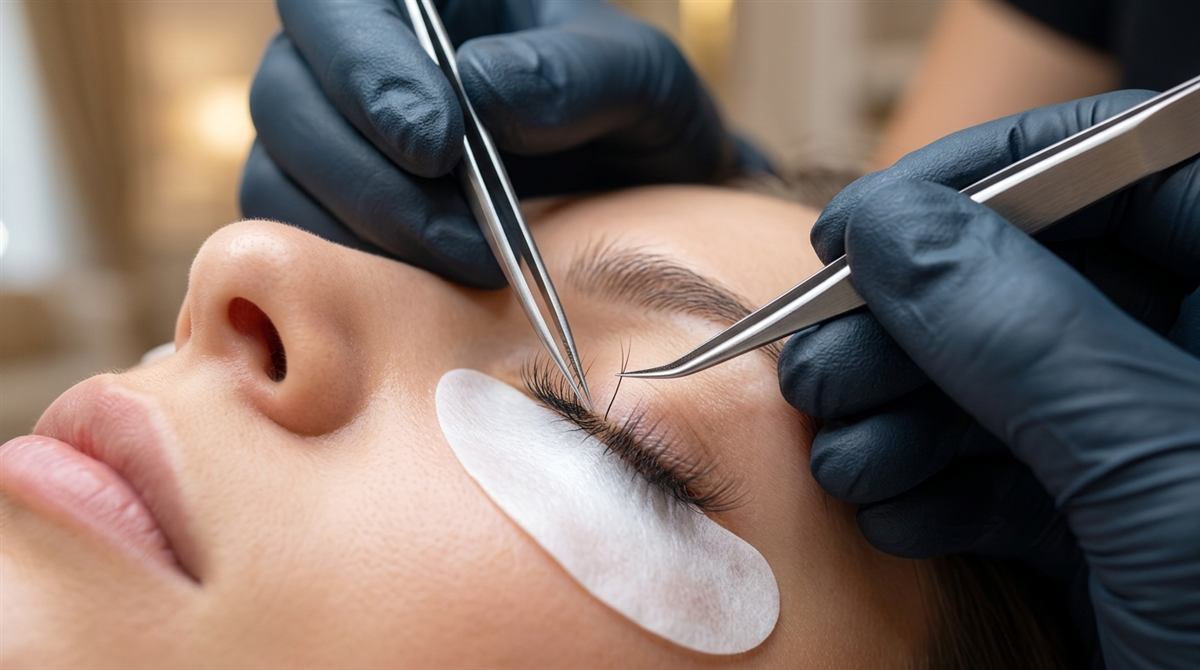
Every natural lash grows from its own follicle. Lashes sit close together, overlap, and grow in different directions and at different lengths. To apply an extension safely, you use a pair of isolation tweezers to pick out one natural lash, hold it away from the others, and keep it separated while you place the extension with your second pair of tweezers.
That one sentence hides a lot of skill. You need to find the right lash, lift it cleanly, keep the neighbors out of the way, and hold it steady while your other hand does precise work, all within a fraction of a second, all a few millimeters from a client’s open-and-closed eye.
Why Isolation Is The Skill That Makes Or Breaks A Beginner
When two natural lashes get glued together by a single extension, they no longer move independently. Every blink, every eye rub, and every wash pulls on both lashes together. That tension can be uncomfortable for the client, can weaken the natural lashes, and in the worst cases can pull lashes out early.
Poor isolation is also the hidden cause behind a lot of problems beginners blame on other things: sets that look messy, extensions that fall off in a few days, clients who report discomfort. Before you worry about adhesive brands or humidity, check your isolation first. If you are fighting retention, our guide on how to fix poor lash retention walks through the other common causes too.
Why It Feels So Hard At First
There is nothing wrong with you if isolation feels awkward. Four things make it hard for almost everyone:
- The scale is tiny. A natural lash is finer than anything you have ever handled with tweezers, and lashes in a real eye are layered, not lined up neatly.
- Your grip is new. Holding tweezers like a pen, like a chopstick, or like a surgeon does not come naturally, and the small differences change everything.
- Both hands must do different jobs. One hand isolates while the other carries the extension. Your brain has to coordinate two separate tasks at the same time.
- Rushing feels efficient but is not. New artists speed up to feel productive and end up grabbing two or three lashes together instead of one.
What Good Isolation Looks Like
You can tell clean isolation from the way a lash behaves when it is separated: it stands away from the rest, with visible space around it, and it does not drag its neighbors along when you lift it. The natural lash should be dry, clean and free of oils, because damp or oily lashes stick to each other and make separation much harder.
A few habits separate steady isolation from frustrated isolation:
- Start with clean, properly prepped lashes, so lashes do not cling together.
- Use the tip of your isolation tweezers with light pressure, not force.
- Let the tweezers do a small sweeping motion to pick out one lash, rather than grabbing at a cluster.
- Check the separated lash before you place the extension, every time, even when you are moving quickly.
- Keep your wrists and shoulders relaxed. Tension in your hands travels straight into your tweezers, and it makes shaky isolation worse. If your hands tremble, read shaky hands and eyelash extension training tips.
Tweezers, Grip And Angle: Small Details With Big Impact
Your tools matter more than most beginners expect. Isolation tweezers with a fine, straight tip make it easier to pick out single lashes, while a tweezer that is too bulky or too curved fights you. You will develop preferences over time, and our article on choosing lash tweezers during your course explains what to look for.
Grip and angle matter just as much. The angle you approach the lash from decides whether you slide cleanly under a single lash or scoop up several. Small adjustments to the angle of your wrist and the position of your tweezers can be the difference between a clean pick and a tangle. Good instruction shows you this in close-up, in slow motion, which is exactly why video lessons you can pause and rewatch are so useful for this particular skill.
A Practice Routine That Actually Builds The Skill
Isolation improves through short, repeated, deliberate practice, not through occasional long sessions. A simple routine:
- Warm up for five minutes. Just isolate lashes on the mannequin head without applying anything, focusing only on separating a single lash cleanly.
- Work in small sections. Isolate ten lashes, check each one, then move on. Speed comes later.
- Slow down on purpose. If you keep catching extra lashes, cut your speed in half until you stop.
- Review your work. Look at the lashes you separated and ask whether each one stood clearly on its own.
- Stop before your hands tire. Fatigue undoes progress. Short sessions three or four times a week beat one marathon.
For more ideas on making the most of your time between lessons, see how to practice lash extensions between lessons.
Mannequin First, Real Eyes Later
A mannequin head is not exciting, but it is the safest place to build isolation. You can pause, restart, and make mistakes with no one feeling anything. Once your isolation is clean on the mannequin, moving to a live model feels much less scary, because the real eye adds movement, blinking and layered lashes on top of a skill you already own. Understanding the natural lash structure before you start helps too; our piece on eye and lash anatomy for lash training covers it.
Common Isolation Mistakes And How To Fix Them
- Grabbing two lashes. Slow down and reduce the amount of pressure in your tweezers.
- Lashes sticking together. Make sure the lashes are clean, dry and free of oils before you start.
- Losing the lash mid-application. Re-isolate instead of trying to save a lash that has drifted.
- Tense shoulders and wrists. Adjust your chair, table and lighting so you are working comfortably.
- Skipping the check. Get in the habit of looking at every isolated lash before the extension goes on.
Quick Checklist: Building Solid Isolation
- Practice isolation alone, without any extensions, for a few minutes before each session.
- Work slowly and check every lash you separate.
- Keep lashes clean and dry so they do not cling together.
- Fix your grip and angle before you try to fix your speed.
- Practice in short, frequent sessions rather than occasional marathons.
- Move to a live model only when your mannequin isolation is consistently clean.
What Our Course Includes
The Lash Extensions Master Course is 31 video lessons across six modules, taking you from lash and eye basics through classic mannequin work, volume full sets, hybrid refills and safe removals. Every application lesson is filmed so you can watch the hand positions up close, pause on the exact moment a lash is separated, and rewatch as many times as you need. You get lifetime access, a Certificate of Completion and a 90+ page training manual with a homework template, so you always have something to practice against.
Final Thoughts
Isolation is not a talent some people are born with. It is a learned skill built from small, careful repetitions, and the people who get good at it are simply the ones who practiced it slowly and correctly. If you are still deciding how to learn, read what to expect in eyelash extension training next, or see how to choose a lash extensions course.
Free Guide
Get Your Free Lash Extensions Starter Guide
A $17 value, yours free today. We'll send the guide straight to your inbox in the next minute.
You'll also get occasional lash tips by email. Unsubscribe anytime.
Frequently Asked Questions
Lash isolation means separating one single natural lash from all of its neighbors with a pair of tweezers, so the extension bonds to that one lash only. It is the foundation of every classic, hybrid and volume set.
Keep Reading
Popular Lash Training Guides
- Minimum Age For Eyelash Extension Training
- Eyelash Extension Training Cost In 2026: Real Breakdown
- Lash Tech License Requirements By State
- Is It Hard To Learn Eyelash Extensions? Honest Answer
Ready to go from reading to doing? See the full Lash Extensions Master Course or browse all lash training guides.