Russian Volume Vs Mega Volume: Course Guide
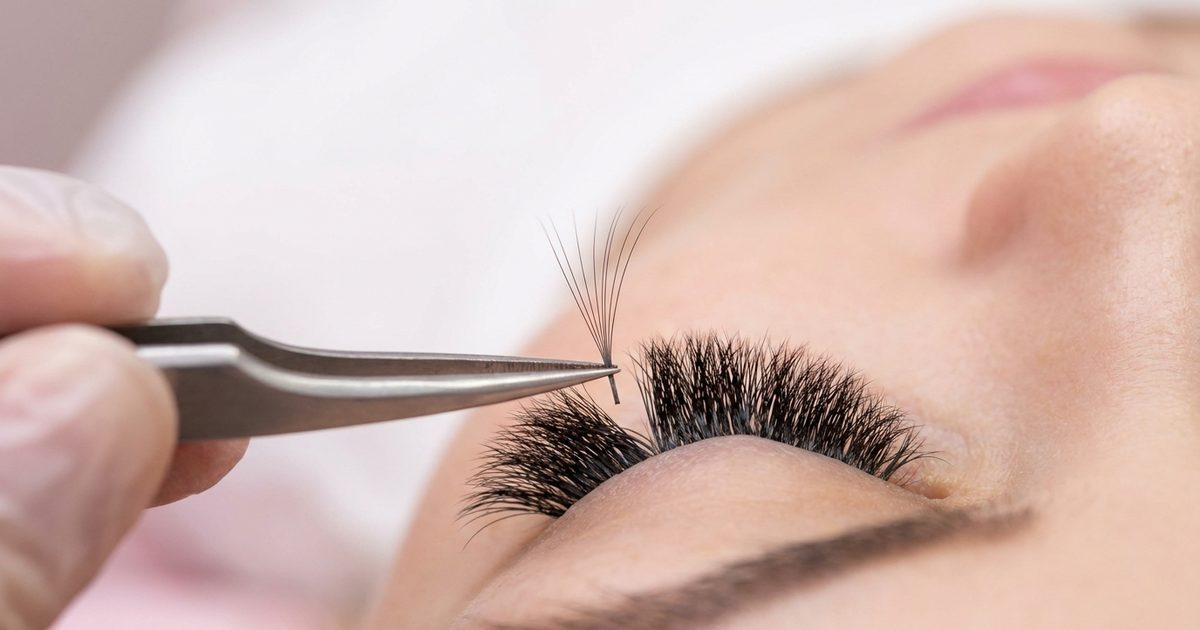
Once you get past classic and standard volume, the next question most students ask is where Russian volume ends and mega volume begins, since both terms get thrown around loosely online and even in some course marketing. Here is how a structured lash course actually separates the two, and why the distinction matters more than it sounds.
Free Guide
Get Your Free Lash Extensions Starter Guide

A $17 value, yours free today. We'll send the guide straight to your inbox in the next minute.
You'll also get occasional lash tips by email. Unsubscribe anytime.
The real difference between Russian volume and mega volume is not “more dramatic,” it is diameter and fan size, both of which change how safely a set can be worn.
What Russian Volume Actually Means In A Course
Russian volume refers to handmade fans built from multiple ultra-fine extensions, usually somewhere between 0.03mm and 0.05mm in diameter, applied one fan per natural lash to create a fuller, more textured look than classic single-extension application. A course teaches you to fan these by hand at your workstation rather than using pre-made fans, which gives you control over fan shape and density for each client.
What Mega Volume Adds On Top Of That
Mega volume pushes the diameter even thinner, often 0.02mm to 0.03mm, and builds noticeably larger fans, sometimes ten or more extensions per fan, to reach an extreme level of fullness while staying inside a safe total weight for the natural lash. It is not simply “more lashes,” it is a different, more delicate handmaking skill that most courses treat as a distinct advanced module.
Why Course Sequencing Matters Here
A properly structured course will not let you jump into mega volume before you are confident with classic isolation and standard Russian volume fan-making. Isolation, symmetry and consistent fan angle are the foundation, and mega volume simply punishes any weakness in those fundamentals faster because the fans are larger and the extensions are thinner and harder to control.
Assessing Which Technique Actually Fits A Client
Part of what a course should teach is restraint. A client with naturally sparse or already-stressed lashes is often a poor candidate for mega volume even if that is the look they request, and a well-trained lash artist knows how to recommend a lighter Russian volume set instead and explain why, rather than simply giving every client whatever they ask for.
How Pricing Should Reflect The Technique
Mega volume sets take meaningfully longer to apply by hand and require more precise fan-making, so most trained lash artists price them higher than Russian volume sets. A course that covers business and pricing alongside technique will walk you through how to set that pricing tier honestly instead of guessing.
How Retention Differs Between The Two Techniques
Because mega volume fans are built from thinner extensions, they are individually lighter, which in theory can be gentler on the natural lash despite looking more dramatic. In practice, retention depends heavily on precise fan attachment and consistent adhesive application, and a poorly built mega volume fan is more likely to slip or shed early than a well-built Russian volume fan, simply because there is less margin for error at that diameter. This is exactly why courses treat mega volume as something you earn through demonstrated consistency, not something you jump into because it photographs well.
Talking Clients Through The Difference Honestly
Many clients arrive already using the term “mega volume” loosely, having seen it used to describe almost any dramatic, full set on social media. Part of your job as a trained lash artist is gently correcting that expectation where needed, explaining what the technique actually involves, and being willing to recommend Russian volume instead when a client’s natural lashes are not a strong candidate for mega volume, even if that is not the term they walked in asking for.
Common Mistakes Students Make Between The Two
- Treating “Russian volume” and “mega volume” as interchangeable marketing terms instead of specific techniques with different diameters.
- Attempting mega volume fans before isolation and classic application are fully consistent.
- Recommending mega volume to a client with thin or damaged natural lashes because it is the trending request.
- Underpricing mega volume relative to the actual time it takes to hand-build larger, thinner fans.
Tools And Products That Change Between The Two Techniques
Beyond diameter and fan size, the adhesive, tweezers and even the tray setup you use can differ slightly between Russian volume and mega volume work. Thinner extensions dry out or tangle faster if humidity and adhesive viscosity are not dialed in correctly, so a lot of what separates a confident mega volume artist from someone still struggling is not just hand skill but also knowing how to adjust adhesive choice and application speed for the thinner product. A course that only teaches the fan-making motion without covering these product-level adjustments leaves a real gap that shows up as frustrating, inconsistent results at the bench.
How Long It Realistically Takes To Feel Confident
Most students report feeling reasonably confident with Russian volume fans within a few weeks of consistent practice after finishing the foundational classic and standard volume modules. Mega volume typically takes noticeably longer, often another significant stretch of deliberate practice beyond that, specifically because the fans are larger and the extensions thinner, which means more can go wrong in a single fan and more repetitions are needed before that consistency becomes automatic rather than effortful.
Questions To Ask Before Enrolling In Volume Training
- Does the curriculum list Russian volume and mega volume as separate lessons, or does it blur them into one module?
- Are diameters and fan sizes explained in numbers, so you know what you are actually building?
- Is there guidance on judging which clients are safe candidates for heavier sets?
- Does the course cover pricing and rebooking for these sets, not just the technique?
What Our Course Gives You Instead
The Lash Extensions Master Course sequences classic, hybrid, standard volume, Russian volume and mega volume in that deliberate order, with dedicated lessons on fan-making, diameter selection and client assessment, plus lifetime access so you can revisit the volume modules as you build confidence with each technique.
Final Thoughts
Russian volume and mega volume are related but distinct skills, separated by diameter, fan size and how much they punish weak fundamentals. Learning them in the right order, with a course that treats client safety and honest pricing as part of the technique, is what actually produces a lash artist clients trust with the most dramatic requests.
If you are still deciding whether you are ready for this stage, read Ready For Volume Lash Extension Classes? next, or check Handmade Vs Premade Fans In A Volume Lash Course to understand the fan-making foundation both techniques build on.
Free Guide
Get Your Free Lash Extensions Starter Guide
A $17 value, yours free today. We'll send the guide straight to your inbox in the next minute.
You'll also get occasional lash tips by email. Unsubscribe anytime.
Frequently Asked Questions
Not exactly. Russian volume typically refers to handmade fans built from a range of ultra-fine extension diameters, usually in the 0.03mm to 0.05mm range, applied to create fuller sets. Mega volume specifically uses the thinnest diameters, often 0.02mm to 0.03mm, and builds larger fans, sometimes 10 or more extensions per fan, to achieve extreme fullness while staying within a safe total weight for the natural lash.
Keep Reading
Popular Lash Training Guides
- Minimum Age For Eyelash Extension Training
- Eyelash Extension Training Cost In 2026: Real Breakdown
- Lash Tech License Requirements By State
- Is It Hard To Learn Eyelash Extensions? Honest Answer
Ready to go from reading to doing? See the full Lash Extensions Master Course or browse all lash training guides.