Learn Lash Correction: Fixing Bad Sets
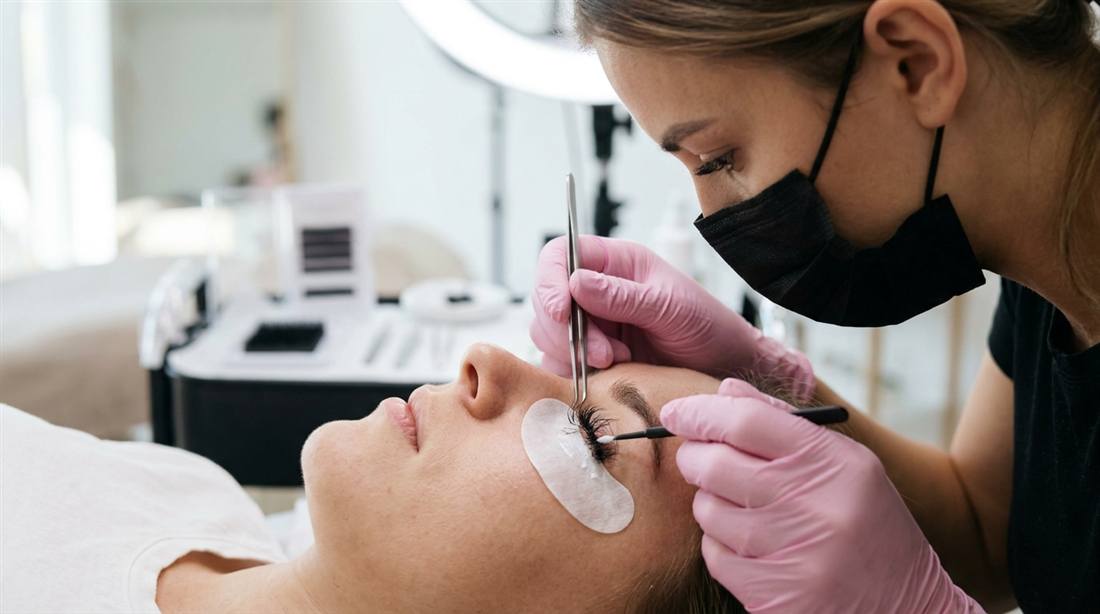
At some point, a client is going to show up with a set someone else applied badly: lumpy fans, extensions glued to more than one natural lash, or simply too much weight for their lash health to handle. Knowing how to fix that safely is a real, underserved specialty, and it’s a skill most lash courses only mention in passing.
Free Guide
Get Your Free Lash Extensions Starter Guide

A $17 value, yours free today. We'll send the guide straight to your inbox in the next minute.
You'll also get occasional lash tips by email. Unsubscribe anytime.
Correction clients are often the most loyal clients you’ll ever have, because you’re the technician who finally got it right.
Why Correction Work Barely Gets Covered In Standard Courses
Most course curriculums are built around applying a fresh, clean set on healthy natural lashes, which makes sense as a foundation. But it leaves a gap: what do you actually do when a client arrives with a previous technician’s mistakes still attached, sometimes combined with natural lash damage from that mistake? Very few programs treat this as its own module worth dedicated attention.
What A Bad Set Actually Looks Like Up Close
Common problems include extensions bonded to two or more natural lashes at once (which risks pulling out healthy lashes when they eventually shed), inconsistent fan weight causing some natural lashes to bear far more load than others, extensions applied too close to the skin, and adhesive applied so heavily it’s visible as hardened clumps at the base. Recognizing these specific issues, not just noticing “this looks bad,” is the starting point for correction work.
Assessing Before You Touch Anything
Before removing a single extension, a proper correction assessment covers the extent of multi-lash bonding, the current health of the natural lashes underneath, and whether a full removal is even the safest option that day or whether it needs to happen in stages. Rushing straight into removal without this assessment is how correction work sometimes causes more damage than the original bad set.
Why Removal Technique Has To Be Flawless Here
Correction work assumes your safe removal technique, the kind we cover in why safe lash removal matters too, is already second nature. You’re often removing extensions that were applied incorrectly in the first place, sometimes with excess adhesive or lashes bonded together, which makes clean removal genuinely harder than removing a well-applied set. This is not a skill to attempt for the first time on a real correction client.
Rebuilding Realistically, Not Immediately
Depending on how compromised the natural lashes are after removal, a full new set the same day isn’t always the responsible choice. Sometimes correction means a lighter, more conservative set than the client originally wanted, with an honest explanation of why, and a plan to build up to their desired look over a couple of appointments as their natural lashes recover.
Talking About The Previous Technician Without Badmouthing Them
Clients often ask directly what went wrong and who’s to blame. Describe the technical issues you see in neutral terms rather than criticizing the previous technician personally or professionally. This keeps the conversation focused on fixing the client’s lashes, protects you from an awkward reputation for talking badly about other technicians, and simply comes across as more professional.
Pricing Correction Work Appropriately
Correction appointments typically take longer than a standard set (assessment, careful removal, sometimes staged rebuilding) and require a higher skill level, so price them accordingly rather than treating them as a standard set with extra steps you’re not charging for. Clients seeking out a specific “fix my bad lashes” service are often willing to pay a premium for someone who clearly knows what they’re doing.
Where To Actually Learn This Skill
If your primary course doesn’t include a dedicated correction module, look for an advanced workshop or add-on training once you’ve built confidence in application and removal, something worth asking about alongside the questions in do you need an advanced lash course. Correction is exactly the kind of specialty that benefits from additional, focused training rather than trying to piece it together from general application knowledge alone.
Building A Reputation Around This Specialty
Once you’re confident in correction work, it’s worth mentioning explicitly in your marketing and booking descriptions, since clients actively search for someone who can fix a bad set rather than just apply a new one. This specialty tends to generate strong word of mouth, because a client who arrives frustrated and leaves relieved is one of the most likely people to refer you to a friend.
Setting Boundaries Around What You Will And Won’t Fix
Not every bad set is safely fixable in one visit, and some clients arrive with damage severe enough that correction has to happen in stages over several appointments, or in rare cases isn’t advisable at all until the natural lashes recover fully first. Deciding your own boundaries in advance, rather than in the moment under a frustrated client’s expectations, keeps you from being pressured into rushing a fix that isn’t actually safe yet.
Keeping A Record Of Correction Cases
Photographing the starting condition, what you found during assessment, and the finished result on correction clients builds a portfolio that’s genuinely persuasive to future clients dealing with the same problem, far more than describing the service in words alone. It also protects you professionally by documenting exactly what condition the lashes were in before you touched them, which matters more here than on a routine fresh set.
Working With Other Technicians In Your Area
Correction work sometimes puts you in an awkward position with other technicians in your local market, especially if word gets back to them that you’re fixing their clients’ sets. Handle this professionally: your job is to serve the client in front of you well, not to build a reputation on criticizing a competitor, and staying strictly factual about what you observe (as covered above) keeps this relationship from turning unnecessarily adversarial.
Common Mistakes New Correction Technicians Make
The most frequent mistake is trying to remove everything in one sitting when the natural lashes clearly can’t handle it, pushing through because the client is impatient to get a fresh set that day. A close second is skipping the neutral, technical explanation of what went wrong and instead making the client feel embarrassed about their previous choice, which does nothing for the lashes and just makes the appointment uncomfortable. Slowing down on both of these, even when a client is pushing for speed, is what separates a technician who does correction work well from one who’s just attempting it.
Final Thoughts
Correction work sits in a gap that a lot of standard lash training leaves unaddressed, which is exactly what makes it valuable to learn deliberately once your core skills are solid. It combines careful assessment, flawless removal, realistic rebuilding, and a professional way of talking about someone else’s mistakes, and it can become one of the more rewarding and well-paid specialties in your business. The Lash Extensions Master Course builds the removal and application foundation you’ll need before adding correction work on top of it.
If you want to strengthen the foundation this specialty depends on, read why safe lash removal matters too next, or revisit how to fix poor lash retention for the client-side half of this problem.
Free Guide
Get Your Free Lash Extensions Starter Guide
A $17 value, yours free today. We'll send the guide straight to your inbox in the next minute.
You'll also get occasional lash tips by email. Unsubscribe anytime.
Frequently Asked Questions
It's the process of assessing, safely removing or adjusting, and rebuilding a set that was applied poorly, whether that means uneven fans, extensions glued to multiple natural lashes, or a set that's simply too heavy for the client's natural lash health.
Keep Reading
Popular Lash Training Guides
- Minimum Age For Eyelash Extension Training
- Eyelash Extension Training Cost In 2026: Real Breakdown
- Lash Tech License Requirements By State
- Is It Hard To Learn Eyelash Extensions? Honest Answer
Ready to go from reading to doing? See the full Lash Extensions Master Course or browse all lash training guides.