Long Nails And Lash Extension Training
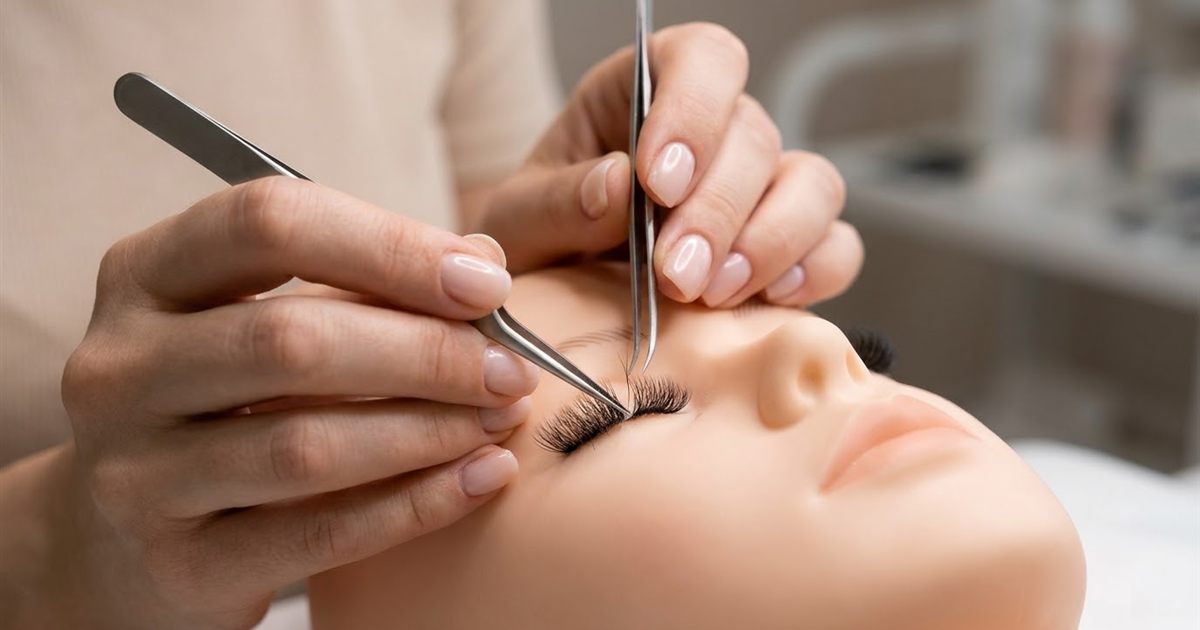
It sounds like a small question, but it comes up constantly in beginner groups: do I have to cut my nails to do lash extensions? For many aspiring artists, nails are part of their style or even their business. The honest answer is more nuanced than yes or no. Lash work is built on tiny, precise finger movements, and your nails sit exactly where those movements happen. This guide explains how nail length changes tweezer control, why it affects safety and hygiene, what many artists do about it and how to test your own setup during eyelash extension training before you decide.
Free Guide
Get Your Free Lash Extensions Starter Guide

A $17 value, yours free today. We'll send the guide straight to your inbox in the next minute.
You'll also get occasional lash tips by email. Unsubscribe anytime.
Why Nails Matter In Lash Work
Lash extension tweezers are small instruments held with the pads of your thumb, index and middle fingers. The fine control you need comes from feeling how much pressure you apply and from small movements of those fingertips. Nails extend beyond the fingertip, so they can change where the tweezers sit and how the fingers move.
There are three separate concerns, and it helps to keep them apart: control, safety and hygiene.
Control: How Long Nails Change Your Grip
When nails extend past the fingertip, the pads of your fingers are no longer the main contact point. Several things may happen:
- The tweezers rest on the nail, which is harder and less sensitive than the finger pad.
- You hold the tweezers further back, which reduces precision at the tips.
- Opening and closing feels different, because the nail changes the angle of pressure.
- Your wrist compensates, introducing tension and shake.
Some people adapt without much trouble. Others find their isolation becomes sloppy and their hands tire quickly. The only reliable way to know is to test it. Read lash tweezer grip and hand position to understand the baseline grip you are trying to reach.
Safety: Working Near The Eye
You work a few centimeters from a client’s eye, often adjusting tape, supporting the lid and moving their lashes. A long or pointed nail near that area increases the chance of an accidental scratch or poke, especially if the client moves unexpectedly.
Short, filed and smooth nails reduce that risk and also feel less intrusive on the delicate skin of the eyelid. Think about safety as a professional standard rather than a personal preference. Clients are trusting you with a sensitive area.
Hygiene: What Lives Under A Nail
Nails can trap product residue, skin cells and bacteria, and longer nails have more space for this to happen. Lash work already asks you to follow strict sanitation, and clean, short nails are easier to keep hygienic. Sanitation and hygiene standards in a lash course explains the routine, including hand washing and tool cleaning.
Artificial nails, polish and nail art add another layer of considerations, such as chipping or product contamination. If you wear them, keep them well maintained and follow the same hygiene routines.
What Many Lash Artists Do
There is no single rule, but common solutions include:
- Keep nails short and rounded on both hands, which is the simplest and most common choice.
- Keep the dominant or fine work hand short and allow a slightly longer length on the other, if it does not interfere with isolation or client safety.
- File edges smooth so nothing catches on tape, hair or skin.
- Choose nail shapes with a soft rounded edge instead of pointed or square corners.
- Schedule nail appointments around lash practice so you are not adapting mid week.
If your nails are part of your brand, remember that your lashes can be, too. Many artists find the swap worth it when their sets become cleaner and more consistent.
How To Test Your Own Setup
Do not guess; run a short experiment during your practice sessions:
- Warm up on a mannequin head with your current nails and pay attention to how your tweezers sit.
- Try isolation drills for ten minutes and note whether you can separate single lashes cleanly.
- Notice hand fatigue after thirty minutes of work.
- Trim or file and repeat the same drill to compare.
- Ask a trainer or experienced artist to watch your grip and tell you what they see.
How to practice lash extensions between lessons gives you drills you can use for that comparison.
Other Hand Related Factors
Nails are only one piece of the puzzle. If you are fighting hand tension, shaky movements or fatigue, look at the broader picture:
- Shaky hands in eyelash extension training covers causes and fixes.
- Lash training with limited hand strength offers adaptations for different needs.
- Eyelash extension training ergonomics explains posture, elbow support and breaks.
- Choosing lash tweezers shows how tool shape and weight affect comfort.
A Note For Nail Technicians
If you come from a nail background, you already have excellent fine motor skills and strong hygiene habits, which is a real advantage. The adjustment is usually practical: shorter nails when you work on lashes, and different hand positions. If you are considering the transition, switching from esthetics or nails to lash extensions explores what carries over.
Do Not Let This Delay Your Training
Nail length is a manageable detail, not a barrier. You can begin learning the theory and watching lessons right away, because most of the early work is knowledge, not hand placement. By the time you pick up tweezers, you will know how your nails behave and can decide with real information.
In the Lash Extensions Master Course, Module 3 shows Lash Application and Full Set Step By Step Application, and Module 4 includes Classic Mannequin Head practice, so you can watch exactly how hands and tweezers work together and replay each close up as often as you like.
Practical Drills To Compare Different Nail Lengths
If you want hard evidence about how your nails affect your work, set up a short, structured comparison rather than relying on a feeling. Use the same mannequin head, the same lash strips and the same tweezers each time, and change only the nail condition.
- Isolation drill, five minutes. Separate individual natural lashes and hold each for a count of three without touching neighbors. Count clean isolations versus slips.
- Pick up drill, five minutes. Pick up an extension from the strip and place it back without crushing or dropping it. Count drops.
- Placement drill, ten minutes. Place extensions along a short section and check spacing and stickiness at the end.
- Fatigue check. Note whether your fingers or wrist feel tense afterward.
Repeat the exact routine after trimming or filing, and compare the numbers. The difference, or the lack of it, tells you more than any advice from another person.
Adjustments That Sometimes Help
Before you decide to cut everything, consider small adjustments that may improve control:
- Change the angle of the tweezers slightly so the pad of the finger sits closer to the tip.
- Try a different tweezer length or shape that sits better with your hand.
- Rest the side of your hand on a stable surface to reduce the effort needed for control.
- Work with a shorter nail on the thumb and index finger, since those fingers do most of the fine pinching.
Some of these tweaks make a real difference, while others only partially help. Be willing to accept the result of your test.
Keeping Nails In Good Shape For Lash Work
If you decide to keep a shorter length, you can still keep your nails looking polished. A neat, even shape, clean cuticles and a simple finish look professional and match the clean image of a lash studio. Choose a polish or finish that is easy to maintain, and avoid anything that chips onto your tools or the client. Smooth edges and short, tidy nails are not only practical; clients often read them as a sign of care and attention to detail.
What To Tell Clients Who Ask
Clients sometimes notice your hands and ask about them, especially if your nails are shorter than the rest of your look suggests. A confident, simple answer works best: “I keep my nails short so I can handle the tools precisely and keep everything clean near your eyes.” That one sentence turns a style choice into a professional standard and reassures the client that safety comes first. Over time it becomes part of how people understand your care for the work, and it reinforces the trust you are building with every appointment.
The Bottom Line
Long nails and lash extensions can coexist for some artists, but short, smooth and clean nails give you the best control, the safest work near the eye and the easiest hygiene. Test your own hands honestly, protect your clients first and choose the length that lets you do the work well. Your skills, not your nails, are what clients will remember.
Free Guide
Get Your Free Lash Extensions Starter Guide
A $17 value, yours free today. We'll send the guide straight to your inbox in the next minute.
You'll also get occasional lash tips by email. Unsubscribe anytime.
Frequently Asked Questions
It is possible for some people, but long nails often make tweezer control, finger positioning and client safety harder. Many artists keep nails short and smooth, at least on the hand they use for fine work.
Keep Reading
Popular Lash Training Guides
- Minimum Age For Eyelash Extension Training
- Eyelash Extension Training Cost In 2026: Real Breakdown
- Lash Tech License Requirements By State
- Is It Hard To Learn Eyelash Extensions? Honest Answer
Ready to go from reading to doing? See the full Lash Extensions Master Course or browse all lash training guides.