Do You Need Good Eyesight For Lash Work?
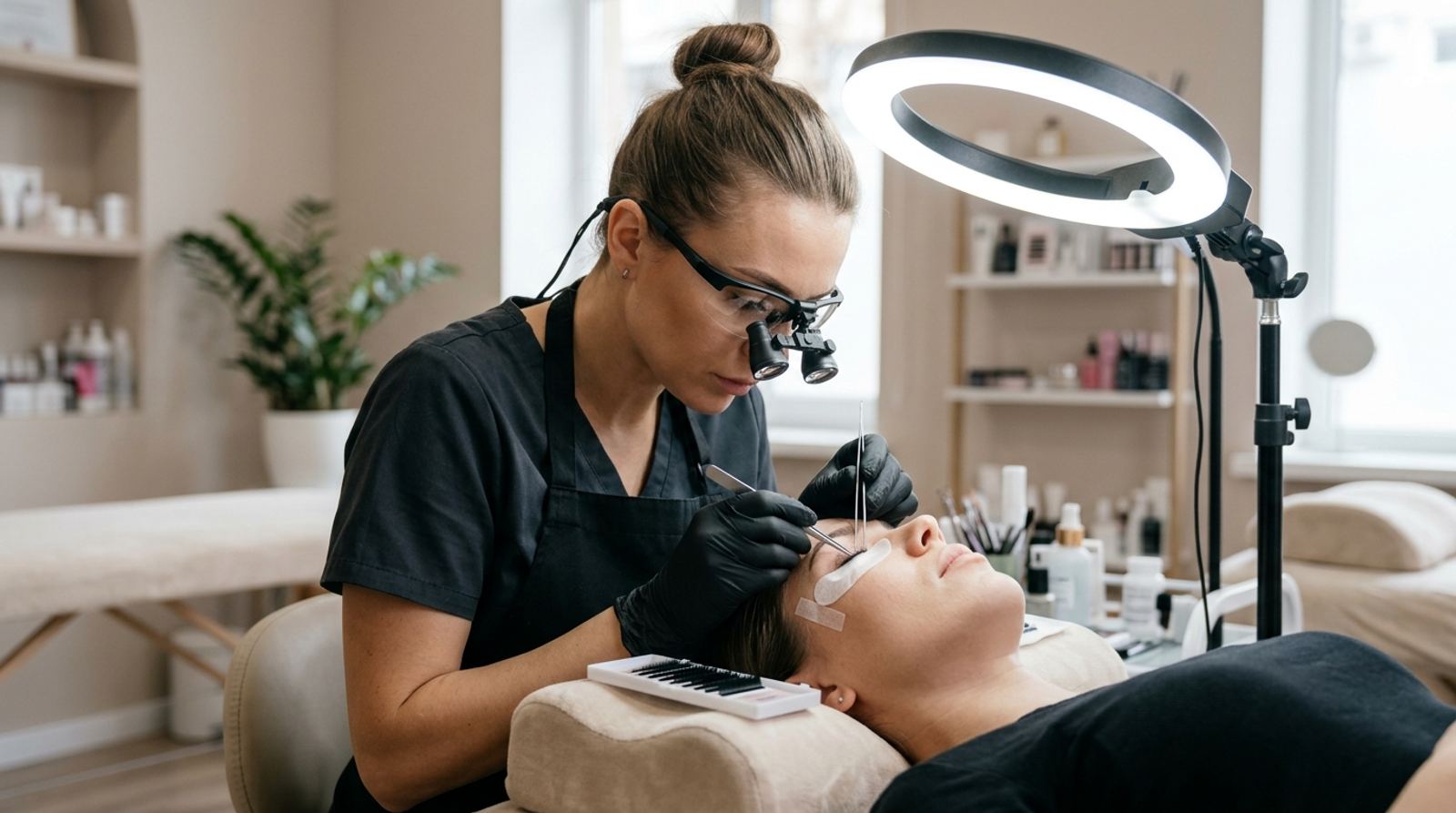
Lash extension application is genuinely precise, close-up work, and it’s a completely reasonable question to wonder whether you need naturally sharp eyesight to do it well. If you wear glasses, have astigmatism, or just aren’t confident your vision is “good enough,” here’s the honest answer: correction, lighting, and the right tools solve most of what you’re worried about, and this concern stops most people who’d otherwise do just fine.
Free Guide
Get Your Free Lash Extensions Starter Guide

A $17 value, yours free today. We'll send the guide straight to your inbox in the next minute.
You'll also get occasional lash tips by email. Unsubscribe anytime.
What The Work Actually Demands From Your Eyes
Lash isolation and application require sustained near-focus at a working distance of roughly twelve to eighteen inches, held steadily for extended periods, with enough visual acuity to distinguish individual lashes and see fine adhesive placement clearly. That’s a specific, learnable demand, not a vague requirement for “perfect eyesight,” and it’s a demand that corrected vision, whether that correction is glasses, contacts, or naturally strong eyesight, generally meets without issue.
Wearing Glasses While You Work Is Completely Normal
A significant number of working lash artists wear glasses throughout every appointment, and it’s simply part of their setup, not a workaround they’re managing around. The main practical consideration is finding glasses that don’t slide down or fog during a multi-hour session, and some artists prefer contacts for exactly that reason, but neither option is a barrier to doing precise, high-quality lash work.
Astigmatism And Other Common Vision Issues
Astigmatism, nearsightedness, farsightedness, none of these are disqualifying for lash training once they’re properly corrected. The practical takeaway is less about the specific vision issue and more about making sure your correction is current and accurate, since an outdated prescription affects fine close-up work more noticeably than it affects everyday tasks like reading a phone screen or driving.
The question isn’t whether you have perfect natural eyesight, it’s whether your correction, if you need one, is current and actually dialed in for close-up work. That’s a much more fixable problem than “bad eyesight” sounds like.
Why Magnification Tools Matter More Than Natural Eyesight
Magnifying lamps and loupes are standard tools in professional lash work, and artists with excellent natural vision use them just as often as artists who wear a strong prescription. The precision required for clean isolation benefits from magnification regardless of your baseline eyesight, which means the playing field is far more level than it feels like before you’ve tried working under proper magnification and lighting for the first time.
Lighting Matters As Much As Your Vision Does
A huge amount of what people attribute to “not having good enough eyesight” is actually a lighting problem. Poor, dim, or harshly angled lighting makes fine isolation work genuinely harder for anyone, regardless of how sharp their vision is. Investing in a proper adjustable lash lamp early in your training solves more of the precision struggle than most new students expect, often more than any change to their own vision would.
Should You See An Eye Doctor Before Starting?
If it’s been a while since your last eye exam, or you’ve noticed any recent blurriness or eye strain during close-up tasks, getting checked before you start intensive lash practice is a reasonable, inexpensive step. It’s not a requirement, but confirming your correction is accurate before you spend hours a week on fine precision work removes one variable that could otherwise slow your progress and make training more frustrating than it needs to be.
Building Visual Endurance Over Time
Even with perfect correction, sustained close-up focus is a skill your eyes build stamina for over repeated practice, similar to how your hands build endurance for the fine motor movements involved. Early practice sessions often cause more eye fatigue than sessions several weeks in, once your eyes have adapted to sustained near-focus work. Shorter, more frequent practice sessions early on help build that endurance without pushing through genuine strain.
Taking Breaks To Protect Your Eyes Long Term
Regardless of your starting vision, taking short breaks during longer practice sessions, looking at something distant for twenty or thirty seconds every so often, reduces eye strain and protects your long-term comfort doing this work. This matters for every lash artist, not just students worried about weaker eyesight, and building the habit early sets you up better for the long, full appointment days ahead once you’re working with clients.
Adjusting As Your Eyes Change Over Time
Vision naturally shifts with age for most people, and an experienced lash artist simply adjusts their glasses prescription, lighting setup, or magnification tools as that happens, the same way any professional doing close-up precision work does over a long career. A gradual vision change is something to adapt to, not a signal that your lashing career has an expiration date attached to it.
Setting Up A Workspace That Works With Your Vision
Beyond a good lamp, small adjustments to your entire practice setup can make a real difference: an adjustable chair and table height that lets you find your ideal working distance without hunching, a matte rather than glossy work surface to reduce glare, and a clutter-free immediate work area so your eyes aren’t constantly refocusing between your tray and your client’s eye area. These are small, one-time setup decisions that pay off in reduced eye strain across every single appointment you do afterward, not just during training.
Why Some Students Worry About This More Than They Need To
A lot of the anxiety around eyesight and lash training comes from imagining the work as requiring some rare, exceptional visual ability, the kind of precision people associate with surgeons or watchmakers. In reality, the visual demand is specific and learnable, closer to threading a needle than performing microsurgery, and it responds well to correction, lighting, and repeated practice the same way any other close-up manual skill does. Reframing the worry from “do I have special enough vision” to “do I have my correction and setup dialed in” tends to resolve most of the anxiety on its own.
Comparing Your Experience To Other Detail-Oriented Hobbies
If you’ve ever done needlework, detailed painting, jewelry making, or any other hobby requiring sustained close-up focus, you already have a useful reference point for how your eyes handle this kind of work, correction and all. Most students who’ve done any prior detail-oriented hobby report that lash training’s visual demands felt familiar rather than like an entirely new challenge, which is worth remembering if you’re comparing yourself to an imagined standard rather than your own actual, relevant experience.
Talking To Your Optometrist About Occupational Needs Specifically
If you do see an eye doctor before starting, it’s worth mentioning specifically that you’re planning close-up precision work for extended periods, rather than just describing general vision concerns. Some optometrists can recommend a slightly different prescription optimized for a fixed close working distance, distinct from your everyday glasses, which some working lash artists find noticeably more comfortable for full appointment days than their regular daily-wear prescription.
Learning From Working Artists Who Wear Glasses
If you know or can find a working lash artist who wears glasses or manages a vision correction of their own, ask them directly what setup works for them, frame style, lens coating to reduce glare under a lash lamp, or whether they switched to contacts specifically for lash work. A concrete, real-world example from someone doing this successfully every day tends to resolve lingering doubts far more effectively than general reassurance, since it shows you a specific, working solution rather than just telling you one exists somewhere.
Why This Worry Rarely Survives Actual Practice
Most students who arrive worried about their eyesight report that the concern faded within their first few real practice sessions on a mannequin head, once they experienced firsthand how much a good lamp and the right working distance actually compensate for. The gap between the imagined difficulty and the actual experience tends to be the biggest surprise for anxious beginners, and it’s worth remembering that this specific worry resolves itself through direct experience far more reliably than through more research or reassurance alone.
What Our Course Includes
The Lash Extensions Master Course is self-paced with lifetime access, covering all 31 video lessons in classic, hybrid and volume application, plus consultation, retention and business training, for a one-time $97 payment, with plenty of demonstration footage showing proper lighting and working distance you can model your own setup on.
Final Thoughts
Needing glasses, having astigmatism, or simply not feeling confident about your eyesight isn’t a real barrier to becoming a skilled lash artist. Correction, proper lighting, and magnification tools handle far more of the precision demand than natural eyesight alone ever would, and most students who worry about this find it’s a non-issue within their first several practice sessions. If physical comfort during long sessions is also on your mind, ergonomics in eyelash extension training covers how to protect your body the same way this covers protecting your eyes, and eye and lash anatomy 101 for lash training is a solid next read for understanding exactly what you’re working with up close.
Free Guide
Get Your Free Lash Extensions Starter Guide
A $17 value, yours free today. We'll send the guide straight to your inbox in the next minute.
You'll also get occasional lash tips by email. Unsubscribe anytime.
Frequently Asked Questions
Yes, plenty of working lash artists wear glasses or contacts daily with no issue. The main adjustment is finding a comfortable working distance and lighting setup that works with your specific correction, which most students figure out within their first several practice sessions.
Keep Reading
Popular Lash Training Guides
- Minimum Age For Eyelash Extension Training
- Eyelash Extension Training Cost In 2026: Real Breakdown
- Lash Tech License Requirements By State
- Is It Hard To Learn Eyelash Extensions? Honest Answer
Ready to go from reading to doing? See the full Lash Extensions Master Course or browse all lash training guides.