Lash Training With Limited Hand Strength
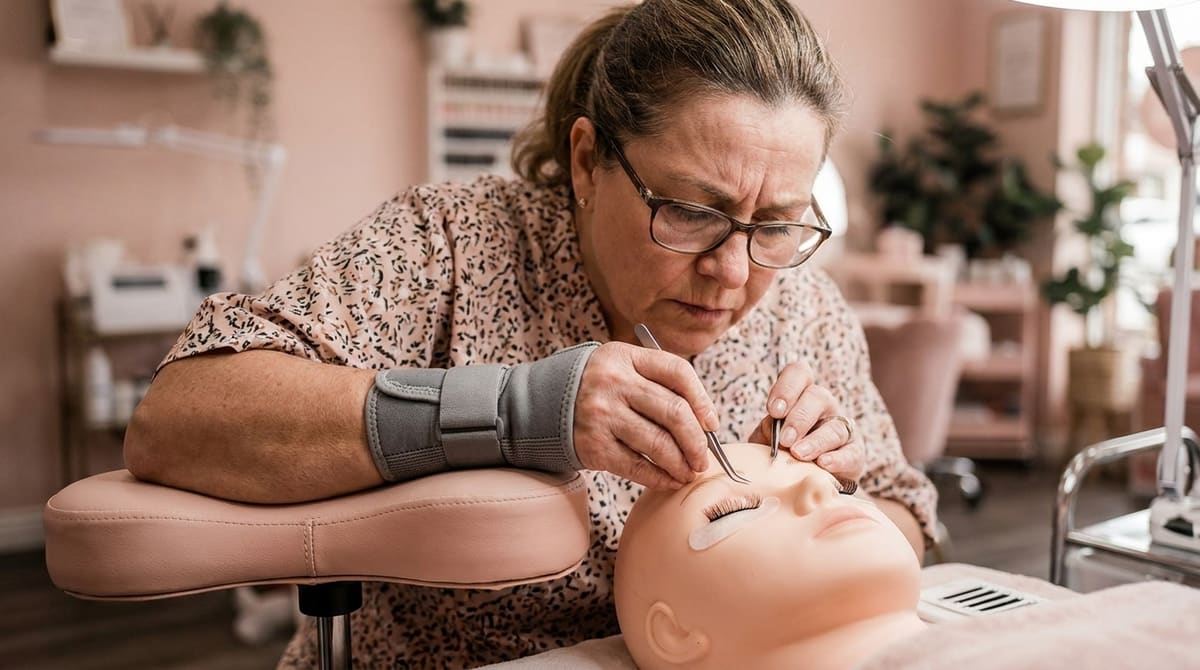
If you have ever hesitated over the “enroll now” button on a lash extensions course because of a hand tremor, arthritis, or hands that just do not feel as steady as they used to, you are not the only one asking this question, and you are also not getting a straight answer from most course sales pages.
Lash application is fine motor work, there is no getting around that. But “fine motor work” is not the same thing as “impossible with anything less than perfectly steady hands,” and the real answer sits somewhere more useful than either extreme.
Free Guide
Get Your Free Lash Extensions Starter Guide

A $17 value, yours free today. We'll send the guide straight to your inbox in the next minute.
You'll also get occasional lash tips by email. Unsubscribe anytime.
Limited hand strength or a mild tremor does not automatically rule out a lash career, but it does mean testing your own capability honestly, early, with real practice, rather than guessing from the sidelines.
Why This Question Gets Avoided In Course Marketing
Almost no course sales page addresses hand tremors, arthritis, or reduced grip strength directly, and it is easy to understand why: it is a narrow audience question in a marketing context built to reach as many potential students as possible. But that silence leaves a real group of people with a genuine, reasonable question and no honest information to work from, just marketing copy that assumes everyone starts from the same physical baseline. The lack of an answer is not the same as a “no,” it just means nobody selling the course wants to be the one to bring it up.
What Actually Makes Lash Application Physically Demanding
The core demand is holding two tweezers with precise, sustained control at close range for extended periods, isolating a single natural lash without touching its neighbors, and doing this hundreds of times per appointment. Fatigue and micro-shake build up over a session for almost everyone, tremor or not, which is part of why proper wrist and arm support, not just raw hand steadiness, matters so much in professional technique. A course that teaches good ergonomic support (resting your working hand against a stable surface or your other hand, rather than holding it entirely unsupported in the air) is already reducing the fine motor demand for every student, tremor or not.
Where Adjustments Genuinely Help
For a mild tremor, added stabilization techniques (bracing the working hand against the non-working hand, using a headrest and proper client positioning to minimize the distance and angle your hand has to hold steady) can meaningfully reduce the practical demand compared to holding a completely unsupported hand near a client’s eye. Tool choice matters too: wider, more ergonomic tweezer handles can reduce the fine grip strength required compared to very thin, precision-style handles built for someone who already has excellent baseline control. None of this eliminates a genuine, more significant tremor, but for many people in the milder range, these adjustments close a real part of the gap.
Real Scenario
A prospective student with a mild essential tremor, diagnosed years earlier, almost did not enroll in an eyelash extension course after reading through technique descriptions that assumed steady hands as a given. She reached out to the course support team directly, got specific advice about wrist bracing and a wider tweezer grip, and used her practice period to test her real capability before booking any paying clients. Her tremor did require more practice repetitions than average before her hand felt reliably steady during isolation, but it did not stop her from becoming a working lash technician.
Where Honesty With Yourself Matters More Than Optimism
The least helpful approach here is either extreme: assuming a hand condition makes lash work impossible without trying, or ignoring the question entirely and hoping it resolves itself once you start practicing. The useful middle ground is testing your actual capability early and honestly, using low-stakes practice (mannequin heads, then patient, informed practice models) before you ever book a real paying client, and being willing to accept if the answer is that your specific condition makes consistent, safe isolation genuinely unreliable. That is a harder conversation to have with yourself than either extreme, but it is the one that actually protects both you and any future client.
Pacing Your Practice Differently Than The Course Timeline Suggests
Most course timelines are built around an average learning curve, and if a hand condition means your isolation and control take longer to become reliable, the honest move is adjusting your own pace rather than measuring yourself against a generic schedule that was never built with your specific starting point in mind. This might mean spending noticeably more hours on mannequin practice before moving to real models, or breaking practice sessions into shorter blocks with more rest between them if fatigue or shake worsens the longer your hand stays in one position. None of this means you are behind or failing the course, it means you are calibrating the plan to your actual body instead of an assumed average one.
When The Honest Answer Is A Different Role In The Industry
For a smaller number of people, a more significant tremor or very limited grip strength may genuinely make consistent, safe isolation unreliable no matter how much stabilization and practice is applied, and a good course, or a good mentor, should be willing to have that honest conversation rather than encouraging every student forward regardless of real safety concerns. This does not have to mean leaving the lash industry entirely. Some technicians with hand limitations that make hands-on application unreliable move toward roles like sales, client consultation, course instruction, or managing a lash studio, where deep product and process knowledge matters more than sustained fine motor precision. Recognizing this possibility early, rather than after a string of difficult client appointments, is a kindness to your future self either way.
What To Ask A Course Before You Enroll
If a hand condition is a real factor for you, ask the course directly (most have some form of student support or community, even for a self-paced program) whether they have worked with students with similar conditions before, and whether any live coaching or feedback options exist, since a course offering real instructor feedback can catch specific gaps you cannot see on your own. This is worth pairing with a broader look at what a good eyelash extension training should teach about hand and body ergonomics in general, since good ergonomic habits benefit every student, condition or not.
It is also reasonable to ask whether a course offers any flexibility on pacing or extended access if you anticipate needing more practice time than the average student, rather than assuming a fixed timeline applies equally regardless of your starting point. A self-paced format with genuine lifetime access removes the pressure of an artificial deadline, letting you build reliable control at whatever speed your own hands actually need, instead of rushing toward client-ready status on someone else’s schedule. Courses built around fixed weekly cohorts or a strict completion window can quietly pressure a student to move on before they are genuinely ready, which matters more, not less, when a hand condition means your own honest timeline may look different from average. There is no shame in taking longer to reach the same reliable result, and a course that respects that pacing is doing you a genuine favor compared to one that quietly assumes everyone starts and finishes at the same speed.
Free Guide
Get Your Free Lash Extensions Starter Guide
A $17 value, yours free today. We'll send the guide straight to your inbox in the next minute.
You'll also get occasional lash tips by email. Unsubscribe anytime.
Frequently Asked Questions
Often yes, especially with adjustments like wrist or arm support, tools sized to reduce strain, and extra practice hours on stabilization, though the honest answer depends on the severity and type of tremor.
Keep Reading
Popular Lash Training Guides
- Minimum Age For Eyelash Extension Training
- Eyelash Extension Training Cost In 2026: Real Breakdown
- Lash Tech License Requirements By State
- Is It Hard To Learn Eyelash Extensions? Honest Answer
Ready to go from reading to doing? See the full Lash Extensions Master Course or browse all lash training guides.