Lash Stickies: Why They Happen And Fixes
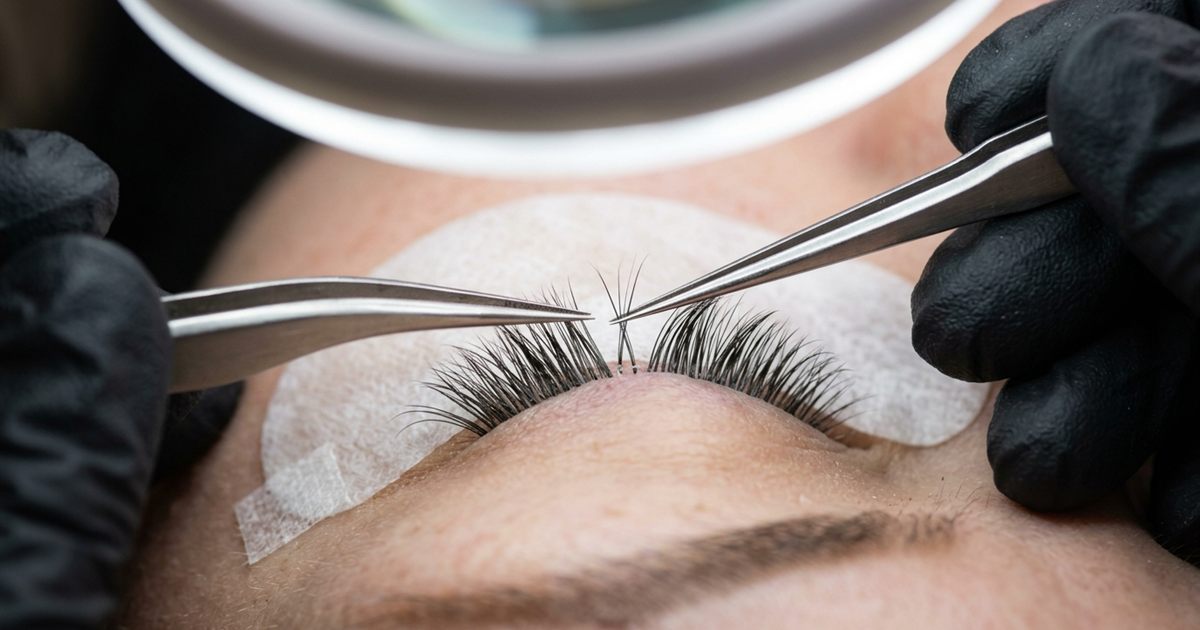
You are halfway through a set and everything looks great, until you notice that two lashes are stuck together. You separate them, and then you find another pair. By the end of the appointment you have spent more time rescuing stuck lashes than placing new ones. Almost every lash artist goes through this stage, and the name for it is stickies. Stickies are one of the most frustrating problems for beginners because they slow you down, frustrate your clients and can leave a set looking messy. The good news is that they have clear causes, and once you understand them, they become much easier to prevent. This guide explains what stickies are, why they happen, how to fix them and what a good eyelash extension course does to help you avoid them.
Free Guide
Get Your Free Lash Extensions Starter Guide

A $17 value, yours free today. We'll send the guide straight to your inbox in the next minute.
You'll also get occasional lash tips by email. Unsubscribe anytime.
Stickies are not a sign that you are bad at lashes. They are a sign that one part of your process, usually isolation or adhesive control, needs more practice.
What Lash Stickies Actually Are
A sticky happens when an extension bonds to a lash it was not meant to touch. That can be a neighboring natural lash, another extension or even a lash from the lower line. The bond is often created by a tiny amount of adhesive that spreads or by lashes that were not fully separated before placement.
You may also hear the word clumping, which describes lashes bunching together in a group. Stickies and clumps are two sides of the same problem. If you want to see how these words fit into the wider vocabulary, look at lash terms you will learn in a lash course.
Why Stickies Are Such A Big Deal
It might seem like a small cosmetic issue, but stickies have real consequences.
- They look messy. Clean, separated lashes are the mark of professional work.
- They stress natural lashes. Bonded lashes can pull on each other when one sheds, which can be uncomfortable and unhealthy for the lash.
- They hurt retention. Extensions that are bonded incorrectly tend to fall out faster or take natural lashes with them.
- They cost time. Fixing stickies eats up the appointment and delays the rest of the set.
- They upset clients. A client who sees bunched lashes is likely to question your skill.
Understanding these consequences is a good reason to focus on prevention rather than repair.
The Main Causes Of Stickies
Nearly every case of stickies traces back to a handful of causes.
- Poor isolation. If you pick up more than one natural lash, the extension bonds to both. This is the single most common cause, and it is why lash isolation is the skill beginners need to master first.
- Too much adhesive. A large drop spreads along the extension and touches neighboring lashes. Adhesive control matters as much as isolation.
- Lashes that are not separated before you start. Natural lashes that cross or overlap are easy to bond by accident. Careful preparation, as in lash prep before extensions, helps you start with lashes that are combed and separated.
- Dirty or sticky tweezers. Dried adhesive on your tools collects lashes and creates bonds you did not intend.
- Fans that are too wide or badly made. In volume work, a fan that is too open or uneven can touch its neighbors.
- Placing too close to the skin or another extension. Poor placement makes lashes cross paths.
- Wet or oily lashes. If lashes are not clean and dry, adhesive behaves unpredictably.
- Rushing. Speed before accuracy almost always produces stickies.
If you notice that your problems are worse in humid conditions, humidity, climate and lash retention explains how the environment changes how adhesive cures.
How To Fix Stickies During The Appointment
The best time to deal with a sticky is right when it happens. Once the adhesive has fully cured, it is harder to separate.
- Stop and look. Do not keep working around a problem. Check under magnification.
- Use clean tweezers or a fine tool to gently separate the lashes, working slowly without pulling on the natural lash.
- If the bond will not release, remove the extension using your training’s safe method rather than forcing it. Read why safe lash removal matters.
- Replace the extension cleanly once the lashes are isolated.
- Clean your tweezers if adhesive has built up on the tips.
Never tug hard on stuck lashes. It is better to spend a minute removing an extension carefully than to pull out a natural lash and cause damage. For bigger problems, the ideas in how to learn lash correction show how to repair a messy set.
How To Prevent Stickies Before They Happen
Prevention is much more efficient than repair. Build these habits into every set.
- Isolate first, place second. Do not bring an extension toward the lash until you can clearly see that only one natural lash is held.
- Use a small amount of adhesive. Dip lightly and wipe off any excess.
- Keep your tweezers clean. Wipe them regularly during the set.
- Work in small sections. A small area is easier to keep under control.
- Check as you go. Look at the lashes every few placements, not only at the end.
- Slow down. Precision first, speed later.
- Keep your posture steady. Steady hands come from a good setup, and ergonomics in eyelash extension training can help.
If shaky hands make it hard to hold a lash steady, shaky hands and lash extension training tips gives useful exercises.
Stickies In Volume Sets
Volume work adds another layer. Instead of one extension on one lash, you place a fan of several fine extensions, and a fan that is not built well can be a source of stickies all by itself. A fan that is too open may reach into the next lash, and one that is uneven can bond at the base or the tips.
- Make fans that are neat and consistent before you place them.
- Keep the base of the fan narrow and controlled.
- Check that the fan sits on one natural lash only.
- Do not overload a fine natural lash with too many extensions.
Whether to make fans by hand or buy premade ones affects how consistent they are, a topic explained in handmade versus premade fans. And before you start volume, make sure your foundation is strong by reading how to know you are ready for volume lashes.
What To Tell A Client Who Notices
If a client points out a sticky, or you find one after she leaves, be honest and calm. You do not need to make excuses.
- Acknowledge it. “Thanks for telling me. Let me fix that.”
- Correct it promptly at her next visit or as a quick touch up, following your studio policy.
- Explain aftercare so she does not pull on the lashes or try to separate them herself. See lash aftercare rules every client needs.
Handling this gracefully builds trust. For the broader picture of managing client experience, clients with unrealistic lash expectations is a helpful read.
How To Practice Reducing Stickies
You can train yourself to produce fewer stickies with deliberate practice on a mannequin.
- Practice isolation alone until you can hold a single lash reliably.
- Count your stickies at the end of each session, so you can see progress.
- Take close up photos of your work and look for bonded lashes you missed.
- Slow down on purpose. Aim for a clean result rather than a quick one.
- Record what happened, including the adhesive amount and how the lashes were separated.
A steady routine like the one in how to practice lash extensions between lessons will make this progress visible. Many students also find it useful to watch a trainer’s work in detail, and how an online course checks your technique explains how feedback speeds that process.
Common Mistakes When Dealing With Stickies
- Pulling stuck lashes apart forcefully. This can damage the natural lash.
- Ignoring them and hoping they will not matter. They do.
- Blaming the adhesive alone. Isolation and technique are usually the bigger factors.
- Skipping the final check. Always review the whole set before the client leaves.
- Rushing to make up time. Hurrying produces more stickies.
For a broader list, see top beginner mistakes in eyelash extension training.
What Our Course Includes
The Lash Extensions Master Course shows the whole process with 31 high quality video lessons on lash application, full set step by step, volume, hybrid refills, retention and adhesives, so you can see clean isolation and adhesive control in real time. It also includes a 90+ page Classic, Hybrid and Volume Lash Training Manual with a homework template, lifetime access and a Certificate of Completion, so you can rewatch the techniques as many times as you need while you practice.
Final Thoughts
Stickies are a normal part of learning, but they do not have to be a permanent one. Clean isolation, careful adhesive control, tidy tools and a slower pace will remove most of them, and the rest can be fixed calmly when they appear. Treat each sticky as information about what to practice next. If you are still comparing options for learning, read how to choose a lash extensions course and pick one that teaches these fundamentals clearly.
Free Guide
Get Your Free Lash Extensions Starter Guide
A $17 value, yours free today. We'll send the guide straight to your inbox in the next minute.
You'll also get occasional lash tips by email. Unsubscribe anytime.
Frequently Asked Questions
Stickies are extensions or natural lashes that have accidentally bonded to each other or to a neighboring lash. They usually happen when isolation is not clean or when adhesive spreads where it should not.
Keep Reading
Popular Lash Training Guides
- Minimum Age For Eyelash Extension Training
- Eyelash Extension Training Cost In 2026: Real Breakdown
- Lash Tech License Requirements By State
- Is It Hard To Learn Eyelash Extensions? Honest Answer
Ready to go from reading to doing? See the full Lash Extensions Master Course or browse all lash training guides.