How An Online Course Checks Your Technique
If you’re considering an online lash course, a fair question comes up fast: without anyone standing over your shoulder watching you isolate and apply, how does the course actually know if you’re doing it right? Here’s how well-designed online programs solve this, and what to watch for in ones that don’t.
Free Guide
Get Your Free Lash Extensions Starter Guide

A $17 value, yours free today. We'll send the guide straight to your inbox in the next minute.
You'll also get occasional lash tips by email. Unsubscribe anytime.
Watching a video teaches you what correct technique looks like. It doesn’t tell you whether your own hands are doing it. Those require different tools.
The Real Concern Behind This Question
This isn’t really about whether online learning works, it clearly can. The real concern is feedback: in a live, in-person class, an instructor corrects your grip or your angle in real time. Online, that correction has to happen some other way, or it doesn’t happen at all, and you keep practicing a mistake without knowing it’s a mistake.
Method One: Photo And Video Submission
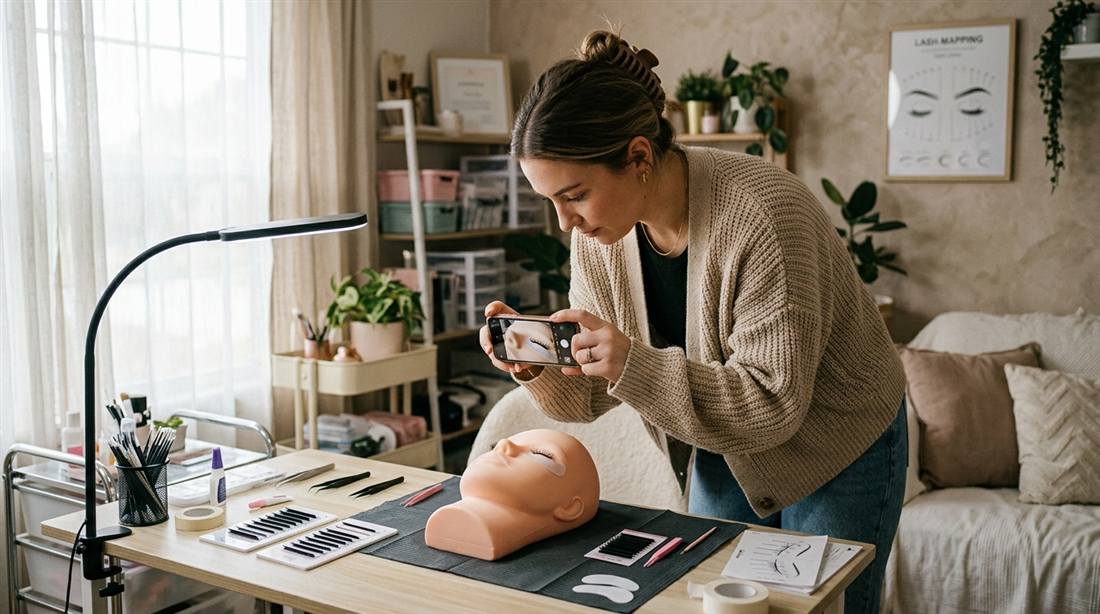
The most common solution is having students submit photos or short videos of their practice work, either on a mannequin head or, later, on models, for instructor or structured community review. This closes most of the gap between live and online learning, since someone with more experience is still looking at your actual output, just not in the same room at the same time.
Method Two: Detailed Self-Assessment Checklists
Some programs pair each technique lesson with a specific checklist of what correct application should look like (fan symmetry, isolation cleanliness, adhesive amount, placement distance from the skin) so you can compare your own work against defined criteria rather than a vague sense of “does this look okay.” This won’t catch everything an experienced eye would, but it’s far better than no structured self-check at all.
Method Three: Structured Practice Progression
Rather than jumping straight to full sets, a well-built course sequences practice assignments: isolation drills first, then single extension placement, then small sections, then full classic sets, each with defined success criteria before moving to the next stage. This progression itself is a form of quality control, since you’re not allowed to practice bad habits at full speed before the fundamentals are solid.
What This Looks Like When It’s Missing
A course that’s purely “watch these videos in order” with no submission option, no checklist, and no structured practice sequence is teaching you concepts without a way to verify you’ve actually absorbed them correctly. That’s not automatically worthless, some highly self-directed students do fine with concepts alone plus their own diligent practice, but it’s a meaningfully higher-risk path than a course with built-in feedback.
Questions To Ask Before You Enroll
If feedback matters to you (and for a hands-on skill like this, it should), ask specifically: can I submit practice photos or video, who reviews them and how quickly, and what does the feedback actually consist of. A course that answers this clearly and specifically is a good sign; one that gives a vague “our community is very supportive” without describing an actual mechanism is worth a follow-up question, something to add to your list from questions to ask before lash training.
Video Quality Matters More Than People Expect Here
If your course does rely on you comparing your work to demonstration footage, the quality and camera angles of that footage genuinely affect how well you can learn from it, a point we cover in more depth in does video quality matter in a course. Blurry or poorly angled demonstration video makes self-comparison much harder, compounding the feedback gap rather than solving it.
Practicing On A Mannequin Before Any Feedback Loop Matters
Whatever feedback method a course uses, it works best once you already have some baseline reps in on a mannequin head, so your submitted work reflects a genuine attempt rather than your very first try at holding the tweezers. Treat mannequin practice as the stage where you build raw hand familiarity, and the feedback loop as the stage where you refine it.
Combining Online Learning With An In-Person Supplement
Some students choose to complete an online course’s video curriculum, then attend a single in-person workshop or practice session with an experienced technician specifically to get live, real-time feedback on their hands before taking on paying clients. This hybrid approach isn’t necessary for everyone, but it’s a reasonable option if you’re feeling uncertain purely from online feedback alone.
What Good Feedback Actually Sounds Like
Vague feedback like “looks good!” on a submitted photo doesn’t tell you anything actionable. Useful feedback names the specific thing to adjust: fan base too wide, adhesive dot too large, isolation not clean on the second and third natural lash from the inner corner. If a course’s feedback tends to be generic encouragement rather than specific correction, you’re not getting much more than you’d get from watching a video alone, even though it feels like personal attention.
How Long Should Feedback Take To Come Back
A reasonable turnaround for submitted practice work is a few days, not weeks. If you’re waiting a long time between submitting your work and getting a response, you’re likely to keep practicing whatever habit you had at submission time in the meantime, which defeats much of the purpose of asking for feedback in the first place. Ask about typical response time before enrolling if this matters to your learning pace.
Self-Recorded Video Is A Tool You Can Use Even Without A Formal Submission System
Even if a course doesn’t have a formal submission process, you can still record your own practice sessions and review them yourself, comparing your hand position, angle and pacing against the course’s demonstration footage. This isn’t a full substitute for outside feedback, but it catches a surprising number of habits you wouldn’t notice in the moment while you’re focused on the lashes themselves rather than your own form.
Community Feedback Versus Instructor Feedback
Some courses lean on peer or community feedback rather than instructor review, which can still be valuable but comes with a caveat: other students are also still learning, so their corrections may occasionally be wrong or based on their own developing habits rather than established technique. A mix of both, community discussion for encouragement and troubleshooting, plus at least some instructor-level review at key milestones, tends to give you the most reliable picture of where you actually stand.
Final Thoughts
The absence of someone watching you live doesn’t automatically mean an online lash course can’t verify your technique, but it does mean the course needs a deliberate system for it, whether that’s submission-based feedback, detailed self-assessment tools, or a carefully sequenced practice progression. Before enrolling, ask specifically how a program handles this rather than assuming video lessons alone are enough. The Lash Extensions Master Course is built with structured practice assignments at each stage so you know exactly what correct technique should look like before moving forward.
If you’re still evaluating your options, read online vs in-person lash extension classes next, or check does video quality matter in a course before choosing a program.
Free Guide
Get Your Free Lash Extensions Starter Guide
A $17 value, yours free today. We'll send the guide straight to your inbox in the next minute.
You'll also get occasional lash tips by email. Unsubscribe anytime.
Frequently Asked Questions
Yes, with the right feedback structure. Video lessons teach the technique, but you also need a way to submit your own practice work for review, whether that's photo or video submission, so mistakes get caught before they become habits.
Keep Reading
Popular Lash Training Guides
- Minimum Age For Eyelash Extension Training
- Eyelash Extension Training Cost In 2026: Real Breakdown
- Lash Tech License Requirements By State
- Is It Hard To Learn Eyelash Extensions? Honest Answer
Ready to go from reading to doing? See the full Lash Extensions Master Course or browse all lash training guides.