Lash Extension Training For Mature Eyelids
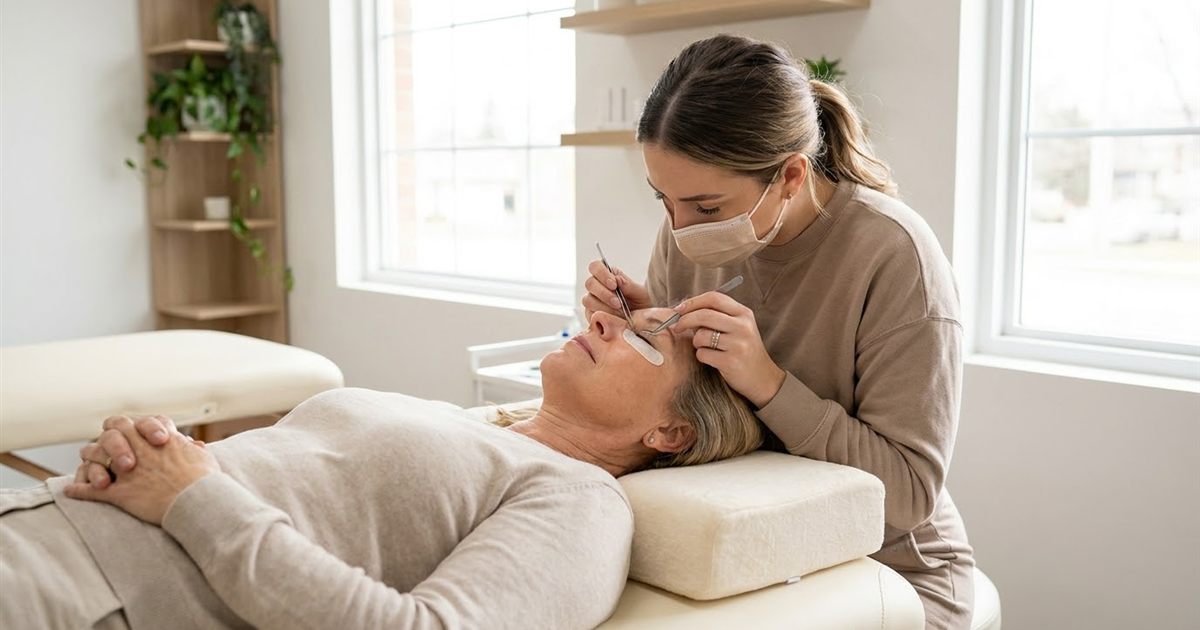
Most beginner lash training is shown on a young, smooth, well rested model: tight lids, a full row of healthy natural lashes and a client who can lie still for two hours. Real appointment books look different. A large share of lash clients are in their forties, fifties and beyond, and they often have the most motivation to book regularly. Their lids, lashes and comfort needs are different from the training model, and artists who understand that stand out quickly. This guide explains what changes with mature eyelids, how to adapt your technique and what to practice during eyelash extension training so you feel confident when these clients sit down.
Free Guide
Get Your Free Lash Extensions Starter Guide

A $17 value, yours free today. We'll send the guide straight to your inbox in the next minute.
You'll also get occasional lash tips by email. Unsubscribe anytime.
Why Mature Clients Are Worth Learning For
Clients who are mature tend to be loyal, punctual and clear about what they want. Many say the same thing: they want to look rested and polished without looking like they are wearing something. That is exactly the kind of set a skilled lash artist can deliver with a lighter hand.
They are also a large and growing share of the market, which means the sooner you know how to serve them well, the faster your calendar fills. If you are still deciding how to get your first clients, first clients after a lash course covers where to start.
What Actually Changes With Age
You do not need medical expertise to adapt your work, but you should understand the practical differences you may see:
- Thinner, looser skin: the lid can be delicate and may crease or move more easily when handled or taped.
- Finer natural lashes: lashes can be thinner and fewer, so each one has less capacity to carry an extension.
- Gaps and sparse areas: lashes may be uneven, with lash line areas that look empty.
- Changes in lid shape: a lid may feel heavier or more hooded than it was years ago, affecting how you map and how the set sits.
- More comfort needs: lying still, neck position and dry eyes become bigger factors in a long appointment.
Knowing the basics of how the eye and lid work makes these differences easier to understand. If that is new to you, start with eye and lash anatomy before a lash course.
Start With A Thorough Consultation
The consultation matters for every client, and it matters more here. Ask about comfort with lying down for a long time, any history of eye irritation or dryness, any medications or treatments the client wants you to know about and what look they are hoping for. What to ask in a lash client consultation gives you a reliable list.
Listen for the goal behind the request. Many mature clients do not want drama; they want their own lashes to look fuller and more defined. That goal points directly to lighter, more natural choices.
If anything about the eyes or lids raises a concern, do not guess. Recommend the client check with a qualified professional first, as covered in eye conditions where you should not apply lashes.
Choose Lighter Extensions
The most important adaptation is weight. A natural lash that is thinner cannot carry the same extension as a thick, healthy one. Heavy extensions on a fine lash can stress it and may lead to premature shedding, which defeats the whole purpose of the service.
Practical choices that artists commonly make for finer lashes include:
- Choose a thinner diameter than you would use on a thick natural lash.
- Keep lengths modest, because longer extensions add weight and leverage.
- Consider a classic or light hybrid set rather than dense volume, depending on what the natural lashes can support.
- Build fullness gradually over fills rather than trying to cover every gap in the first appointment.
Lash extension weight and natural lash health explains the logic in detail, and curl, length and thickness choices helps you pick sensible options.
Handle The Lid Gently
Tape and pads help isolate, but they also touch delicate skin. Use the lightest hold that does the job, avoid pulling the lid upward or sideways and check frequently that the client feels comfortable. If tape feels harsh on the skin, consider gentler options and ask the client to tell you straight away if they feel any pulling.
When you lift or support a lid for isolation, work with small movements and a calm pace. Lash tape and under eye pads for beginners describes the options so you can match them to each skin type.
Make The Client Comfortable For The Whole Session
Comfort is often the deciding factor between a client who rebooks and one who does not. Mature clients may find a long appointment tiring on the neck and back, so small adjustments make a large difference:
- Support the neck with a pillow or rolled towel so the head sits neutral.
- Offer a short pause if the client needs to shift or swallow.
- Keep the room temperature comfortable and the lighting soft on closed eyes.
- Explain what you are doing before touching the face, so nothing feels surprising.
You can find more ideas in client comfort and positioning in lash classes.
Map For Lift Without Overloading
Mapping is where your styling skills shine. On a lid that feels heavier, a well planned set can create the impression of lift by placing slightly longer lengths toward the outer corner and keeping the inner and middle areas light. Done in moderation, it opens the eye without piling weight onto fragile lashes.
Keep expectations honest: lash extensions enhance what is there, they do not change eyelid structure. Lash mapping and styling by eye shape covers the principles, and hooded eyes and monolids is a useful companion if the lid hides part of the lash line.
Set Realistic Expectations Early
Sparse lashes will not become a thick row in a single visit. Say so kindly, and explain that the set will improve with fills as long as the natural lashes are supported. A client who understands the plan is far more likely to be happy than one who expected a transformation on day one. For practical language, read handling unrealistic client expectations.
Practice Before The Real Appointment
You can prepare ahead of time even without a mature model. Practice working with a light touch on a mannequin head, using thinner extensions and shorter lengths until your placement stays clean. When you move to real people, ask a family member or friend in the age group you want to serve to be a practice model, with written consent, using the guidance in finding practice models.
Common Mistakes When Serving Mature Clients
Even well trained beginners fall into a few predictable traps. Knowing them in advance saves you stress and protects your clients.
- Copying a favorite young model set. A dramatic photo you admire was probably built on thick, healthy natural lashes. Applying the same recipe to a finer lash row can overload it.
- Skipping the conversation about comfort. A client may tolerate discomfort quietly and simply not return. Ask questions during the appointment, not only before it.
- Using the same tape pressure for every lid. Delicate skin deserves a lighter touch and frequent checks.
- Promising what lashes cannot deliver. Extensions add definition and fullness, not a surgical lift. Say so kindly.
- Rushing the first fill. The first fill is where you learn how the natural lashes held the set, so treat it as information and adjust the next set.
What To Look For At The First Fill
The fill appointment is where you learn the most about a mature client. Look at retention and how the natural lashes have grown through the set. If extensions are shedding early with their natural lash, the set may be too heavy or too long. If retention is good, you can gradually add fullness in areas that look sparse.
Take notes after every visit, including the diameters and lengths you used and how they performed, because patterns across fills become a personal formula for each client. Lash refill appointments explained shows the structure of a good fill and what to evaluate.
Communicating Aftercare Clearly
Mature clients often have established skincare and makeup routines, so aftercare conversations should be specific and practical. Explain which cleansers and products to avoid near the lash line, how to remove makeup gently and why rubbing is a problem. Written instructions are especially helpful. Lash aftercare instructions for clients gives you a clear structure to adapt.
Where This Fits In Your Training
Everything above builds on fundamentals. In the Lash Extensions Master Course, Module 1 teaches Eye Anatomy, Module 2 covers Styling, Retention, Adhesives and Eye Education, Module 3 goes through Consultation and Lash Application, and Module 6 covers Resolving Client Expectations. Together they give you the judgment to adapt your technique instead of memorizing one routine. With the structure of an online eyelash extension course and lifetime access, you can rewatch any lesson before your first mature client sits down.
Free Guide
Get Your Free Lash Extensions Starter Guide
A $17 value, yours free today. We'll send the guide straight to your inbox in the next minute.
You'll also get occasional lash tips by email. Unsubscribe anytime.
Frequently Asked Questions
Many mature clients wear lash extensions happily. The difference is in the approach: lighter extensions, gentle handling of the lid and a thorough consultation about comfort and eye health. Your training teaches you to adapt each set to the person in the chair.
Keep Reading
Popular Lash Training Guides
- Minimum Age For Eyelash Extension Training
- Eyelash Extension Training Cost In 2026: Real Breakdown
- Lash Tech License Requirements By State
- Is It Hard To Learn Eyelash Extensions? Honest Answer
Ready to go from reading to doing? See the full Lash Extensions Master Course or browse all lash training guides.