Lash Course With Allergies Or Sensitivities
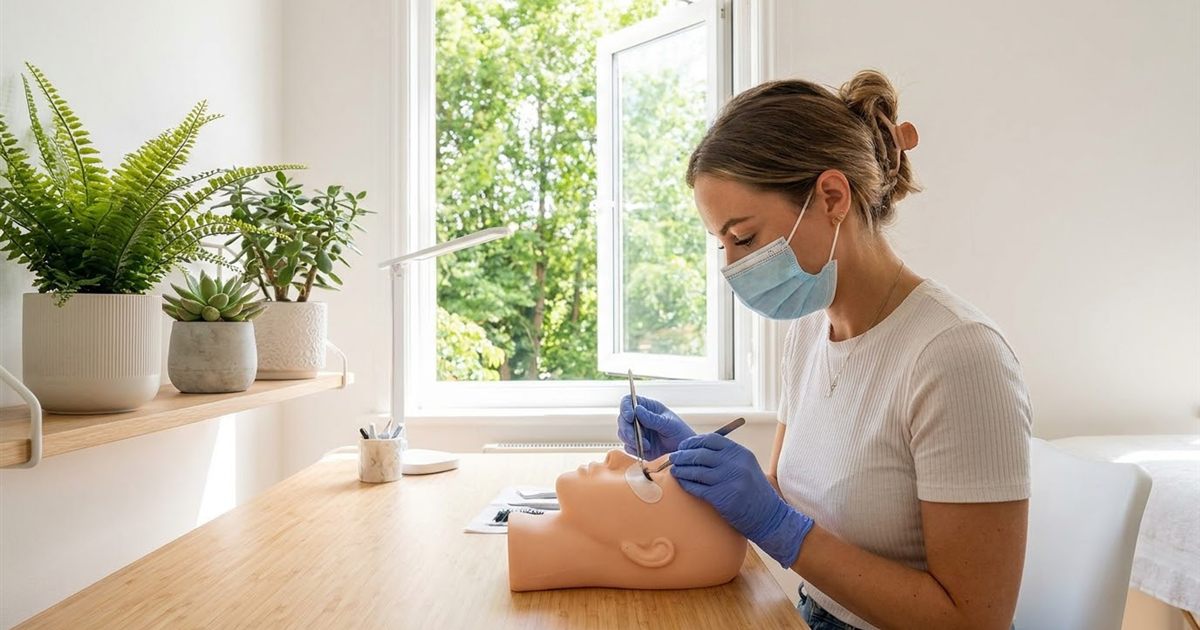
Searching for a lash course while living with allergies, asthma or reactive skin often turns into a quiet worry: will I be able to do this work at all? Lash extension adhesives have a noticeable smell, products touch your hands all day and you spend hours close to a client’s face. These are fair questions and they deserve honest answers, not a blanket yes or no. This guide explains what actually creates exposure in lash work, what questions to ask your doctor and your course before you enroll and which everyday habits help artists protect themselves while they train. It is general education, not medical advice, so your own healthcare professional always has the final word.
Free Guide
Get Your Free Lash Extensions Starter Guide

A $17 value, yours free today. We'll send the guide straight to your inbox in the next minute.
You'll also get occasional lash tips by email. Unsubscribe anytime.
Start With The Real Question
“Can I be a lash artist with allergies?” is too broad to answer. The useful question is more specific: what am I sensitive to, how strong are my reactions and which parts of lash work expose me to it?
Lash work involves a limited set of exposures: adhesive vapors, adhesive on the skin, cleansers and primers, tape and pad materials, and sometimes latex gloves. Knowing which of those relates to your sensitivity is the first step. A person who reacts to latex has a different plan than a person who struggles with fragrances or fumes.
Where Exposure Actually Happens
Adhesive Fumes
Lash adhesives release vapors as they cure, and many artists notice a smell, especially in small or unventilated rooms. For some people it causes watery eyes, irritated airways or headaches. Because a beginner works slowly and practices for long sessions, the exposure time can be significant.
Read adhesive fumes and your health in lash extension training for the practical side of ventilation, setup and breaks.
Skin Contact
Handling tweezers, products and clients means your hands touch a lot of material. If your skin is reactive, repeated contact with adhesives or cleansers may cause irritation. Gloves, clean tools and attention to where products land help.
Materials You Do Not Think About
Tape, pads, gloves, wipes and cleansing products all carry ingredient lists. If you know a specific trigger, check the labels. Lash course supplies kit checklist shows what typically goes into a starter setup so you can review each item.
Questions To Ask Your Doctor First
Before enrolling, it is sensible to speak to a doctor or allergist, especially if you have asthma, eczema or a history of strong reactions. Bring specifics to the conversation:
- Describe the work: close, repeated exposure to adhesive vapors and contact with cosmetic-grade products for several hours at a time.
- Mention your known triggers and ask whether anything in that environment is likely to be a problem.
- Ask about protection: masks, ventilation and gloves, and whether they suit your condition.
- Ask whether a gradual approach makes sense, such as short practice sessions to see how you react.
Their guidance should shape your decision, not the other way around.
Questions To Ask The Course
A good course is transparent about the health side of the profession, not just the glamorous part. Before you enroll, look for answers to these:
- Does the course explain ventilation, product handling and safe working habits?
- Does it cover adhesives and how they behave, so you can make informed choices?
- Does it teach sanitation and how to reduce unnecessary skin contact?
- Can you review the lessons at your own pace, so you can stop and step away if you feel unwell?
In the Lash Extensions Master Course, Module 5 includes Health & Safety and Lash Artist Health, while Module 2 covers Adhesives and Eye Education. Because it is an online, self-paced format, you can practice in short blocks and rewatch lessons as needed. To see how that structure compares with other formats, read how an online lash course really works.
Habits That Protect You While You Train
None of these replace medical advice, but they are common sense practices many artists follow:
- Ventilate the room. Open a window or use air movement away from your face, and avoid working in a closed small space.
- Work in short sessions at first. Thirty to forty minutes with a break lets you notice how you feel.
- Use gloves and clean tools where they suit you, and wash your hands often.
- Store products properly, away from heat, with lids closed, so they behave as intended. See lash adhesive storage and shelf life.
- Keep your workspace tidy so you are not leaning over open containers.
- Listen to your body. Itchy eyes, throat irritation or headaches are signals to stop and reassess, not to push through.
Think About Your Clients As Well
Your sensitivity is one side of safety; your clients’ sensitivity is the other. A good consultation asks about allergies and previous reactions before any adhesive touches the lash line, and a patch test is a standard precaution many artists offer. Lash adhesive sensitivity and patch tests explains how that works, and what to do if a client reacts prepares you for the rare cases.
Hygiene Is Part Of Health
Clean tools, a tidy cart and sensible sanitation protect both you and the client. Sanitation and hygiene standards in a lash course covers the routine every artist should follow, which also reduces the chance of product contact you did not intend.
When It Is Not The Right Fit
Sometimes the honest answer is that lash extension work will not suit your health. That is not a failure; it is an informed decision, and a good one. If your doctor advises against close exposure to adhesives, there are related areas that may fit better, such as lash lifts or other beauty services. Lash course types: extensions versus lifts can help you compare them.
Understanding What A Reaction Might Look Like
Because this is a sensitive topic, it helps to know the general signs that something is not right, so that you can stop and seek advice early rather than ignoring them. Many artists notice itching, redness, watery eyes, a scratchy throat or headaches during or after long sessions around adhesive. Skin that becomes red, dry or cracked on the hands after repeated product contact is another signal.
These are not diagnoses, and they do not necessarily mean you cannot do the work. They are information. Stop the session, ventilate, wash your hands and speak with a healthcare professional if symptoms repeat or worsen. Keeping a short log of when symptoms appear, what product you used and how long you had been working gives your doctor something concrete to evaluate.
Equipment And Setup Choices That Can Help
Your environment matters as much as the products. Small decisions in how you set up your station can reduce exposure significantly:
- Position the client and yourself so vapors move away from your face, using a small fan or open window rather than blowing air directly at the eyes.
- Keep adhesive containers closed except when you pick up a drop, and use small amounts at a time.
- Replace adhesive according to the manufacturer guidance, since old product can behave differently.
- Choose a comfortable, well lit station so you are not bending closer than necessary.
- Take short breaks away from the work area to breathe fresh air and rest your eyes.
If you are building a workspace from scratch, lash cart setup for beginners shows how to organize it so everything is within reach and nothing needs to stay open longer than necessary.
Talking To Clients About Your Own Limits
If you have a sensitivity, you may eventually need to explain your working conditions, such as shorter sessions or specific product choices. Clients are usually understanding when you are honest and professional. Frame it as a way you deliver your best work: “I keep my appointments structured so that I can give each client my full attention and a consistent result.”
You do not need to share personal medical details. A simple, calm explanation of how you work is enough, and it often reinforces trust.
A Cautious Way To Begin
If your doctor agrees that you can try, a low risk start looks like this: watch the safety lessons first, set up a well ventilated space, practice for short periods on a mannequin head and keep a simple note of how you feel after each session. After a couple of weeks you will have real information about your tolerance instead of a guess.
Training in a self-paced format with lifetime access means you control the pace. You can go slowly, repeat lessons and step away when you need to, which is exactly the flexibility a health-conscious beginner benefits from.
Free Guide
Get Your Free Lash Extensions Starter Guide
A $17 value, yours free today. We'll send the guide straight to your inbox in the next minute.
You'll also get occasional lash tips by email. Unsubscribe anytime.
Frequently Asked Questions
Many people with allergies or sensitive skin train successfully, but it depends on what you react to and how severely. Talk to your doctor before you start, and ask your course about the products and safety practices it teaches.
Keep Reading
Popular Lash Training Guides
- Minimum Age For Eyelash Extension Training
- Eyelash Extension Training Cost In 2026: Real Breakdown
- Lash Tech License Requirements By State
- Is It Hard To Learn Eyelash Extensions? Honest Answer
Ready to go from reading to doing? See the full Lash Extensions Master Course or browse all lash training guides.