Eyelash Course Types: Extensions Vs Lifts
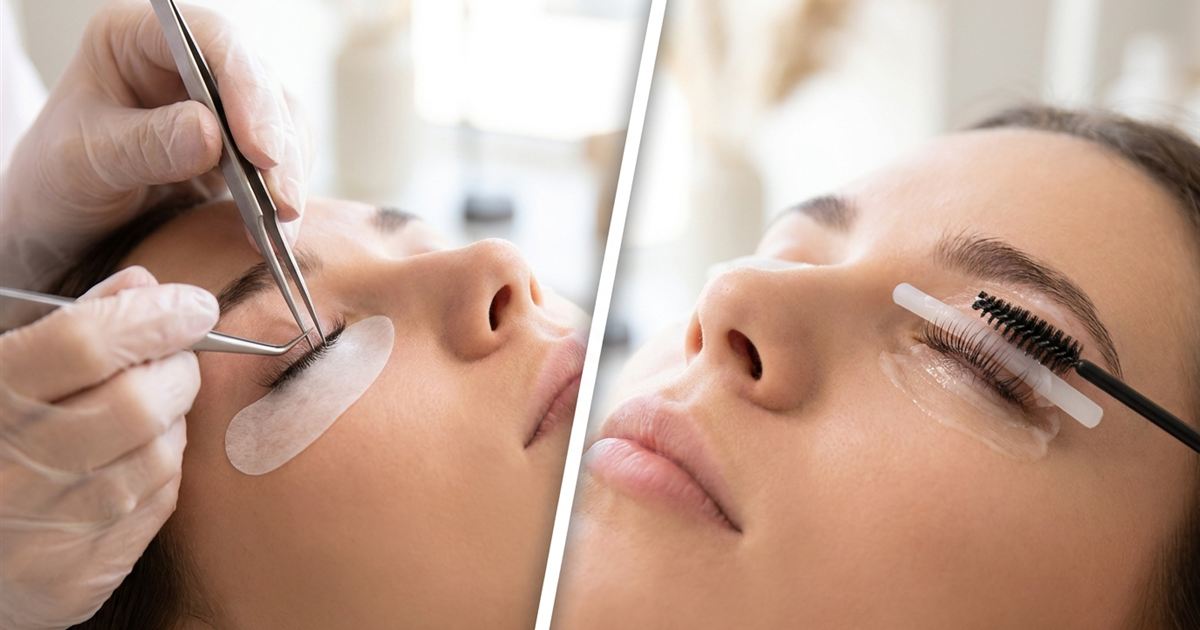
Search for an eyelash course and you will find programs that teach extensions, lifts, tints, laminations and sometimes all of them at once. They sound similar, but they are different services with different products, techniques, appointment lengths and price points. Picking the wrong one is an easy and expensive mistake. This guide explains each type of eyelash course, who it suits and how to be sure you are signing up for the training you actually want.
Free Guide
Get Your Free Lash Extensions Starter Guide

A $17 value, yours free today. We'll send the guide straight to your inbox in the next minute.
You'll also get occasional lash tips by email. Unsubscribe anytime.
“Eyelash course” is a broad label. Always check the lesson list to confirm whether it teaches extensions, lifts or something else before you pay.
Why The Phrase “Eyelash Course” Is So Vague
Beauty training names are not regulated, so a single phrase covers a lot of ground. A school might call a one day lash lift class an “eyelash course,” while another uses the same words for a multi week eyelash extension program. If you search broadly, you will see both. The result is that people sometimes buy a lift class expecting to learn extensions, or the other way around.
The fix is simple: ignore the title and read the curriculum. Whatever the course is called, the lesson list tells you what you will really be able to do afterwards.
Type One: Eyelash Extension Courses
An eyelash extension course teaches you to attach synthetic lashes to a client’s natural lashes using adhesive. It is the most detailed of the lash services because it combines several skills: isolating a single natural lash, handling tweezers, building fans, managing adhesive and keeping a full set light and healthy.
A complete program covers eye anatomy, sanitation, patch testing, classic, hybrid and volume application, refills and safe removals, along with consultation and aftercare. Extensions are usually the most in demand, and they bring repeat business, because clients return for refills every few weeks. If you want details on what such a program teaches, volume lash course: what you will learn and classic vs volume lash extensions are good places to start.
Type Two: Lash Lift And Tint Courses
A lash lift curls and lifts a client’s natural lashes using a solution, and a tint adds color. No extensions are attached. The class is usually shorter than an extension course, the tools are different and the service involves chemical products applied close to the eye, so safety and timing are important.
Lifts appeal to clients who like their natural lashes and want low maintenance, and they are quicker to perform than a full set of extensions. They can also be a good add on service if you already offer extensions. That is why lash lift and tint after your course treats them as a natural next step once extensions are comfortable.
Type Three: Lamination, Brow And Combo Courses
Some programs teach brow lamination, lash lamination or a bundle that includes brows, lashes and tinting. These can be useful if you want a broader beauty service menu, but they are not the same as an extension course and they do not prepare you to apply extensions. If brows interest you, adding brow lamination after your lash course explains how it fits in.
How The Main Types Compare
| Service | What it does | Training depth | Client return |
|---|---|---|---|
| Eyelash extensions | Attaches synthetic lashes to natural lashes | Highest: isolation, fans, adhesive, removals | Refills every few weeks |
| Lash lift and tint | Curls and colors natural lashes | Moderate: products, timing, safety | Repeat every several weeks |
| Lamination and brow | Shapes lashes or brows with a solution | Moderate | Repeat every several weeks |
The exact timing varies by client and product, but the pattern holds: extensions take the most skill to learn and, for many artists, produce the most recurring income.
Which Type Should You Choose?
Start from your goal, not from the price.
- You want a full time lash career or a high demand service: choose an extension course. It is the deepest skill, and the one clients ask for most.
- You want a quick add on service for an existing beauty business: a lift and tint class can be a fast way to expand your menu. Adding lash extensions to your existing beauty business covers the extension side of that decision.
- You are curious and want to do your own lashes: an extension course is still the best fit if you want lashes that last, as in taking a lash course to do your own lashes.
- You are unsure: begin with a complete beginner extension program, since the skills transfer to other lash services more easily than the reverse.
Extension Styles You Will Hear About Inside The Category
Even within extensions, course names can hide different content. Classic means one extension on one natural lash. Hybrid blends classic and volume fans. Volume uses fans of several very fine extensions on each natural lash, and mega volume pushes that to denser fans. Some programs teach only classic, which is fine as a starting point but limits what you can offer. Others go through hybrid and volume, which opens the full menu that clients ask for.
If a course lists only one style, ask whether the others are sold separately and what they cost. Can you skip volume in a lash course explains when a classic only path makes sense, and hybrid lash extensions explained shows what you would be missing.
What The Income Picture Looks Like
Income depends on price per service, how many clients you book and how often they return. Extensions tend to have longer appointments and higher prices than lifts, but they also need more skill before you can work quickly and confidently. A lift is faster, so you can fit more appointments in a day, but the price per service is typically lower. Neither is automatically better. How much you can earn after lash extension training and how to price lash services after your course give you a realistic way to think about it without relying on inflated promises.
Mixing Services Later
Many lash artists eventually offer more than one service. A common path is to master extensions first, then add lifts, tints or brows once the core skill is steady, because the clients you already have become easy customers for the extra service. Learning them in that order also tends to go smoothly, since extension training teaches the eye safety, hygiene and client handling habits that every lash service relies on. Starting broad and shallow, by contrast, can leave you unsure at every appointment.
Inside An Extension Course
Because so many people search for a general eyelash course when they mean extensions, it helps to see what a proper extension program contains. The Lash Extensions Master Course is 31 video lessons across six modules. It starts with the industry, product knowledge and eye anatomy, then covers styling, retention and adhesives, consultation and a full set step by step, refills and lash cart setup. Later modules cover classic work on a mannequin head, volume and hybrid sets, aftercare, removals, health and safety and professionalism, including handling client expectations and scheduling. You also get a 90 plus page training manual, a Certificate of Completion, lifetime access and a 7 day money back guarantee. See it all on the course page.
Questions To Ask Before You Buy Any Eyelash Course
Whatever type you are considering, confirm the same things. What exactly will I be able to do when I finish? Is the training video based, in person or text? How much of it is real demonstration? Is the refund policy clear? What does the certificate say? Questions to ask before lash extension training gives a full list, and how to choose a lash extensions course helps you narrow the options.
Do Not Forget Your Local Rules
Different services can fall under different rules. Some places require a cosmetology or esthetics license for lash extensions, and requirements can differ for lifts and tints. Before you pay for any course, check your area. Lash tech license requirements by state is a good starting point, and remember that a course certificate does not replace a license where one is required.
Final Thoughts
An eyelash course can mean extensions, lifts, tints or laminations, and they are genuinely different skills. If your goal is to offer the lash service clients rebook most and to build real technique, an eyelash extension course is the deepest path. Read the lesson list, confirm the format and the refund terms and check your local rules before you pay, and you will end up with training that matches what you wanted to learn.
Free Guide
Get Your Free Lash Extensions Starter Guide
A $17 value, yours free today. We'll send the guide straight to your inbox in the next minute.
You'll also get occasional lash tips by email. Unsubscribe anytime.
Frequently Asked Questions
Eyelash course is a broad phrase that can mean extensions, lash lifts, tinting or brow and lash lamination. An eyelash extension course specifically teaches how to attach synthetic extensions to natural lashes, including classic, hybrid and volume techniques.
Keep Reading
Popular Lash Training Guides
- Minimum Age For Eyelash Extension Training
- Eyelash Extension Training Cost In 2026: Real Breakdown
- Lash Tech License Requirements By State
- Is It Hard To Learn Eyelash Extensions? Honest Answer
Ready to go from reading to doing? See the full Lash Extensions Master Course or browse all lash training guides.