If A Client Reacts To Lash Adhesive
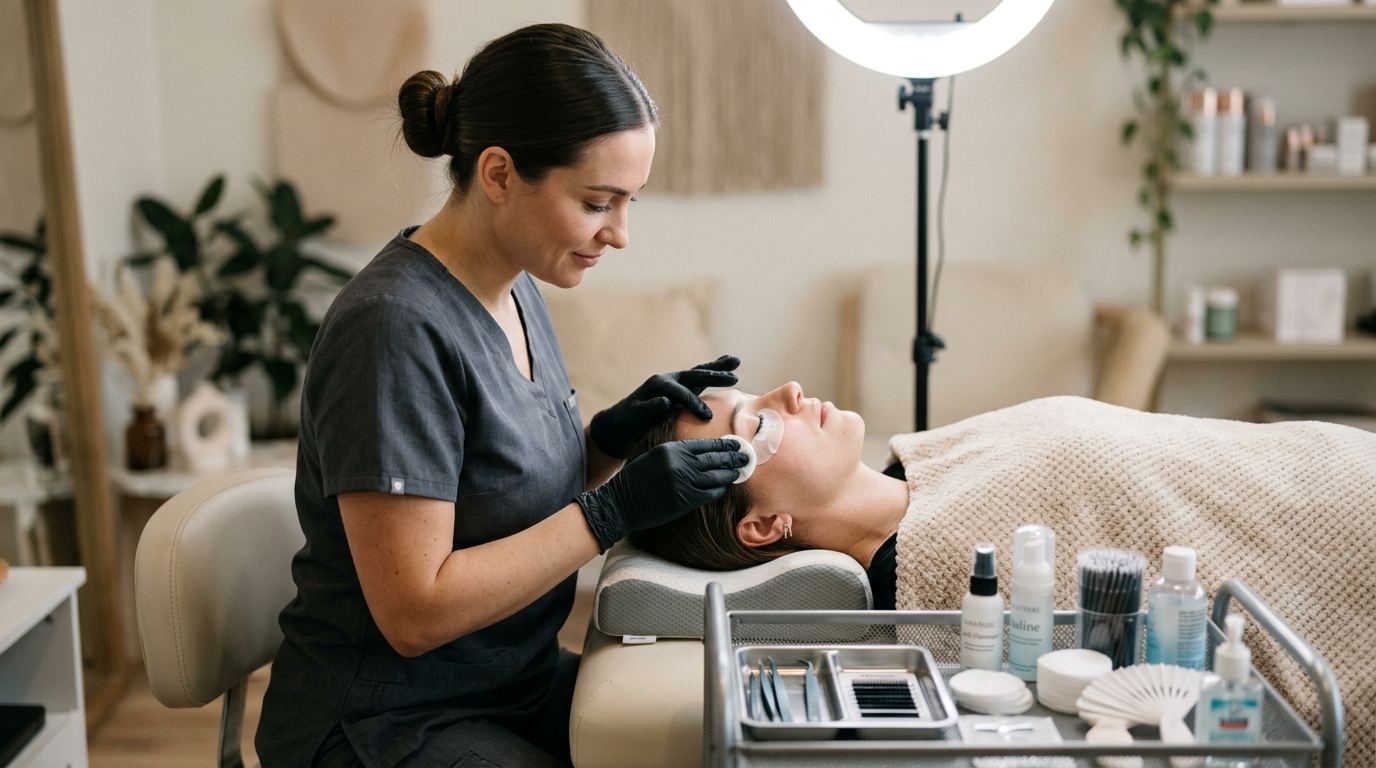
A patch test lowers the risk of an adhesive reaction significantly, but it doesn’t make that risk disappear entirely, and every working lash artist should have a clear plan for what to do if one happens anyway. This isn’t about being afraid of it, it’s about being ready, calmly and correctly, if it ever comes up, since how you respond in that moment matters just as much as the technical skill you bring to the appointment itself.
Free Guide
Get Your Free Lash Extensions Starter Guide

A $17 value, yours free today. We'll send the guide straight to your inbox in the next minute.
You'll also get occasional lash tips by email. Unsubscribe anytime.
Why A Clean Patch Test Doesn’t Guarantee Anything Forever
Sensitivity to lash adhesive can develop over time, even in a client who’s had several reaction-free appointments before. A patch test lowers risk, it doesn’t remove it permanently.
Cyanoacrylate, the ingredient in lash adhesive, can trigger a sensitivity response that builds up with repeated exposure rather than only showing up on a first exposure. That means a regular client who’s been reaction-free for months can still develop a reaction at a later appointment, which is exactly why watching for signs during every service matters, not just on someone’s very first visit.
What To Actually Watch For During A Service
Mild redness or slight itching around the eye area is relatively common and often settles on its own without being a true allergic reaction. What needs real attention is swelling that’s building rather than staying stable, the client reporting genuine burning or pain rather than mild irritation, or visible difficulty opening the eye normally. The difference between “keep a close eye on it” and “stop and act now” usually comes down to whether the symptom is mild and stable or actively getting worse.
Make a habit of glancing at the eye area periodically throughout the appointment rather than only at the very end, especially during longer volume sets where you’re focused closely on the work itself. Catching an early, mild sign partway through gives you far more options, pausing, checking in, adjusting your approach, than discovering a fuller reaction only once the set is already complete and the adhesive has had more time to affect the area.
If You See Early Signs, Stop And Assess First
Don’t keep applying adhesive on a client who’s already reporting discomfort, hoping it resolves before you finish the set. Pause, ask directly how they’re feeling, and look closely at the area. If it’s mild and not progressing, you can make an informed decision about whether to continue carefully or stop there. If it’s clearly building or the client seems distressed, stop the service entirely rather than trying to finish first and deal with it after.
Removal Is Usually The Right Call For A Clear Reaction
Leaving adhesive on a lash line that’s actively reacting, hoping it settles while the extensions stay on, is not the safer choice it might feel like in the moment. Safe, proper removal, the same skill your course trains you on for routine take-offs, is exactly what a reaction situation calls for. Removing the trigger is the fastest way to let the reaction start resolving, rather than leaving it in place and hoping.
Stay calm and explain what you’re doing as you go, since a client who’s already uncomfortable will feel more reassured watching you respond confidently and deliberately than sensing panic from you on top of their own discomfort. A steady, clear explanation, “I’m going to remove these now so the irritation can settle, this will take a few minutes,” goes a long way toward keeping the whole situation calmer for both of you.
Document What Happened And Follow Up
After the appointment, write down what you observed, when it started, and what you did in response, both for your own records and for your liability insurance if you’re ever asked. Follow up with the client afterward to check how they’re doing, which matters for their wellbeing and also for your professional relationship with them. Flag their file for extra caution, or a different adhesive formula, at any future appointment.
Choosing Adhesives With Sensitivity In Mind
If you regularly work with clients who have sensitive skin or a history of mild reactions to other beauty products, consider keeping a lower-fume, sensitive-formula adhesive on hand as an alternative option, not just your standard go-to. Offering this proactively for a client who mentions any sensitivity history, rather than only reaching for it after a reaction has already happened once, is a small extra step that can prevent a repeat situation entirely.
Have A Simple Kit Ready For These Moments
Keep a small, dedicated kit within reach during every appointment: sterile saline or eyewash, clean gauze, and your adhesive remover for a safe, controlled removal if needed. Knowing exactly where these items are, rather than searching for them while a client is uncomfortable, keeps you calm and capable in the moment instead of scrambling. Treat this kit the same way you’d treat any other essential supply, checked and restocked before it’s actually needed.
Know When A Reaction Needs More Than Your Own Response
Most mild reactions resolve well with prompt removal and a calm approach, but know the line where a situation needs more than what you can handle in your chair. Significant swelling that’s spreading beyond the eye area, difficulty breathing, or a reaction that seems to be intensifying rather than settling after removal are signs to recommend the client seek medical attention rather than trying to manage it yourself. Knowing this boundary in advance, rather than deciding under pressure in the moment, is part of being genuinely prepared rather than just hoping it never comes up.
Keep basic emergency information visible in your workspace, the nearest urgent care location and a way to reach emergency services, so you’re not searching for this information while also trying to keep a client calm. This is a small, one-time setup step that only matters on the rare day you actually need it, but it matters a great deal on that day specifically.
Talk To Clients About This Possibility Beforehand
Mentioning, briefly and calmly, that reactions can occasionally happen even with a clean patch test, as part of your consultation, sets honest expectations rather than leaving clients blindsided if something does happen later. This isn’t about scaring clients away from the service, it’s about being the kind of professional who’s upfront about real risks, which tends to build more trust than pretending the risk doesn’t exist at all.
What Our Course Includes
The Lash Extensions Master Course covers patch testing, safety protocols, and proper removal technique as core parts of the curriculum, for a one-time $97 payment with lifetime access, so you’re prepared for situations like this, not just routine application.
Final Thoughts
An adhesive reaction is uncommon but real, and knowing exactly what to watch for and how to respond calmly is part of being a genuinely prepared lash artist, not just a technically skilled one. Watch closely during every service, stop at the first real sign of trouble, and remove safely when needed. For more on prevention before it ever gets to this point, read lash adhesive sensitivity and patch tests, or see why safe lash removal matters too to review the skill that matters most in a moment like this.
Free Guide
Get Your Free Lash Extensions Starter Guide
A $17 value, yours free today. We'll send the guide straight to your inbox in the next minute.
You'll also get occasional lash tips by email. Unsubscribe anytime.
Frequently Asked Questions
Yes. A patch test lowers the risk significantly but doesn't eliminate it entirely, since sensitivity can develop over repeated exposure, meaning a client who was fine at their first few appointments can still react at a later one.
Keep Reading
Popular Lash Training Guides
- Minimum Age For Eyelash Extension Training
- Eyelash Extension Training Cost In 2026: Real Breakdown
- Lash Tech License Requirements By State
- Is It Hard To Learn Eyelash Extensions? Honest Answer
Ready to go from reading to doing? See the full Lash Extensions Master Course or browse all lash training guides.