Lash Course For Hairstylists And Barbers
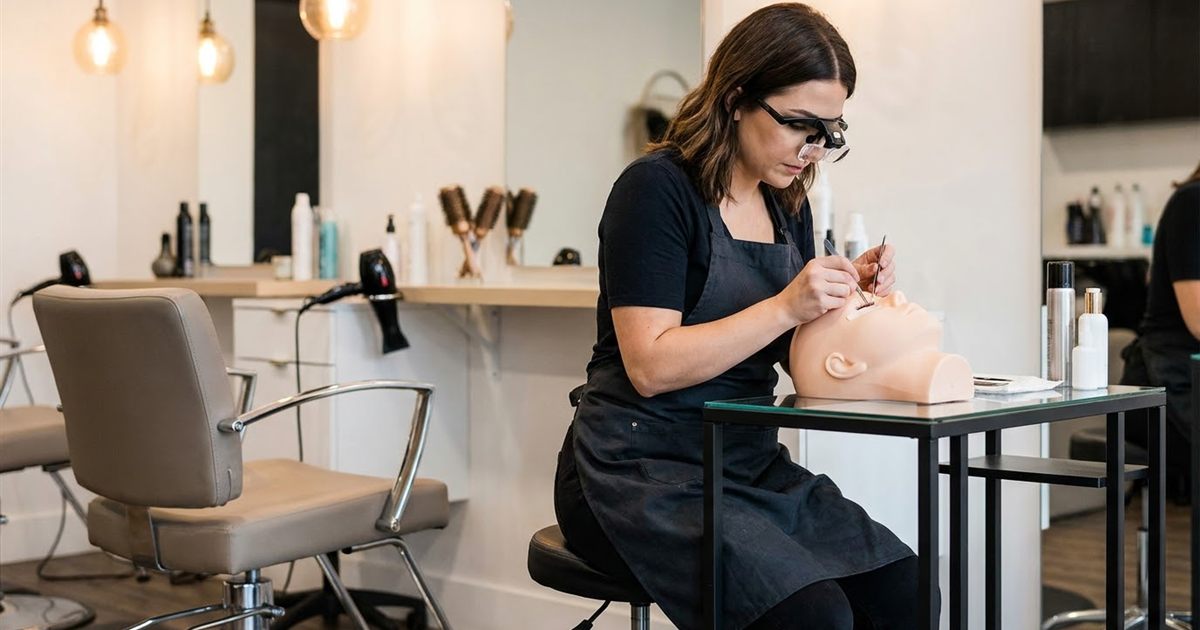
If you already spend your day with clients in your chair, you are closer to offering lash extensions than you might think. Hairstylists and barbers have steady hands, a regular clientele, good habits around sanitation and the kind of trust that turns a haircut into a long relationship. Adding lash extensions can raise the value of each visit, fill quieter hours and give you a service that complements what you already do. It is not a copy and paste of your existing skills, though, and it deserves proper training. This guide explains how a lash extension course fits into a stylist or barber’s world, what transfers, what is new and how to introduce the service without disrupting the business you have built.
Free Guide
Get Your Free Lash Extensions Starter Guide

A $17 value, yours free today. We'll send the guide straight to your inbox in the next minute.
You'll also get occasional lash tips by email. Unsubscribe anytime.
Why Lash Extensions Fit A Styling Or Barbering Business
The strongest argument is simple: you already have people who trust you. A client who sits in your chair every few weeks is far more likely to try a new service from you than from a stranger. You do not have to find new customers first; you need to let existing ones know what you can do.
There is also a practical fit. Lash fills happen every two to three weeks, which matches the rhythm of many hair appointments. A client can book a lash fill on the same day or on a different day, and the service adds revenue without requiring a bigger chair or more expensive equipment. If you want to understand the broader opportunity, read adding lash extensions to an existing beauty business.
What Transfers From Your Current Skills
- Fine motor control: working with scissors, clippers or color brushes builds the hand steadiness you will need for tweezers.
- Client consultation habits: asking what someone wants and managing expectations is the same skill in a new setting.
- Sanitation routines: you already clean and sanitize tools between clients, which is the backbone of lash safety.
- Time management: you know how to keep an appointment on schedule.
- Customer service: conversation, comfort and professionalism carry over completely.
What Is Genuinely New
Be honest about the gaps, because that is where beginners get into trouble:
- Working close to the eye: the margin for error is smaller, and you must understand eye anatomy and what to avoid. See eye and lash anatomy before a lash course.
- Isolation: separating one natural lash from its neighbors is a new, detailed skill. Start with lash isolation technique for beginners.
- Adhesives and retention: how products cure, how humidity matters and why sets fall out. Lash course adhesive brand and what to know is a good starting point.
- Longer sessions: a full set takes longer than a haircut, so appointment planning changes.
- Removal and safety: removing lashes safely is a distinct skill.
Check Your Licensing First
Rules about who can perform lash extensions differ widely. Some places let certain beauty licenses cover lash services, others require a specific license and some have no requirement at all. Do not assume that a hair or barber license automatically covers lashes, and do not assume it does not. Check with your local board before offering the service, and read lash tech license requirements by state for the questions to ask.
Choosing A Course That Fits Your Schedule
A working stylist rarely has weeks of free time. A self-paced online course is the most flexible fit, because you can train on a day off, between appointments or in the evening, and rewatch a lesson when you need it. Compare formats in online versus in-person lash extension classes and self-paced lash courses for busy schedules.
A complete beginner course should include more than application. The Lash Extensions Master Course, for example, includes 31 lessons across six modules covering product knowledge, eye anatomy, adhesives, consultation, full sets, refills, removals, health and safety, and professionalism and scheduling. It also includes a certificate of completion and a training manual, with lifetime access.
A Realistic Training Plan Around Your Chair
You can build skills without taking time from your clients:
- Two or three short sessions per week, 45 to 60 minutes each, on a mannequin head.
- One lesson per sitting, followed immediately by practice on the same skill.
- A weekly review, where you rewatch the lesson that gave you trouble.
- A gradual move to live models only when your mannequin sets are clean and consistent.
How to practice lash extensions between lessons and the 30 day study plan give you structure.
Setting Up A Lash Corner In Your Space
You do not need a separate studio to begin. A small, well lit corner or a treatment room used at set times can work, provided you have a comfortable reclined position for the client, good lighting, a cart for supplies and a clean surface. Lash cart setup for beginners lists the essentials, and lighting and magnification setup matters more than most people expect.
Think about noise and traffic too. Lash clients lie still with closed eyes for a long time, so a calm corner away from blow dryers and loud music is a real advantage.
Introducing The Service To Existing Clients
Your first lash clients will most likely come from your current ones. A few simple ways to introduce the service:
- Mention it naturally during an appointment, once you are ready, rather than announcing it too early.
- Offer a few models at a gentle introductory price to build photos and experience, with clear consent forms.
- Show your work on your page and in your space once you have clean, honest photos.
- Bundle thoughtfully, for example pairing a lash fill with a regular service, once your pricing is clear.
First clients after a lash course and how to price lash services walk you through the details.
Scheduling Without Chaos
Lash sets take longer than many styling services and fills have predictable lengths. Block time in your calendar deliberately so that a lash appointment never runs into a color service. Lash appointment scheduling and time blocks gives practical guidance, and booking systems and deposits will help reduce no shows.
Protect Your Reputation While You Learn
Because your hair clients already trust you, a bad first lash experience affects more than one service. Take time to become consistent on mannequins, practice on consenting models and keep early sets modest rather than ambitious. It is better to say “I am still building my lash skills, so I only offer classic sets for now” than to overreach.
What The Numbers Might Look Like
Revenue from a new service is easier to plan when you think in simple terms. A single lash fill appointment adds a predictable amount per visit, and regular clients typically return every few weeks. Instead of guessing a monthly figure, work backwards from the hours you can realistically dedicate.
For example, if you decide to block four lash appointments per week and each one fills a defined time slot, you can estimate weekly and monthly income from your own pricing. Then subtract the costs of supplies and any course or tool investment to see how quickly it pays for itself. How fast lash extension classes pay for themselves walks through that math step by step, and monthly supply costs after a lash course helps you keep expenses honest.
Treat early estimates as planning tools rather than promises. Your results will depend on your pricing, your local market and how consistently you practice and promote.
Protecting Your Current Business While You Learn
The biggest risk for an established stylist or barber is not the course. It is the temptation to rush the new service and hurt the reputation you already have. A few guardrails help:
- Keep your lash practice outside your busiest hours until your sets are consistent.
- Do not advertise the service until you have clean photos and experience with real models.
- Start with a small menu, perhaps classic sets and fills, and add hybrids and volume later.
- Tell clients honestly where you are in your learning, if they ask, and offer a fair introductory arrangement.
- Keep your regular services on schedule. A lash appointment that overruns should never push a haircut client into waiting.
Cross Promotion That Feels Natural
Because you already talk with your clients, you do not need loud marketing. Let the service appear in the normal flow of your day: a small sign near your station, a mention in your booking confirmations or a short story on your page showing a finished set. Combine it with other local contacts as described in local business partnerships to find lash clients and loyalty packages for rebooking.
A Service That Grows With You
Once the basics are solid, lash extensions give you room to develop a specialty, whether that is natural classic sets, volume or maintenance for regulars. The investment is mostly time and practice rather than space or expensive machinery, which makes it one of the more accessible ways for a stylist or barber to expand.
If you are ready to take the next step, an online eyelash extension course that starts from zero and lets you train at your own pace is a sensible, low risk way to begin.
Free Guide
Get Your Free Lash Extensions Starter Guide
A $17 value, yours free today. We'll send the guide straight to your inbox in the next minute.
You'll also get occasional lash tips by email. Unsubscribe anytime.
Frequently Asked Questions
Yes. The fine motor skills, client service habits and sanitation routines you already use transfer well. You still need to learn lash-specific skills such as isolation, adhesives and eye safety, and you should check the licensing rules for your location.
Keep Reading
Popular Lash Training Guides
- Minimum Age For Eyelash Extension Training
- Eyelash Extension Training Cost In 2026: Real Breakdown
- Lash Tech License Requirements By State
- Is It Hard To Learn Eyelash Extensions? Honest Answer
Ready to go from reading to doing? See the full Lash Extensions Master Course or browse all lash training guides.