Mink Vs Silk Vs Synthetic Lashes Explained
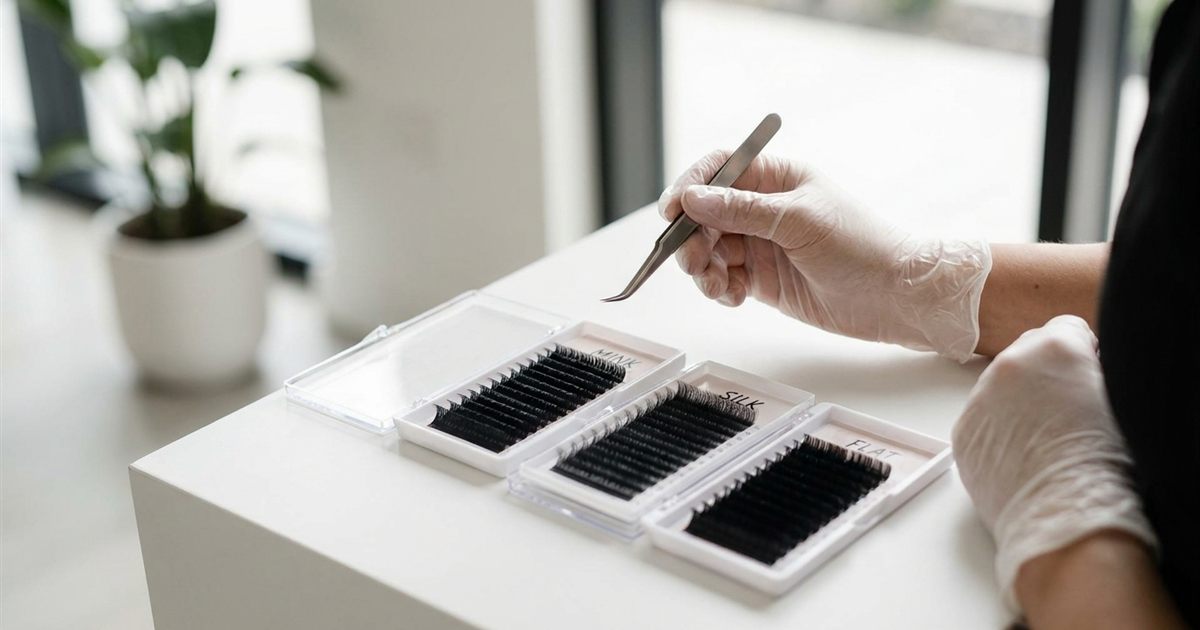
You open a lash supplier’s website for the first time and it feels like a different language. Mink, silk, faux mink, flat, ellipse, matte, glossy, J, B, C, D, 0.07, 0.10. Every brand uses its own names, every beginner forum gives a different answer, and you start to wonder whether you need to buy twelve kinds of lashes before you can even begin. Take a breath. Most of this vocabulary describes only a few real differences, and once you understand them, the confusion disappears. This guide explains the common lash extension types in plain language, what actually changes between them and what you should focus on during eyelash extension training.
Free Guide
Get Your Free Lash Extensions Starter Guide

A $17 value, yours free today. We'll send the guide straight to your inbox in the next minute.
You'll also get occasional lash tips by email. Unsubscribe anytime.
Why Lash Type Names Are So Confusing
Lash names are partly descriptive and partly marketing. A brand may call a lash “mink” because of its soft, fluffy look, “silk” because of its sheen, or “cashmere” because of its matte finish. None of those names guarantee a specific material, thickness or behavior, and the same word can mean slightly different things in different catalogs.
The practical consequence is simple: do not rely on the name alone. Learn the properties that actually change how a lash behaves, and read the product description from the supplier you choose. If you want a refresher on common vocabulary, lash terms you will learn in a lash course is a helpful reference.
The Four Properties That Really Matter
Whatever a lash is called, four properties decide how it behaves on a natural lash:
- Material and stiffness: how soft or firm the fiber feels and how well it holds its curl.
- Diameter (thickness): measured in fractions of a millimeter, such as 0.07 or 0.15.
- Length: the part that creates your map and shape.
- Curl: the angle of the lash, labeled with letters such as J, B, C, D and L.
Material is only one of four. If you understand diameter, length and curl well, you can pick a good lash from nearly any brand. Our guide to lash curls, lengths and thickness goes deeper on those three.
Mink Style Lashes
Mink style lashes are the most common choice in modern lash studios. They are typically soft and lightweight, with a slightly fluffy finish that blends in with the natural lash. That makes them popular for natural and soft glam sets, where the goal is a lift without a heavy look.
In professional supply, “mink” usually refers to a synthetic fiber made to mimic mink hair, not to hair from an animal. Terminology differs by brand, so treat it as a texture description rather than a promise about origin. If ethical sourcing matters to you or your clients, read the supplier’s information carefully, and see vegan and cruelty free lash supplies.
Silk Style Lashes
Silk style lashes are also generally synthetic. They tend to be a little thicker and more rigid than mink style lashes, with a shinier, deeper black finish. Many artists choose them for a bolder, more defined look and for clients who want a clearly visible result.
The extra firmness can help a lash hold its curl, but it can also make the lash feel heavier on a fragile natural lash. That is why choosing a silk style option is always a decision about the client’s natural lashes, not just about the look.
Synthetic Lashes In General
“Synthetic” is the broad umbrella. Almost every extension used in modern professional work is made from a synthetic fiber of some kind, usually a type of polymer, which is shaped and curled by heat. What differs is the formulation and the finish: soft or firm, glossy or matte, light or dense.
Because of this, a good rule is to compare lashes by what you can feel and see in your hands: how it bends, how it springs back, how it sits in your tweezers. A small sample set from a trusted supplier teaches you more than any comparison chart.
Flat And Ellipse Lashes
Flat and ellipse lashes are shaped differently from classic round lashes. Their cross section is flat or elliptical, which allows a lash to look wide and dark while weighing less than a round lash of the same visual width. That is why they are often described as fuller yet lighter.
They also behave differently. A flat lash can feel different in your tweezers, have a specific side to attach to the natural lash and be more sensitive to how you place it. Most trainers suggest building confidence with round classic lashes first and then exploring flat shapes. Classic versus volume lashes can help you decide the right order of learning.
Matte, Glossy And Natural Finish
Finish changes how light reflects off the lash:
- Glossy lashes reflect light and look deep black, which gives definition.
- Matte lashes absorb light and look softer and more like natural lashes.
- Semi matte or natural finish sits between the two.
Finish has no effect on retention, but it affects how obvious the lashes look. Matte tends to suit clients who want a subtle result, while glossy suits clients who want a defined, dramatic look.
Matching The Lash To The Natural Lash
The most valuable skill is not memorizing lash names, it is matching the extension to the natural lash. A natural lash can safely carry only so much weight, and heavy extensions on a fine natural lash lead to damage and poor retention. The usual guideline is to choose an extension that is not heavier than the natural lash can support, which depends on thickness and length together.
This is why the lash type is the last decision, not the first. First assess the natural lash, then decide thickness and length, then choose the material and finish that deliver the look your client wants. Lash extension weight and natural lash health explains how to think about it.
What To Buy First As A Beginner
You do not need every lash type to start. A small, focused set is better than a big messy one:
- A tray of classic lashes in a couple of common curls, such as C and D curl, and a few lengths.
- One diameter you can handle comfortably, often a middle thickness for practice.
- Premade or handmade fans only after you master isolation and classic application.
See lash course supplies: the kit you need for a complete list, and remember that you never need to buy everything at once.
Testing Lash Types Safely
When you try a new lash type, change one thing at a time. If you switch material, diameter and curl all at once and your retention drops, you will not know why. Keep notes of what you used and how it held. Test on a mannequin head first, then on a practice model, and observe how the lash weighs, curls and sits.
Also remember that adhesive and lash type interact. A thicker or heavier lash puts more demand on the bond, so retention results depend on both choices together. If retention is your concern, how to fix poor lash retention is a good next read.
Common Beginner Mistakes With Lash Types
Three mistakes show up again and again in the first months of training:
- Buying by name instead of by properties. Two lashes called “mink” from different brands can feel and behave very differently, so always check diameter, curl and length before ordering.
- Choosing a heavier lash to look more professional. A thick, glossy lash can look impressive in a photo but may overload a fine natural lash and fall out early.
- Changing everything at once. New lash type, new adhesive and new curl in the same appointment makes it impossible to learn what caused a change in retention.
A calmer approach is to pick one reliable lash type, learn how it behaves in different conditions and change a single variable at a time. That patience is what separates a confident artist from one who is constantly guessing. It also makes your notes far more useful, which is why many artists pair this habit with lash client record cards.
How Your Training Introduces Product Knowledge
A good lash course teaches products before it teaches application, because you cannot make good decisions with tools you do not understand. In the Lash Extensions Master Course, Module 1 includes a Product Knowledge lesson alongside The Industry and Eye Anatomy, and Module 2 covers Lash 101, Styling and Adhesives. That order means you meet the materials first and then learn how to use them on real eyes.
Treat the names on a supplier page as a starting point, not as an answer. Learn the four properties, practice with a small set and let your hands teach you what each lash does. The vocabulary becomes simple very quickly.
Free Guide
Get Your Free Lash Extensions Starter Guide
A $17 value, yours free today. We'll send the guide straight to your inbox in the next minute.
You'll also get occasional lash tips by email. Unsubscribe anytime.
Frequently Asked Questions
Both are usually synthetic fibers. Mink style lashes are generally softer, lighter and have a fluffier, more natural finish, while silk style lashes tend to be slightly thicker and glossier with a darker, bolder look. The names describe the look and feel rather than the animal or material they come from.
Keep Reading
Popular Lash Training Guides
- Minimum Age For Eyelash Extension Training
- Eyelash Extension Training Cost In 2026: Real Breakdown
- Lash Tech License Requirements By State
- Is It Hard To Learn Eyelash Extensions? Honest Answer
Ready to go from reading to doing? See the full Lash Extensions Master Course or browse all lash training guides.