Retaking Your Lash Course After A Break
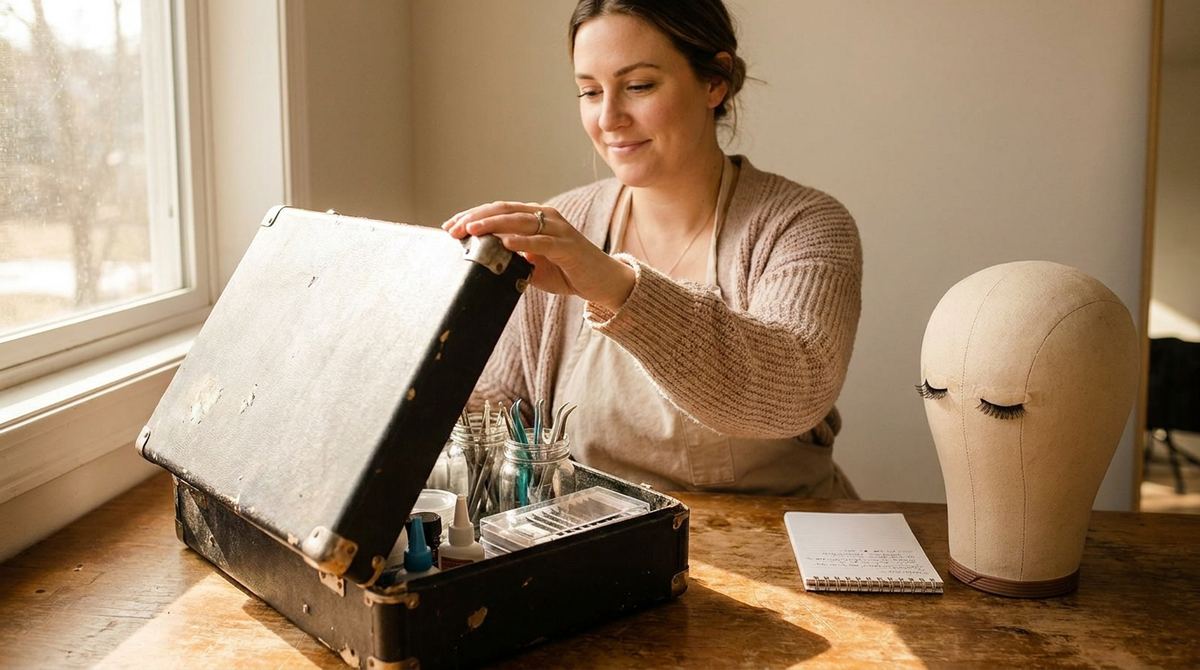
Life happens: a move, a new baby, an injury, or simply a stretch where lashing wasn’t the priority, and suddenly it’s been a year or more since you last did a full set. Coming back after a break like that raises a real question that doesn’t have an obvious answer: do you jump straight back into paying clients, brush up on your own, or actually retake your lash extension course from the start?
Free Guide
Get Your Free Lash Extensions Starter Guide

A $17 value, yours free today. We'll send the guide straight to your inbox in the next minute.
You'll also get occasional lash tips by email. Unsubscribe anytime.
Why Skill Fades Faster Than You’d Expect
Lash application is a fine motor skill built on repetition, and like any fine motor skill, it fades with time off far faster than most artists expect going in. Isolation that used to feel automatic can suddenly require conscious thought again, application speed often drops noticeably, and small habits, like exactly how you angle your tweezers or how quickly you check for stuck lashes, can slip without you noticing until a set takes twice as long as it used to. None of that means you’ve lost your skill permanently, it just means it needs to be rebuilt deliberately rather than assumed to still be there.
What’s Actually Changed While You Were Away
Technique fundamentals don’t shift dramatically year over year, but plenty else does. Adhesive formulas get reformulated, new styling trends become what clients are asking for by name, and best practices around retention, sanitation, and even client consultation language can move meaningfully over a few years. Coming back after a long break isn’t just about your hands remembering what to do, it’s about making sure you’re not walking back in with two-year-old information that’s since been updated.
Feeling nervous about your first sets back is completely normal, not a sign you’ve forgotten everything. Most artists describe it as feeling like a beginner again for a session or two, then the muscle memory returns faster than they expected.
Being Honest With Yourself About Why You’re Hesitating
Sometimes what feels like uncertainty about technique is really nervousness about starting over socially and professionally, telling people you’re “new again,” rebuilding a reputation, facing the vulnerability of not being instantly as good as you remember being. That’s a completely normal reaction to a long break, but it’s worth naming it honestly rather than mistaking it for a purely technical question, since the fix for hesitation about facing clients again is different from the fix for rusty hand skills, even though they often show up feeling like the same problem.
Full Retake, Refresher, Or Self-Review: How To Decide
If your original course access has lapsed or you no longer have the material at all, a full retake makes the most sense, especially if it’s been several years. If you still have your original course materials and just need to rebuild confidence and speed, a structured self-review, watching key technique sections again and dedicating real mannequin practice time before your first paying client, is often enough. The deciding factor is less about the calendar and more about how shaky your fundamentals genuinely feel when you try to picture doing a full set right now.
Practice On A Mannequin Before You Practice On A Client
Whichever path you choose, don’t skip mannequin practice before booking a real client again. Artists coming back from a break consistently underestimate how much their speed and isolation have slipped, and a mannequin head is where you want to discover that, not partway through a paying appointment. Give yourself at least a few full practice sets before you commit to a client booking, even if it feels unnecessary at first.
Check Your Certification And Insurance Status
Separate from your actual skill, check whether your certification and any professional insurance are still valid where you’re located. Requirements vary significantly by state and country, and a lapsed certification or insurance policy is a paperwork problem you want to solve before you’re back in front of clients, not something to discover after an issue comes up.
Deciding Whether To Change Your Specialty Or Niche
A long break is also a natural point to reconsider whether your old specialty still fits. Maybe classic sets were your focus before, but mega volume or a specific styling niche has since become more in demand in your area, or your own interests have simply shifted. There’s no obligation to pick up exactly where you left off, and treating your return as a chance to adjust direction, not just resume the old one, can turn a break into an opportunity rather than a pure setback.
Rebuilding Your Client Base, Not Just Your Technique
Coming back after a long break often means starting your client list over almost entirely, since former regulars may have found another artist, moved, or simply lost the habit of booking with you. Treat rebuilding your client base as its own project, separate from rebuilding your hands-on skill: reach out to former clients directly rather than waiting for them to notice you’re back, refresh your portfolio with current work since old photos may no longer reflect current trends, and be upfront on social media or with your network that you’re back and taking bookings again.
Restocking And Checking Your Supplies
If your kit has been sitting unused, don’t assume everything in it is still good to use. Adhesive has a shelf life and degrades faster once opened, even unopened bottles expire eventually, and tweezers or other tools can develop rust or lose calibration if stored improperly for a long stretch. Go through your full kit before your first practice session back, replace anything expired or questionable, and treat this as a normal part of returning rather than an unnecessary expense.
Setting Realistic Expectations For Your First Month Back
Give yourself a real runway before expecting to be back at your previous pace and client volume. Most artists find their first month back is noticeably slower than their pace before the break, both because speed takes a few weeks to fully return and because client volume naturally ramps up rather than snapping back immediately. Planning for that adjustment period, financially and mentally, makes the transition far less discouraging than expecting an instant return to where you left off.
What Our Course Includes
The Lash Extensions Master Course gives you lifetime access to all 31 video lessons for a one-time $97 payment, so if you originally trained with us, your material is still there to review in full, and if you’re coming from elsewhere, it works as a complete, structured refresher covering classic, hybrid and volume technique from the ground up.
Final Thoughts
Coming back to lashing after a long break is common, and handled deliberately, it doesn’t have to feel like starting over completely. Rebuild your technique, your kit, and your client base as three separate projects rather than one overwhelming comeback, and give yourself the same patience during your first month back that you’d offer a genuinely new student. If burnout was part of why you stepped away originally, avoiding burnout your first year lashing is worth revisiting so the same pattern doesn’t repeat, and if certification status is part of your concern, does your lash certification expire covers how renewal rules typically work.
Free Guide
Get Your Free Lash Extensions Starter Guide
A $17 value, yours free today. We'll send the guide straight to your inbox in the next minute.
You'll also get occasional lash tips by email. Unsubscribe anytime.
Frequently Asked Questions
There's no universal number, but most artists who took a year or more off, especially through a major life change like a move or a new baby, benefit from at least reviewing full course material again, even if they don't formally retake it start to finish.
Keep Reading
Popular Lash Training Guides
- Minimum Age For Eyelash Extension Training
- Eyelash Extension Training Cost In 2026: Real Breakdown
- Lash Tech License Requirements By State
- Is It Hard To Learn Eyelash Extensions? Honest Answer
Ready to go from reading to doing? See the full Lash Extensions Master Course or browse all lash training guides.