What If You Fail Your Practical Exam?
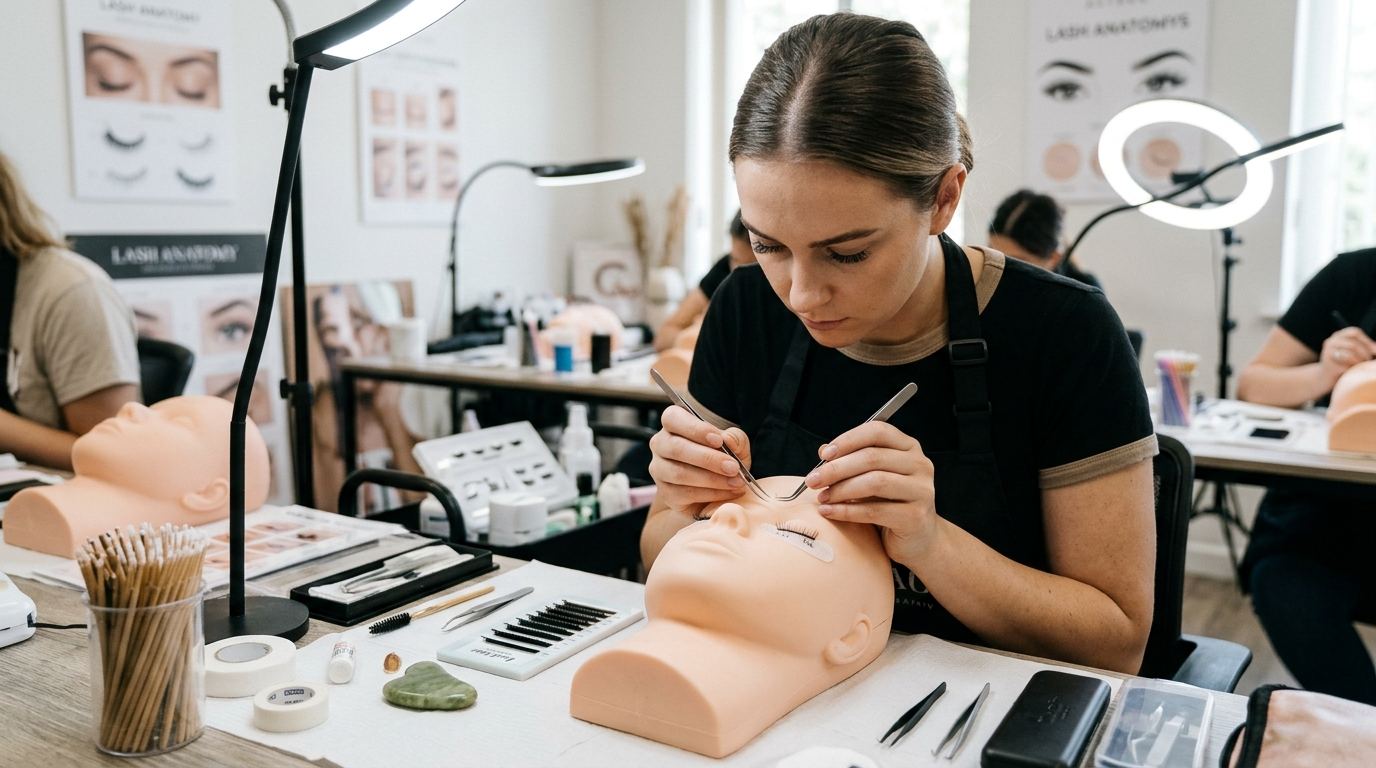
Not passing a practical assessment on your first attempt feels like a bigger deal in the moment than it actually is in the long run. It happens to a real number of students, and it says far less about your future as a lash artist than it feels like it does the day it happens. Here’s what it actually means, why it’s more common than most new students realize, and what to do next to close the gap properly.
Free Guide
Get Your Free Lash Extensions Starter Guide

A $17 value, yours free today. We'll send the guide straight to your inbox in the next minute.
You'll also get occasional lash tips by email. Unsubscribe anytime.
Why This Happens More Than New Students Expect
Lash application, especially volume fans and consistent retention, is a genuinely hands-on skill that improves with repetition, and a practical assessment captures your technique on one specific attempt, not your ceiling. Nerves, an unfamiliar practice model, or simply not yet having done enough reps on one particular criteria (isolation, fan symmetry, speed) can all affect a single assessment without meaning anything about your long-term ability to do the work well.
It also tends to happen more often on the more advanced criteria within a course, volume fan consistency in particular, simply because that’s genuinely the hardest skill most students are learning for the first time in their lives. Struggling with the newest, most technically demanding part of the curriculum isn’t a red flag about your overall aptitude, it’s closer to what should be expected of a skill that takes real students real repetition to master, regardless of how naturally talented they are with the more foundational parts of the course.
What A Non-Pass Actually Means
A practical assessment measures where your technique is today. It does not measure where it will be after another week of focused practice, which is usually all that separates a non-pass from a pass.
Most of the time, not passing a practical assessment points to one or two specific, fixable criteria rather than a broad failure across everything. Maybe your isolation slipped under time pressure, or your fans weren’t consistently symmetrical, or your set ran longer than the time standard allowed. Identifying exactly what didn’t meet the bar is far more useful than treating the whole result as a vague sign you’re not ready.
What To Actually Do Next
Ask specifically what criteria weren’t met rather than accepting a general “not yet” without detail, since vague feedback makes it much harder to improve efficiently. Once you know exactly what to work on, practice that specific skill deliberately rather than redoing broad general practice: if speed was the issue, time yourself on practice sets; if isolation was the issue, drill isolation specifically on a practice model or mannequin before your retake. Most programs let you retake just the portion you didn’t pass, not the entire course.
Write down the specific feedback as soon as you receive it, while it’s still fresh and detailed, rather than trying to recall it days later once the disappointment has faded and the specifics have blurred together. A short list, even three or four concrete points, gives you a clear practice checklist to work through instead of a vague sense that you need to “get better” without a defined target to aim for.
Give Yourself Real Time Before Retaking
Scheduling a retake the very next day, before you’ve had time to actually address the specific gap, often just repeats the same result. A short, focused practice window, even just several days of deliberate work on the exact criteria you missed, tends to produce a meaningfully better outcome than rushing back in immediately out of frustration or urgency to be done.
Use that window deliberately rather than just letting time pass. Set a specific number of practice reps on the exact skill in question, film yourself if that’s an option so you can review your own technique the way an instructor would, and compare your progress against the specific standard you were told you missed. Time alone doesn’t close a skill gap, focused, deliberate practice during that time does.
It Doesn’t Follow You Into Your Career
Once you pass, whether on your first attempt or your third, your certificate looks identical and says nothing about how many attempts it took. Clients booking with you will never ask, and salons hiring you care about your finished work and your certificate, not your assessment history. This is a training-phase moment, not a permanent mark on your career.
Managing The Emotional Side, Not Just The Technical Side
Not passing on the first attempt can feel discouraging in a way that’s disproportionate to what actually happened, especially if you’ve already invested real time and money into your training. It’s worth naming that feeling honestly rather than pushing through it silently, whether that means talking to a classmate, an instructor, or simply giving yourself a day before diving back into practice. A clear head tends to produce better practice sessions than one clouded by frustration or self-doubt carried straight from the assessment.
What A Second Attempt Actually Looks Like
Most programs structure a retake around the specific criteria you didn’t meet rather than making you repeat lessons you already passed comfortably. That typically means a shorter, more targeted session than your original assessment, focused entirely on demonstrating the one or two skills in question. Knowing this ahead of time can lower the anxiety around a retake considerably, since it’s a much smaller, more specific hurdle than facing the full assessment from scratch again.
Talk To Your Instructor Before You Assume The Worst
If you’re not fully clear on what went wrong, ask directly rather than guessing or assuming the entire assessment was a failure across the board. A good instructor can pinpoint exactly which criteria fell short and how close you actually were, which is often more encouraging than students expect once they hear the specifics instead of just the overall result.
Compare Notes With Other Students, Carefully
Talking to classmates who also didn’t pass on their first attempt can be reassuring, since it confirms you’re not the only one and that the standard is genuinely rigorous rather than arbitrarily strict. Be careful, though, not to let a group conversation turn into shared frustration that discourages focused practice. The goal of comparing notes is context and support, not building a case for why the assessment itself was unfair.
Remember Why The Standard Exists In The First Place
A rigorous practical assessment exists to protect real clients who will trust you with their eyes, not to gatekeep unnecessarily. Reframing a non-pass as the assessment doing exactly what it’s supposed to do, catching a gap before it reaches a paying client, rather than as a personal setback, can make the whole experience easier to move through with a clear head and genuine motivation to close that gap properly.
What Our Course Includes
The Lash Extensions Master Course is built around skill-building at your own pace, for a one-time $97 payment with lifetime access, so you can revisit any lesson as many times as you need before or between assessment attempts, without any extra cost or time pressure added.
Final Thoughts
Not passing a practical assessment on the first try is a normal, fixable part of learning a genuinely hands-on skill, not a verdict on your future as a lash artist. Get specific feedback, practice the exact gap deliberately, and give yourself real time before retaking. If you’re still building your foundational confidence, read is it hard to learn lash extensions?, or see retaking your lash course after a long break if you need to step away and come back before finishing.
Free Guide
Get Your Free Lash Extensions Starter Guide
A $17 value, yours free today. We'll send the guide straight to your inbox in the next minute.
You'll also get occasional lash tips by email. Unsubscribe anytime.
Frequently Asked Questions
It's more common than most new students expect, especially for volume application or retention-related criteria, since those skills genuinely take repetition to master and a single assessment attempt doesn't always reflect a full skill level yet.
Keep Reading
Popular Lash Training Guides
- Minimum Age For Eyelash Extension Training
- Eyelash Extension Training Cost In 2026: Real Breakdown
- Lash Tech License Requirements By State
- Is It Hard To Learn Eyelash Extensions? Honest Answer
Ready to go from reading to doing? See the full Lash Extensions Master Course or browse all lash training guides.