What To Expect From Eyelash Extension Training (Lesson By Lesson)

You clicked “enroll” or you are about to, and somewhere in the back of your mind is a small worry you have not said out loud: what if you get inside and it is just a vague pile of videos with no real order, and you are left guessing what to actually do first. That uncertainty is normal, and it is exactly what separates a real curriculum from a folder of disconnected clips.
Free Guide
Get Your Free Lash Extensions Starter Guide
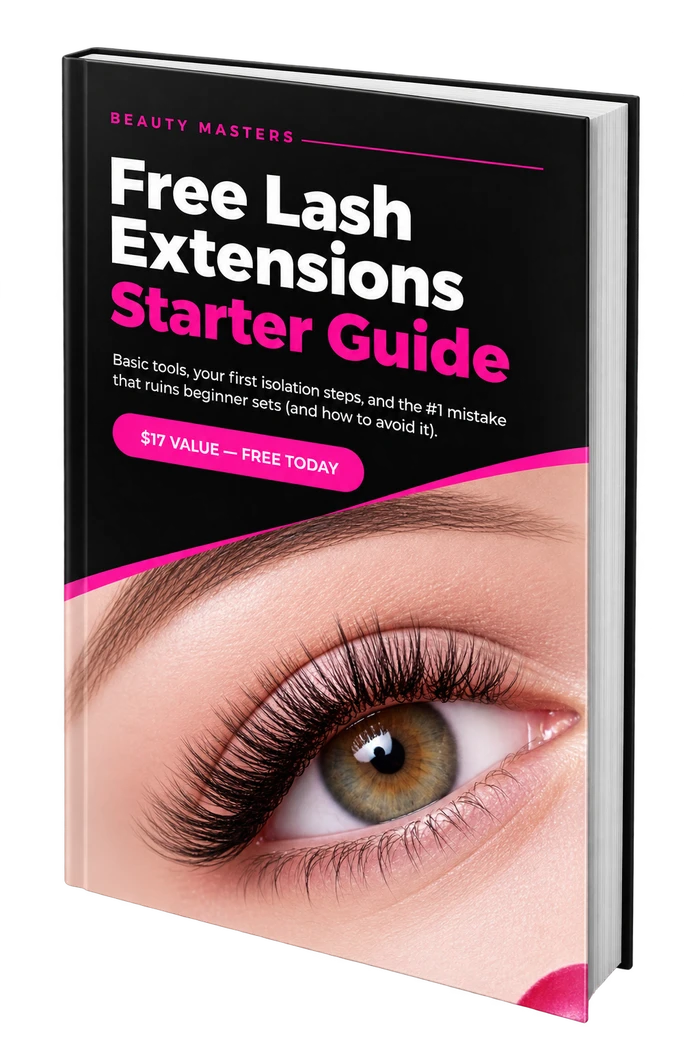
A $17 value, yours free today. We'll send the guide straight to your inbox in the next minute.
You'll also get occasional lash tips by email. Unsubscribe anytime.
Real eyelash extension training follows a fixed order: fundamentals, isolation, classic, hybrid, volume, consultation and retention, refills and removals, then business. Skipping ahead is the single biggest reason people stall out.
Here is exactly what each stage covers, so you know precisely what you are walking into before you press play on lesson one.
Stage 1: Product Knowledge And Eye Anatomy
Before you touch a single lash, a real curriculum covers what adhesive actually does, how humidity and airflow affect cure time, the different lash extension materials and curls, and the anatomy of the natural eyelash growth cycle. This is not filler. Understanding why a set fails later almost always traces back to something taught here.
Stage 2: Isolation Technique
Isolation, separating a single natural lash from its neighbors before attaching an extension, is the single most important technical skill in the entire craft, and the one most beginners underestimate. This stage is slow and repetitive by design, usually a full week of mannequin practice before it starts to feel natural, because rushing past it is what causes stuck-together lashes and poor retention down the line.
Stage 3: Classic Application
Your first full sets: one extension per natural lash, learning consistent placement, angle and adhesive amount. Classic is the foundation every other style builds on, which is why it comes before hybrid or volume in a properly ordered curriculum rather than after.
Stage 4: Hybrid And Volume Styling
Once classic placement is consistent, hybrid (a mix of classic and light volume fans) and volume (multiple ultra-fine extensions fanned onto one natural lash) get layered on top. Volume fan-making is its own separate skill, usually the part that takes the longest to feel confident with, and a real curriculum gives it real dedicated lesson time instead of a single rushed overview.
Stage 5: Consultation And Styling
Learning to read a client’s natural lash health, eye shape and desired look, and to translate that into a lash map before you ever pick up a tweezer. This is what separates a technician who follows a fixed template every time from one who can actually customize a set that suits the person in the chair.
Stage 6: Retention, Refills And Removals
What actually makes a set last, how to diagnose early lash loss, and how to safely remove extensions without damaging natural lashes underneath. Refills and removals make up a large share of a working lash artist’s actual client base, so a curriculum that skips this stage leaves a real gap in your day-to-day skill set.
Stage 7: Business Training
Pricing your services, structuring appointment time, handling consultations and managing client expectations. This is the stage that turns a technical skill into consistent income, and it is frequently the one weaker courses leave out entirely, assuming you will figure it out on your own after the fact.
Why The Order Matters More Than The Content Itself
Two courses can cover the exact same topics and produce very different results depending on the order those topics are taught in. Jumping straight to volume because it looks more impressive, before isolation is solid, is the most common reason people stall out and lose confidence, not lack of talent.
Quick Checklist: What A Real Training Curriculum Should Include
- Product knowledge and eye anatomy before any application technique.
- Dedicated isolation practice before moving to full sets.
- Classic technique taught before hybrid and volume.
- Consultation and lash mapping, not just application.
- Retention, refills and removals as their own lessons.
- Business training: pricing, scheduling, client expectations.
What Our Course Includes
The Lash Extensions Master Course is built exactly in this order: 31 lessons filmed in professional 4K with Mauvella Lash Academy, moving from fundamentals through classic, hybrid and volume, then consultation, retention, refills, removals and business training, with lifetime access so you can revisit any specific stage exactly when you reach it in your own practice.
Final Thoughts
Once you know the real stages, “eyelash extension training” stops being a vague, intimidating phrase and becomes a checklist you can actually track your own progress against. See the exact lesson-by-lesson structure built around this order, next.
Before your first practice session, check what supplies and kit you actually need to get started, or read how long it realistically takes to learn lash extensions.
Free Guide
Get Your Free Lash Extensions Starter Guide
A $17 value, yours free today. We'll send the guide straight to your inbox in the next minute.
You'll also get occasional lash tips by email. Unsubscribe anytime.
Frequently Asked Questions
A proper beginner curriculum covers eye anatomy and product knowledge first, then isolation technique, classic application, hybrid and volume styling, consultation, retention and aftercare, refills, removals, and business training, usually in that order.