Is It Hard To Learn Lash Extensions? The Honest Answer For Beginners
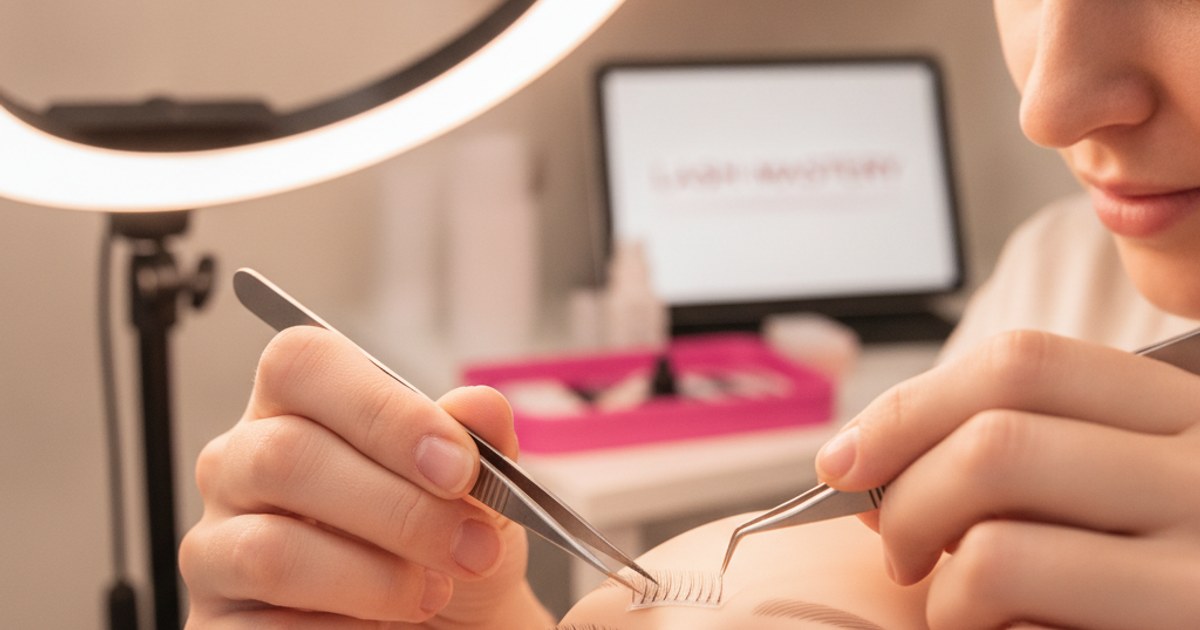
You have watched three different lash artists on TikTok make it look completely effortless, and now a quiet voice is telling you that you are probably not “the type” who is good with your hands or artistic enough to actually pull this off. That voice is wrong more often than it is right, and it stops a lot of people from even starting a course they would have genuinely succeeded at.
Free Guide
Get Your Free Lash Extensions Starter Guide
A $17 value, yours free today. We'll send the guide straight to your inbox in the next minute.
You'll also get occasional lash tips by email. Unsubscribe anytime.
Lash extension technique is a learned manual skill, closer to handwriting than to natural artistic talent. It is genuinely hard at first for almost everyone, and it becomes reliable with repetition, not with a talent you either have or do not.
Here is what actually makes it hard, what does not, and how to tell normal early struggle apart from something worth troubleshooting.
What Actually Makes It Hard: Isolation, Not “Talent”
The single hardest part for nearly every beginner is isolation, consistently separating one natural lash from its neighbors before attaching an extension, without catching or gluing lashes together by accident. This is a fine motor skill built through repetition on a mannequin head, and it is genuinely slow and frustrating for the first several sessions for almost everyone who starts, regardless of background.
What Does Not Make It Hard: Being “Naturally Artistic”
Placement, angle and consistency are closer to a repeatable technical process than an artistic gift. Artistic sense becomes genuinely useful later, when you are choosing a lash map that suits a specific client’s eye shape, but that stage comes well after the fundamentals, not before them. You do not need to have “an eye for beauty” to learn correct isolation and application technique.
What Does Not Make It Hard: Steady Hands (At First)
Most people’s hands are not naturally steady enough for precise isolation on day one, and that is completely normal, not a sign you are unsuited to this. Hand control improves quickly and noticeably within the first couple of weeks of consistent mannequin practice, the same way any repeated fine motor task improves with reps.
Why It Feels Harder Than It Actually Is On Social Media
What you see online is a finished, sped-up thirty-second clip of someone’s five-hundredth set, not their first. Nobody posts the shaky, uneven mannequin practice from week one, which quietly sets an unrealistic bar for what “normal beginner progress” is supposed to look like.
Normal Struggle vs Actually Being Stuck
Normal struggle looks like slow, imperfect early sets that gradually get cleaner and faster, session over session. If your sets have not improved at all after several weeks of genuinely consistent practice, that is usually a sign one specific technique detail needs revisiting (adhesive amount, tweezer angle, isolation grip), not that the skill itself is out of reach for you.
What Actually Predicts Whether You Will Get Good At This
Consistency of practice and following a structured curriculum in the order it was designed, far more than any natural trait you walked in with. Someone practicing three short sessions a week following a clear lesson order will consistently outpace someone with “naturally steady hands” who practices once a month with no structure.
Quick Checklist: Is This Actually Hard, Or Just New?
- Isolation feels slow and frustrating at first for nearly everyone, this is normal, not a red flag.
- Improvement should be visible week over week with consistent practice.
- Hand steadiness improves with reps, it is not a fixed starting trait.
- Artistic talent matters for later styling decisions, not for core technique.
- No improvement after weeks of real practice usually means one specific detail needs revisiting, not that you should quit.
What Our Course Includes
The Lash Extensions Master Course is built assuming zero prior experience, starting with isolation fundamentals before any full set application, with 31 lessons in a deliberate order and lifetime access so you can rewatch any specific step exactly when you get stuck on it.
Final Thoughts
Lash extensions are genuinely hard for the first few weeks, for everyone, and that difficulty fades with structured repetition, not with talent you either have or do not. The real question was never “am I the type,” it was always “will I practice consistently.” See the exact structure built to make that easier, next.
If you want a realistic sense of how long that progress actually takes, read How Long Does It Take To Learn Lash Extensions? next, or see how to become a lash technician with no experience.
Free Guide
Get Your Free Lash Extensions Starter Guide
A $17 value, yours free today. We'll send the guide straight to your inbox in the next minute.
You'll also get occasional lash tips by email. Unsubscribe anytime.
Frequently Asked Questions
Some hand steadiness helps, but it is a skill that improves quickly with repetition, not a fixed trait you either have or do not. Most beginners notice a real improvement in hand control within their first two weeks of consistent mannequin practice.